FIFA's Disciplinary Discrepancies: Heavy Bans for Players, Leniency for AFA
Henry Winter has cast a harsh light on FIFA’s handling of Argentina’s World Cup fallout, arguing the governing body hit the players hard while going soft on the federation.
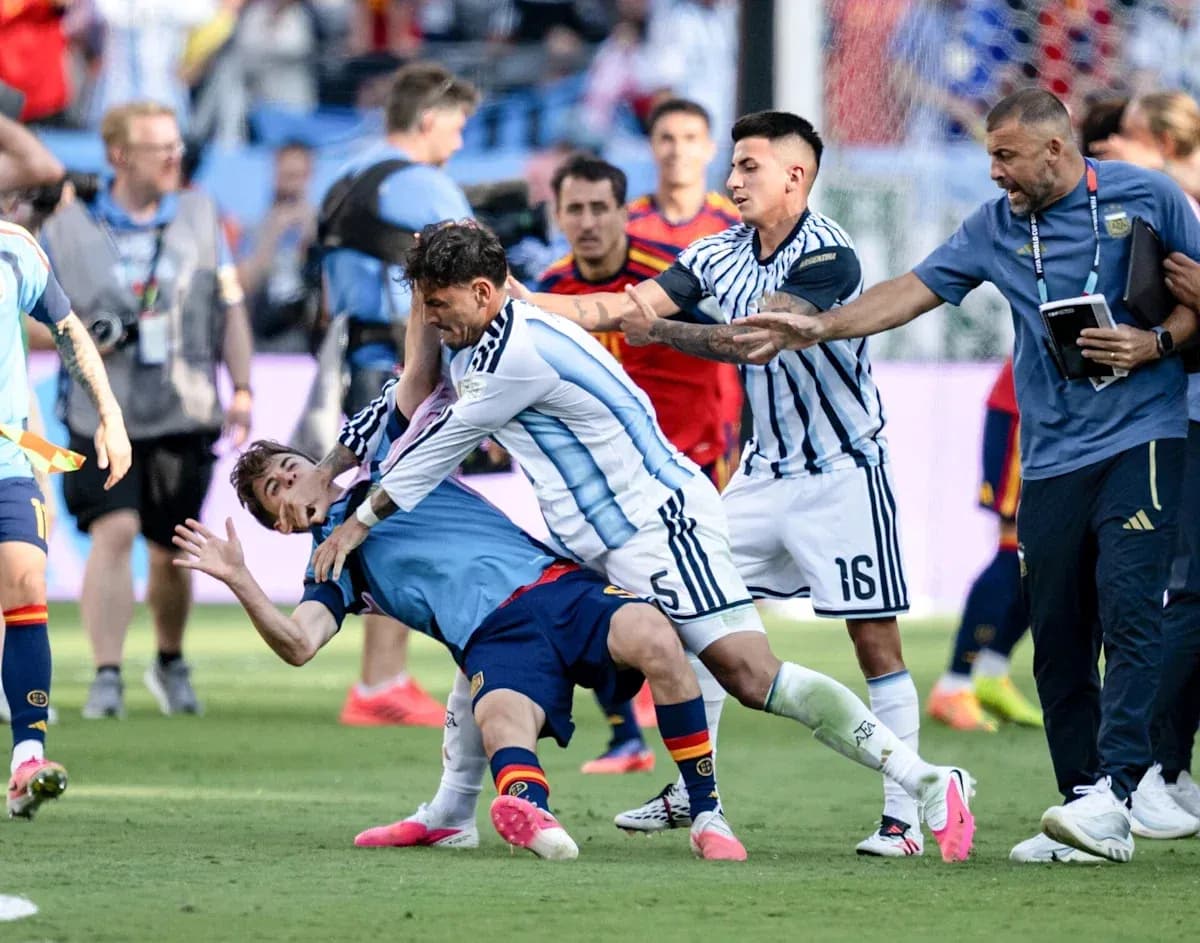
The punishments arrived more than a month after Spain’s 1-0 extra-time win over Argentina in the World Cup final, and the headlines quickly settled on two names: Leandro Paredes and Nahuel Molina.
Paredes took the heaviest blow – a 10-match international ban and a $90,000 fine. Molina was handed a seven-game suspension and the same financial penalty. For Henry Winter, that contrast with the treatment of the Argentine Football Association (AFA) is exactly where the problem lies.
Heavy bans, light touch?
On X, Winter summed up his view of FIFA’s verdict:
“Probably what we expected of FIFA's Argentina punishment for assorted World Cup excesses: relative leniency for the Argentinian FA and chunky bans for two scrap-happy individual players.”
The AFA was fined $321,000 for a string of disciplinary breaches. Those include the Falkland Islands banner displayed after the semi-final win over England, team misconduct, and discriminatory chants and gestures from sections of the Argentina support.
Sanctions on the federation did not stop at money. Argentina must play their next two home matches at 50% capacity, with one of those games effectively on hold as a suspended sanction. Of the $321,000 fine, $100,000 is also suspended, dependent on good behaviour during a probationary period.
This is where the numbers jar. Argentina reportedly earned around $33 million from their World Cup run. Set against that windfall, a $321,000 fine barely dents the balance sheet. The players, by comparison, are paying in games, reputation, and cash.
Thiago Almada received a one-match ban, while Roberto Ayala was suspended for three. On the Spanish side, Gavi was also hit with a one-game ban. Yet it is Paredes who has become the lightning rod.
Paredes hits back
The midfielder has not taken his punishment quietly. He accused FIFA of favouring Spain and argued the disciplinary panel zeroed in on his reaction rather than the provocation.
“I get 10 games ban and $90,000 after I defended myself,” he said. “It's obvious they didn't care to know what the guy said to me but are interested in how I reacted.”
He went further, claiming the narrative would be entirely different if the roles were reversed.
“If reverse was the case, everyone will say FIFA is helping Argentina but they are all mute now,” he added.
His words feed into a wider sense of grievance inside the Argentine camp, but they also sharpen the debate Winter has raised: where is the real weight of FIFA’s justice falling?
AFA prepares its fight
The AFA has no intention of accepting the verdict as the final word. The federation plans to request the detailed grounds of FIFA’s decisions, then appeal to the FIFA Appeals Committee. If that fails, it is prepared to escalate the case to the Court of Arbitration for Sport.
For now, FIFA’s sanctions stand. Paredes, Molina and others face long spells away from the international stage, while the AFA absorbs a fine that looks small beside a $33 million World Cup payday.
That imbalance is exactly what Winter has put under the microscope. When a federation banks tens of millions from a tournament, does a $321,000 hit truly count as punishment – or just the cost of doing business at the top of the game?