
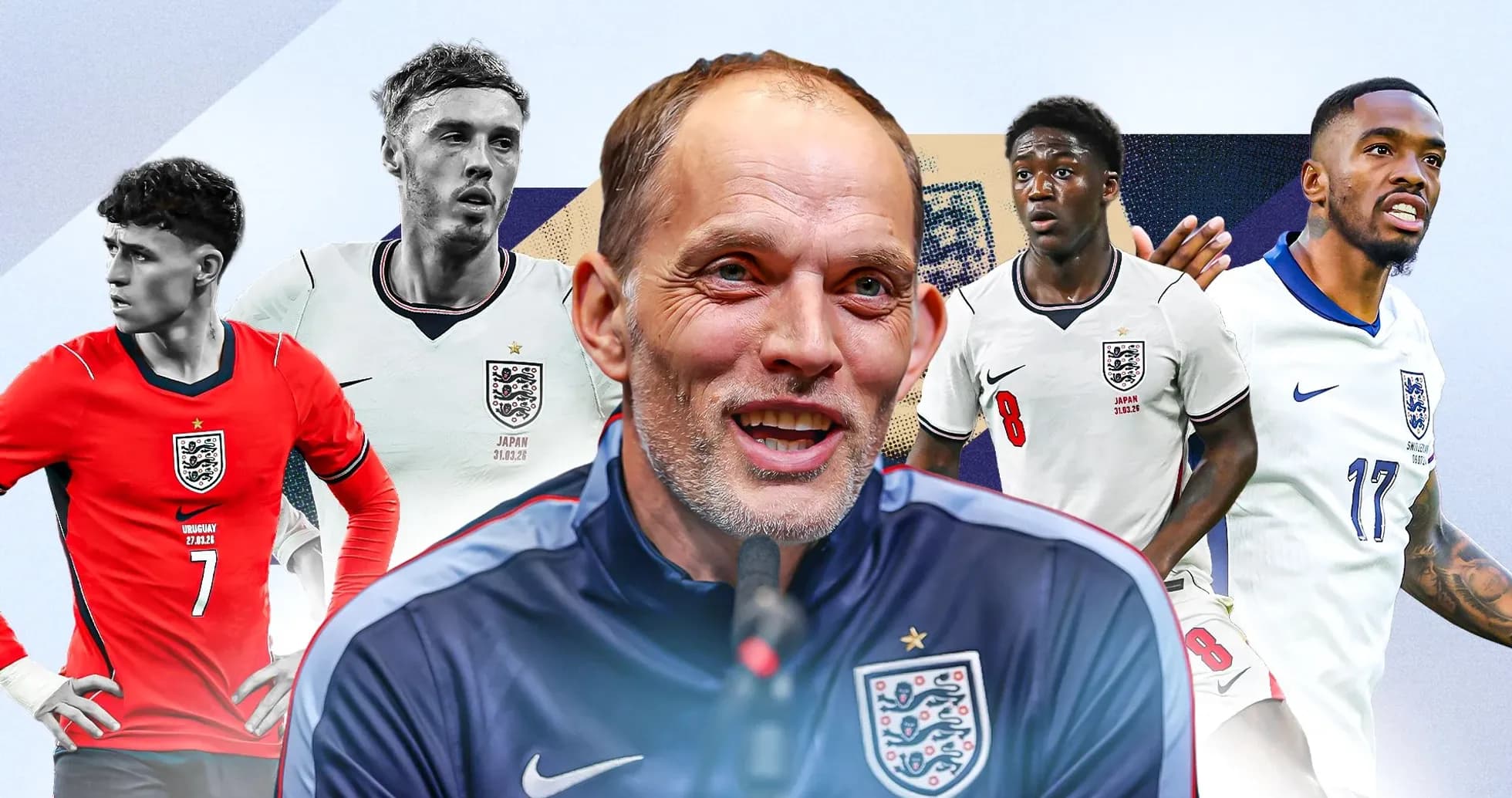
England's World Cup Squad: Tuchel's Bold Decisions and Surprising Omissions
When England walk out for their World Cup opener on June 11, it will be a year and a day since Ivan Toney last pulled on the shirt – two lonely minutes in a grim friendly defeat to Senegal at Nottingham Forest’s City Ground. Since then, nothing. Not a squad, not a camp, not a look-in.
Now he’s back. Not for a low-key qualifier, not for a Nations League dead rubber. For a World Cup.
Thomas Tuchel has turned to the 30-year-old Al-Ahli striker as one of Harry Kane’s understudies, a U-turn powered by a simple, brutal statistic: more than 40 goals in Saudi Arabia. Tuchel ignored that avalanche for a year. He no longer can. Toney has also made the point that he’s already acclimatised to the kind of furnace England will face in North America. Tuchel clearly believes that matters.
A ruthless call at No.10
If the recall of Toney raised eyebrows, the surgery in the No.10 department blew them off.
Everyone knew there would be at least one big casualty among the attacking midfielders. Morgan Rogers was effectively inked in, Jude Bellingham’s versatility made him undroppable, and that left Tuchel staring at Eberechi Eze, Cole Palmer, Phil Foden and Morgan Gibbs-White.
Gibbs-White, despite being the most in-form of the chasing pack, had long been framed as an outsider. His omission fits the narrative. The decision to cut both Palmer and Foden does not. That was the earthquake. Social media melted, disbelief pouring in from every angle.
Strip away the noise and Tuchel’s logic is cold. Palmer’s season never really got going. Injuries bit, minutes for England since Euro 2024 were scarce, and only late in the campaign did he begin to resemble the player who had lit up his first two years at Chelsea. Foden’s slide has been slower, more painful. Off the boil for club and country since the last Euros, he never shook off the sense of a talent slightly out of tune.
Eze survives them all. His debut campaign at Arsenal veered between promise and frustration, but Tuchel has clearly seen enough to trust his unpredictability in tight games.
There will be arguments that Palmer, Foden and Gibbs-White would all have offered more off the bench than some who made the cut. Tuchel anticipated that storm. On the No.10s he left at home, he was blunt: he wanted balance, not a suitcase full of playmakers shunted out of position. “Because whom would we do a favour with that? The player? Ourselves? I don’t think so.”
Mainoo’s rise from the scrapheap
Kobbie Mainoo’s World Cup hopes looked dead before Christmas. Ruben Amorim, then in charge at Manchester United, simply didn’t see a place for him in his back-three system. Mainoo was frozen out, his profile shrinking by the week, a January exit very much on the table.
He stayed. Amorim did not.
The moment Michael Carrick stepped in as interim head coach, Mainoo’s career jolted back to life. The 21-year-old academy graduate walked straight back into the side, played with a calmness that belied his age, and helped drag United into the Champions League. The reward was a new contract – and now, a ticket to the World Cup.
He has edged out Adam Wharton and James Garner for the final central midfield berth. Realistically, he will sit behind Declan Rice and Elliot Anderson in the pecking order, but his presence says plenty about how Tuchel sees England’s future spine.
Trent shut out again
For Trent Alexander-Arnold, the writing had been on the wall. That doesn’t soften the blow.
Injuries elsewhere appeared to open a path back, yet Tuchel again turned away from the Real Madrid right-back, choosing Tottenham’s Djed Spence instead. The hint was there in March, when Alexander-Arnold didn’t even make the expanded 35-man squad. Now the door has slammed.
This is a brutal end to a bruising first season in Madrid. Alexander-Arnold left Liverpool with ambitions of the Ballon d’Or conversation. He now finds his international career on hold. Ben White is injured, Tino Livramento is only just returning, and still Tuchel has said no. The 27-year-old has not played for England in almost a year. As long as Tuchel stays, the route back looks narrow.
From a tactical standpoint, the decision will be pored over. Against deep, stubborn defences, no English full-back can match Trent’s passing range. But Tuchel has once again judged that the defensive trade-off is too severe. For him, the risk at the back outweighs the reward going forward.
Alonso’s unexpected bonus
Not everyone in English football will be cursing Tuchel’s boldness. At Cobham, Xabi Alonso might allow himself a quiet smile.
Reece James stands alone as Chelsea’s only England representative. Palmer stays home. So do Levi Colwill and Trevoh Chalobah. For a new manager wanting time on the training ground, it is a gift.
Palmer’s body has taken a battering this season; a summer of rest could be exactly what he needs. Colwill has only just returned from an ACL tear. Alonso now has a full pre-season to rebuild them both without interruption.
With Joao Pedro, Andrey Santos and Estevao all overlooked by Brazil boss Carlo Ancelotti, Chelsea’s World Cup contingent will likely be limited to James, Marc Cucurella, Jorrel Hato, Enzo Fernandez, Moises Caicedo, Pedro Neto and Nicolas Jackson. That is a manageable exodus for a club in transition.
Maguire’s shock and fury
Few players seemed more certain of their World Cup place than Harry Maguire. Recalled by Tuchel for the last international break, buoyed by an impressive second half to Manchester United’s season, the centre-back believed he was back in the fold for good.
Tuchel thought otherwise.
Maguire has been cut, the German sticking to the stance he hinted at in March: the defender remained low down his list and nothing had changed his mind. Concerns have swirled around Maguire’s suitability for a possession-heavy, play-from-the-back approach. There have also been whispers that his ego, and his unwillingness to accept a back-up role, counted against him.
The reaction from the Maguire camp did little to dispel that narrative. On the eve of the announcement, the player and some of his family hit out. “I was confident I could have played a major part this summer for my country after the season I've had,” Maguire wrote on social media. “I've been left shocked and gutted by the decision.”
Tuchel will not have missed the tone.
O’Reilly handed the left flank
If Maguire’s story is one of status lost, Nico O’Reilly’s is the opposite.
The 21-year-old has been England’s breakout star of 2025-26, a revelation on the left side of Manchester City’s defence. Fifteen goal involvements from left-back is an absurd return, and he now heads to the World Cup not as a project, but as the likely starter.
Lewis Hall and Myles Lewis-Skelly both looked strong contenders to at least share the role. Both have been left out. The position now belongs to O’Reilly, with Spence expected to provide cover from the opposite flank.
There is risk here. O’Reilly is, by trade, a midfielder. Tuchel is going into a World Cup without a single orthodox left-back. Spence is more at home on the right, O’Reilly is still learning the nuances of the role, and tournament football is unforgiving. Tuchel clearly believes the upside – O’Reilly’s energy, his timing in the final third, his understanding of space – is worth the gamble.
Tuchel’s England, Tuchel’s gamble
From the moment he took the job, Tuchel promised he would not chase popularity. He would pick his team, his way, and live with the consequences.
This squad is the purest expression of that promise yet.
The core of England’s strongest XI remains intact. Kane, Rice, Bellingham, James, the key pillars are there. But beyond that, the safety net has been cut away. No Jarrod Bowen. No Palmer. No Alexander-Arnold. No Gibbs-White. No Wharton. No Maguire. All players who, in a different universe, could have swung a knockout tie from the bench.
In their place, a bench that inspires more questions than comfort. Jordan Henderson’s experience is undeniable, but his legs are not what they were. Spence is untested at this level. Noni Madueke brings flair but also volatility. The margin for error has narrowed.
There is, however, one advantage to this ruthlessness: silence. The endless debates that have stalked previous tournaments – Should Palmer start? Is Foden wasted out wide? Where on earth do you play Alexander-Arnold? – simply won’t exist. The starting XI almost picks itself, with only the No.10 role genuinely up for grabs between Bellingham and Rogers. Tuchel called it “clarity”. In a tournament bubble, that calm might prove priceless.
Or it might not.
Because make no mistake: this squad will define Tuchel. If England reach at least the semi-finals, he will be hailed as the manager who cut through the noise and trusted his convictions. If they fall short, the inquest will begin with this list of 26 names and the players left watching at home.
He wanted ownership of this England. Now he has it. The only question left is whether this is the moment he wins the World Cup – or the moment everything starts to unravel.





