
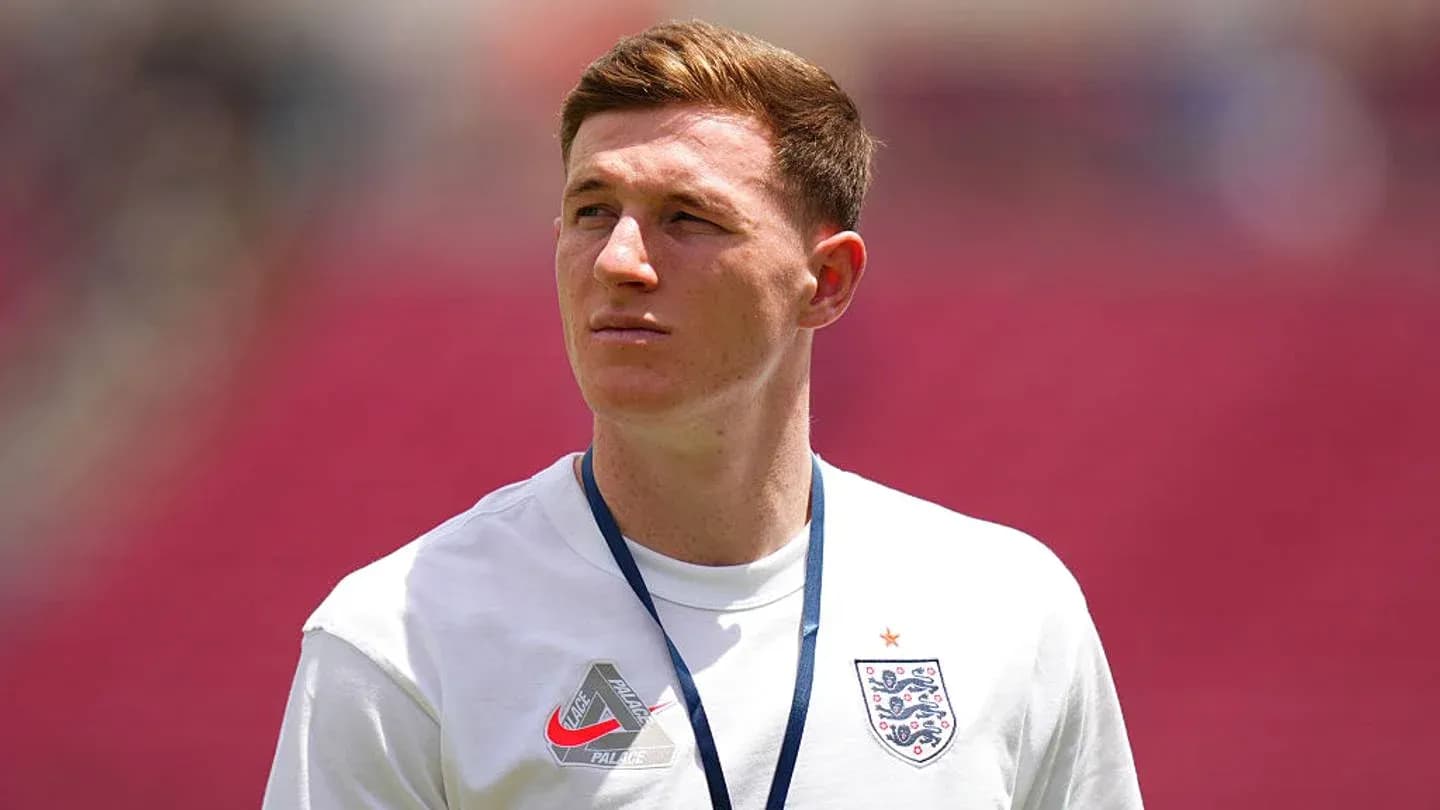
Elliot Anderson: Manchester City's Record Transfer Bid Explained
Manchester City are testing the limits of English football’s transfer market again, and this time the spotlight is on Elliot Anderson.
The Premier League champions have moved aggressively for the Nottingham Forest midfielder, tabling an offer that would make the 23-year-old the most expensive English player of all time. The bid: $141.7 million (£106 million) guaranteed, with performance-related add-ons that could push the total beyond $160.4 million (£120 million), according to Fabrizio Romano and David Ornstein.
That fixed fee alone edges past Arsenal’s 2023 deal for Declan Rice, the current benchmark for an English player. City are prepared to go there. Forest, for now, are not prepared to fold.
Forest Hold Their Nerve
This is not a selling club backed into a corner. Forest know exactly what they have.
Anderson exploded during the 2025–26 season, driving games from midfield and forcing his way into England’s squad for the 2026 World Cup. He has three years left on his contract, no release clause, and a body of work that includes standout displays against both Manchester clubs. That matters in negotiations. So does the fact that Manchester United are watching closely from across town.
Forest are thought to be demanding more guaranteed money, and they have a clear reference point. Ornstein cites Alexander Isak’s 2025 move from Newcastle United to Liverpool: $167.1 million guaranteed, with only minimal add-ons. That fee set a brutal standard. Forest believe Anderson belongs in that bracket, at least.
Match Isak, and you’re not just setting an English record. You’re breaking the Premier League’s overall transfer record, entering a stratosphere previously reserved for Neymar and Kylian Mbappé once add-ons are stripped away.
Forest’s stance is simple: if City want a player they view as a future cornerstone of England’s midfield, they must pay like it.
Win-Win for Forest
Forest do not want to lose Anderson. That much is clear. But they can afford to be cold about the numbers.
With three years remaining on his deal, there is no ticking clock, no looming free agency to undermine their position. They can turn down bids, safe in the knowledge that Anderson remains central to their project and that his value is unlikely to crater if he continues on this trajectory.
The calculation is ruthless but logical. Either no one meets their valuation and they keep a player who can anchor their midfield for at least another season, or a superclub breaks through what should have been a prohibitive asking price and Forest walk away with a transformative fee.
In that scenario, they bank close to $170 million and reshape the squad. It is the kind of sum that changes training grounds, wage structures and long-term planning.
The Market That Built This Price
If Anderson’s price tag feels wild, it’s only because football has moved the goalposts so far, so quickly.
Rice to Arsenal. Enzo Fernández to Chelsea. Moisés Caicedo following him to Stamford Bridge after Liverpool had also agreed a huge fee. Those 2023 deals dragged the going rate for top-tier central midfielders into a new financial universe, and the game hasn’t exactly become poorer since.
Clubs now operate with those figures as precedent. Forest look at Anderson, at his age, output and upside, and see a player who belongs in the same economic conversation, even if the positions and profiles are not perfectly aligned.
Isak’s transfer is the clearest driver of Forest’s current stance, but it’s not a like-for-like comparison. The Swede arrived at Liverpool amid huge expectation, then saw his first season shredded by fitness problems, a broken leg and further setbacks. Even that hasn’t scared elite clubs away from nine-figure bets. It has only underlined how high the stakes now are when those bets land.
Football has been here before, in its own way. Back in 1993, Forest sold Roy Keane to Manchester United for a British record £3.75 million, with Blackburn Rovers actually offering more. That fee now looks quaint, almost comic, against today’s numbers. The principle hasn’t changed: if the market says you’re worth it, you’re worth it.
Why City Are Willing to Go So Big
Strip the emotion away and Manchester City’s logic is clear.
What looks like an eye-watering sum in 2026 will not feel the same in 2030, 2033 or 2036. Anderson turns 24 in November. If he signs now and stays for eight, nine, even ten years, the cost spreads across an era, not a season.
City have built their modern dynasty on precisely that kind of long-term value. David Silva, Yaya Touré, Sergio Agüero, Kevin De Bruyne, John Stones, Bernardo Silva – expensive at the time, but amortised across a decade of trophies and identity. They do not get every transfer right, but they rarely miss on the ones they truly commit to.
Anderson fits the profile of a post-Pep Guardiola cornerstone: technically clean, tactically flexible, able to operate in multiple midfield roles and influence games in and out of possession. City see an all-rounder who can grow with a squad that is quietly evolving as its first great cycle ages out.
The risk is obvious. To justify a fee that may brush $170 million, Anderson has to become not just very good, but defining. A player who bends seasons and shapes titles.
City, by moving this far already, are signalling they believe he can.
A Battle With No Need for Panic
For now, the impasse is about structure, not intent.
City are comfortable with a package that climbs over $160 million when add-ons kick in. Forest want more of that money locked in from day one, closer to the Isak deal, and are prepared to wait. Anderson’s contract allows them to do so. City’s resources allow them to keep pushing.
Somewhere between those positions lies a number that would redraw the lines of the Premier League market again.
If City reach it, they get a midfielder they hope will anchor their next great side. If Forest hold it, they either keep one of the league’s standout talents for another year or cash out at a level that would have been unthinkable not long ago.
The only certainty is this: whatever figure finally lands on the paperwork, it will say as much about where football is heading as it does about Elliot Anderson himself.





