Egypt Falls to Argentina 3-2 Amid VAR Controversy and Messi's Comeback
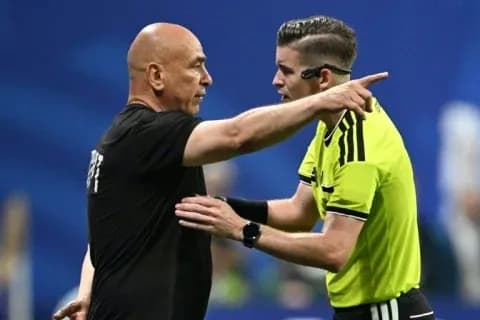
In the bowels of a Los Angeles stadium, Hossam Hassan did not bother with diplomacy. His Egypt side had just blown a 2-0 lead to lose 3-2 to Argentina and fall one step short of a historic World Cup quarter-final. The coach’s verdict was blunt.
“We have been cheated unfairly today, we have suffered injustice,” he snapped, his press conference turning into a full-frontal assault on officiating, VAR and scheduling.
On the pitch, it had been a classic. Off it, it became a scandal in Egyptian eyes.
Egypt’s Dream, and a Disallowed Lifeline
Egypt had Argentina rattled. Yasser Ibrahim’s header gave the Pharaohs a deserved lead, a shock scoreline that crackled around the stadium. The defending champions looked shaken, their rhythm broken, their composure fraying.
Then came the first flashpoint.
Mostafa Zico thought he had doubled Egypt’s advantage, a goal that would have sent the North Africans surging towards a first-ever World Cup quarter-final. Instead, VAR intervened, rolling the move back to a foul on Lisandro Martinez much earlier in the build-up. The goal was wiped out.
Hassan’s anger began there.
“A second goal was remarkably disallowed,” he fumed later. “There has not even been a VAR check when we have all seen the image of the (shirt) being pulled back.”
Egypt regrouped. The sense of injustice seemed to fuel them. Zico struck again, this time the goal stood, and Argentina stared at the abyss. Egypt were 2-0 up, on the brink of rewriting their football history.
Messi Misses, Then Roars Back
Argentina, though, do not surrender titles easily. The pressure built, wave after wave of sky blue attacks. A lifeline arrived when Nicolas Tagliafico went down in the box and the referee pointed to the spot.
Lionel Messi stepped up, the eight-time Ballon d’Or winner staring down Mostafa Shobeir. The script felt familiar, almost inevitable.
Shobeir tore it up. Diving low, he beat away Messi’s effort and sent the Egyptian bench into delirium.
Messi’s uneasy relationship with World Cup penalties deepened. He has now failed to convert four of his eight non-shootout spot-kicks at the tournament, two of those misses coming in this edition alone.
But Argentina still had time, and champions rarely die quietly.
Cristian Romero dragged them back into the contest, reducing the deficit and tilting the momentum. The Egyptian defence, so assured for so long, suddenly looked besieged.
Then Messi struck. The equaliser came with all the force of a man refusing to exit the stage, his eighth goal of the tournament lashed home to haul Argentina level and detonate the stadium. From 2-0 down, it was 2-2. The world champions were alive again.
The Flashpoint Before the Winner
The decisive moment, in Egyptian minds, did not come with Enzo Fernandez’s winner. It came just before it.
As Argentina surged forward in search of the kill, Egypt were convinced they should have had a penalty of their own. Hamdy Fathy’s shirt appeared to be pulled by Alexis Mac Allister in the box, a tug the Egyptians insist was clear.
Play continued. No VAR review came. Argentina broke, the move flowed, and Fernandez finished it. 3-2. A comeback for the ages on the scoreboard, a burning sense of injustice on the other side.
“We haven't seen respect or fair play. There has not been respect or fair play,” Hassan said, his voice hardening. “A penalty was ruled out, was not even checked by VAR… There has not even been a VAR check when we have all seen the image of the (shirt) being pulled back.”
For Argentina, it was the ruthless instinct of serial winners. For Egypt, it felt like the door to history had been slammed in their faces by forces beyond their control.
Hassan Points at the Power Game
Hassan did not stop at individual incidents. He went after the bigger picture, hinting that the presence of the reigning champions and their global icon had influenced the night.
“Perhaps they wanted to keep the world champions in the competition. Perhaps they wanted Messi to stay in the running,” he told BeIn Sports. “In football, there are sometimes external factors that go beyond the technical aspects. The world champions received support at every level.”
These are heavy accusations, the kind that linger long after a tournament moves on. To Hassan, this was not just about one match; it was about status, power and who gets the benefit of the doubt when the margins tighten.
“You Don’t Play Football at Noon”
The Egypt coach also turned his fire on the schedule. The match kicked off at noon local time (1600 GMT), only four days after both teams had slogged through their round of 32 ties.
“Whoever schedules those matches has never played football,” he said. “You never schedule a game for 12pm. At noon you go for a walk or to eat brunch, you do not go to play football.
“When are the players supposed to eat? At 7.30am?
“There have been a lot of things to be questioned on and off the pitch.”
In his view, the conditions, the timing, the officiating – all of it stacked the deck.
A Coach Who Walks Away
By the time he left the press room, Hassan had gone beyond the usual post-match complaints. He delivered a protest of principle, or at least that is how he framed it.
“I am not going to continue following the matches of this World Cup, watching the matches of this World Cup,” he said. “This is my own way of speaking up.”
For Egypt, the record will show a 3-2 defeat to the world champions after leading 2-0. For Argentina, it will go down as another great escape in an era defined by Messi’s refusal to fade.
The arguments over what happened in Los Angeles – the penalty calls, the VAR silence, the schedule, the shadow of a superstar – will not change the result. The only question now is whether this night becomes just another hard-luck story for African football, or a spark that finally forces the game to confront who it truly serves when the stakes are highest.