
Curaçao's Football Journey: Brenet's Redemption Story
On a small Caribbean island that still flies the Dutch flag, a very different kind of Oranje story is unfolding.
Curaçao, an autonomous part of the Kingdom of the Netherlands and a former colony, has quietly become a cornerstone of Dutch football. Generations of Curaçaoans moved to the Netherlands, and their children and grandchildren now pack out the national-team dressing room. FIFA only recognised Curaçao as a national side in 2010, yet its fingerprints have long been visible on the Dutch game.
Of the 26 players in Curaçao’s current World Cup squad, just one was actually born on the island. He also happens to be the most recognisable name: Tahith Chong. The winger once walked through the doors of Manchester United’s first team, playing 16 competitive matches before a stuttering six‑month loan at Werder Bremen in 2021. Now at Sheffield United, he is one of six Curaçao players with a Bundesliga line on their CV.
There is a faintly German thread running through this team. Gervane Kastaneer passed through 1. FC Kaiserslautern. Riechedly Bazoer had his spell at VfL Wolfsburg. Roshon van Eijma featured for Preußen Münster. Jürgen Locadia and Joshua Brenet both wore the colours of TSG Hoffenheim. For Brenet in particular, that chapter in Germany left scars that still define him.
Brenet: From Eredivisie champion to costly gamble
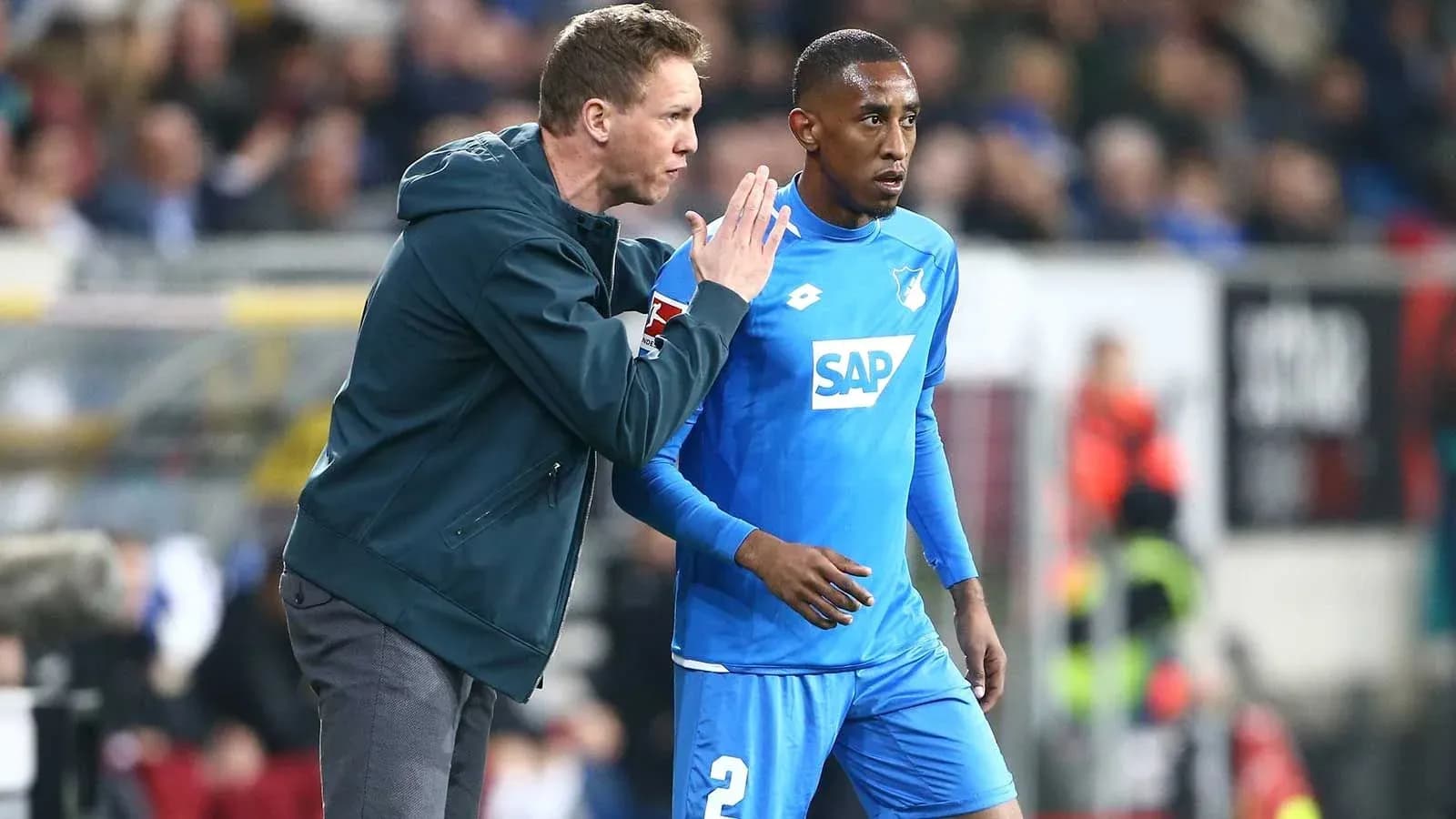
When Hoffenheim paid €3.5 million to sign Brenet from PSV Eindhoven in 2018, they believed they were buying a ready-made full-back. He arrived as a three-time Eredivisie champion, a player with two caps for the Netherlands, and with the backing of Julian Nagelsmann, then the bright young thing of German coaching and now Germany’s national-team manager.
The plan looked clear. The reality was brutal.
Brenet started his Bundesliga life on the bench, watching the early league matches pass him by. Then came Hoffenheim’s first-ever Champions League outing, a landmark night against Shakhtar Donetsk. On the eve of it, Brenet skipped a video session. Nagelsmann’s response was immediate: he dropped him from the squad.
The coach did eventually bring him back into the fold, but the damage was done. Brenet’s appearances for the rest of the campaign came in fits and starts, never with the rhythm or trust a defender needs. When Nagelsmann moved on, his successor Alfred Schreuder – now Nagelsmann’s assistant with the DFB – did not use Brenet at all. By the time Sebastian Hoeneß took charge, the right-back had slid even further down the ladder, demoted to the reserves in the fourth-tier Regionalliga Südwest.
On the pitch, his career stalled. Off it, his reputation frayed. Chronic lateness and recurring disciplinary issues turned him into an unwanted asset. Hoffenheim searched for a buyer and found none. Only in 2022, when his contract finally ran down, did he leave on a free transfer to Twente Enschede.
A fresh start, then another collision course
Twente looked like the reset he badly needed. Brenet began to remind people why he had once been trusted by PSV and the Dutch national team. His performances improved, his name stopped appearing in the disciplinary columns and returned to the match reports.
Then he blew it again.
In January 2023, he was caught driving without a licence twice in two weeks. His licence had already been revoked in 2020 after a drink-driving offence. The court had seen enough.
“He clearly has no regard for authority. It seems to me as though he is continuing to play football after receiving a red card,” the presiding judge said, before handing down a one-month prison sentence in 2024. It was not his first brush with the law. Back in 2021, Brenet had received a suspended sentence, including a fine and community service, for domestic violence.
The jail term for driving without a licence was later converted to community service on appeal. Twente’s patience did not survive the process. The club terminated his contract.
Qatar, Scotland, Turkey – and a new flag
From there, his career turned nomadic. Brenet joined Al-Rayyan in Qatar but managed only six appearances in the 2024/25 season. By autumn he had moved again, this time to Livingston FC in Scotland. That stay was brief. For the second half of the campaign he headed to Turkey with Kayserispor, another short chapter in a restless journey.
Now he stands in a different shirt altogether.
Despite his long association with Dutch youth teams and a senior debut for the Netherlands in the 2016 World Cup qualifiers, FIFA granted Brenet permission to switch allegiance to Curaçao, his parents’ homeland. It was a change of colours that felt less like a career move and more like a final attempt to anchor a drifting life in football.
Since making his debut for Curaçao in 2024, he has scored six goals in 17 appearances – an impressive return for a right-back. In the team’s final warm-up match against Aruba, he started in his familiar position on the right and found the net again, a reminder of the attacking thrust that once made him such a coveted prospect.
On Sunday at 7 pm, the 32-year-old will walk out to start a World Cup campaign against Germany, staring across at Nagelsmann and Schreuder – the coaches who once benched him, dropped him, and eventually moved on without him.
For Curaçao, it is a historic stage. For Brenet, it is something sharper: a collision with his past, and perhaps his last real chance to show the football world what he has done with that red card the judge said he never stopped playing on from.





