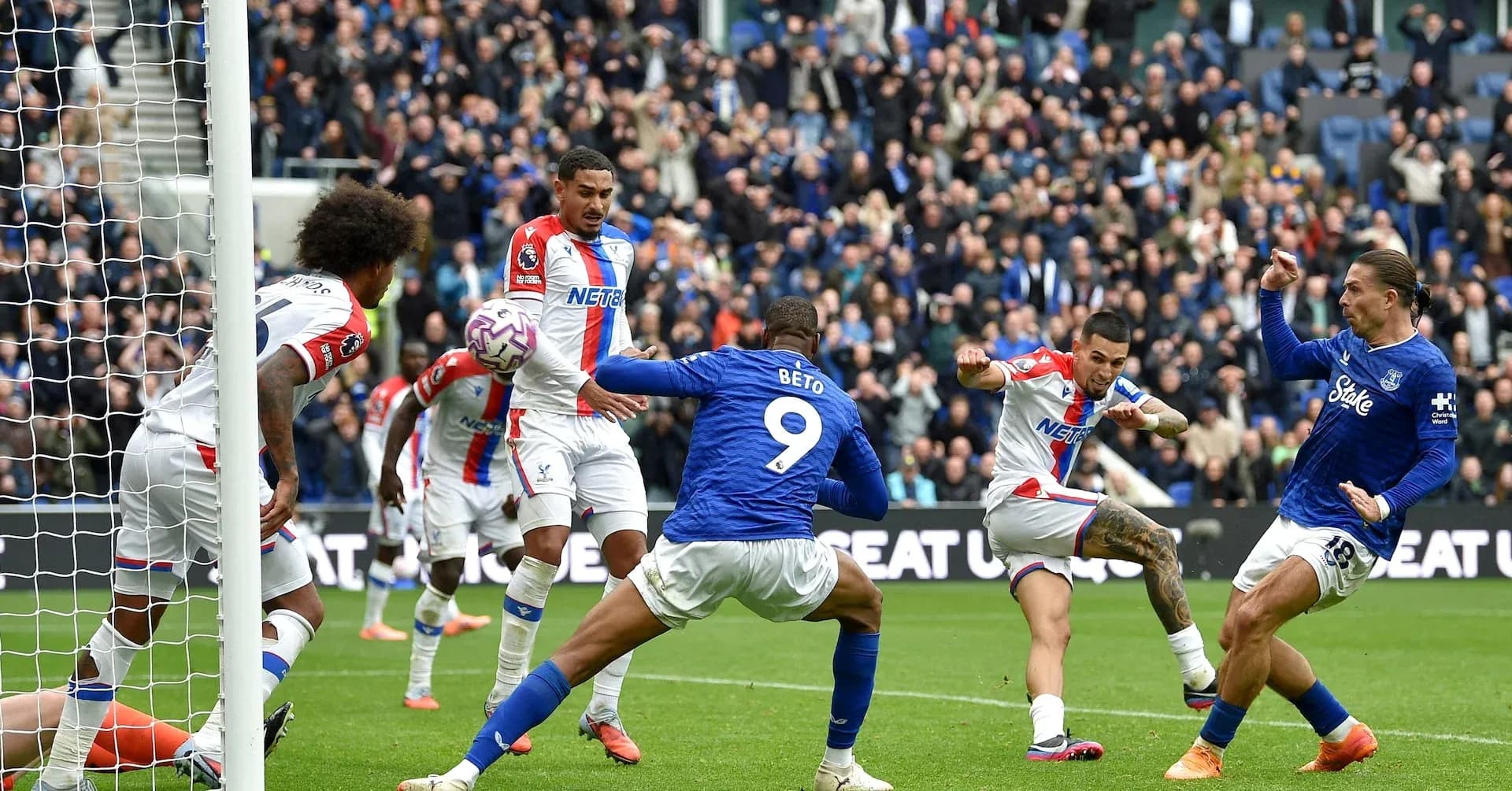
Crystal Palace vs Everton: Premier League Clash at Selhurst Park
Selhurst Park stages a mid-table Premier League meeting on 10 May 2026 as Crystal Palace host Everton in Round 36 of the 2025 season. The stakes are quieter than at the bottom or top, but there is still plenty riding on this: Palace sit 15th on 43 points, looking to lock in safety and avoid being dragged into late jeopardy, while 10th‑placed Everton, on 48 points, are chasing a top‑half finish and the financial and psychological boost that comes with it.
Context and form
In the league, Crystal Palace have taken 43 points from 34 matches, with an 11‑10‑13 record and a goal difference of -6 (36 scored, 42 conceded). Their recent form line of LLDWD underlines inconsistency and a tendency to oscillate between solid results and setbacks. At Selhurst Park, they have been hard to beat but not always ruthless: 4 wins, 8 draws and 5 defeats from 17 home games, with only 16 goals scored and 19 conceded. The eight home draws point to a side that often keeps games tight but struggles to turn control into wins.
Everton arrive in London with a more stable league platform: 13‑9‑13 from 35 games, 48 points, and a neutral goal difference (44‑44). Their form reads DLLDW, another mixed sequence but with enough wins dotted through the campaign to keep them in the top half. Away from home they have been respectable: 7 wins, 4 draws and 6 losses in 17 away fixtures, scoring 19 and conceding 20. That record is slightly stronger than Palace’s home return, giving Sean Dyche’s side grounds for confidence on the road.
Tactical outlook: structures and styles
Across all phases this season, Palace have been wedded to a back three. They have used a 3‑4‑2‑1 in 30 matches and a 3‑4‑3 in 4, suggesting a settled structural identity: three centre‑backs, wing‑backs providing width, and either two narrow attacking midfielders behind a striker or a more orthodox front three.
The numbers back up the picture of a compact but limited attacking unit. Palace average 1.1 goals per game (36 in 34), with only 0.9 per match at home. They have kept 12 clean sheets (7 at home) but have failed to score 11 times (7 at Selhurst Park). The biggest home win is 2‑0 and they have not scored more than 3 in any home game, while their heaviest home defeat is 0‑3. This points towards a team that relies on defensive structure and set patterns in transition rather than sustained attacking waves.
Everton’s default shape has been a 4‑2‑3‑1, used in 21 matches, with a single outing in a 4‑3‑3. That double pivot in front of the back four is key to how they manage games away from home: screening central spaces, allowing full‑backs to advance in phases, and giving the No.10 and wide players licence to support the striker. They average 1.3 goals per game overall (44 in 35), with 1.1 away, and concede 1.3 per match. Their biggest away win is 0‑2 and their heaviest away defeat is 2‑0, again underlining a preference for controlled, relatively low‑margin contests.
Discipline could also shape the rhythm. Palace accumulate yellow cards fairly evenly across the match, with spikes between 31‑45 and 46‑60 minutes, while Everton see a high proportion of bookings late on (76‑90) and have picked up red cards in several time bands. In a tight game, those late‑match disciplinary trends may matter.
Key individuals
For Palace, the standout attacking figure is Jean‑Philippe Mateta. The French striker has 10 league goals from 28 appearances (24 starts), with 53 shots and 30 on target. He is heavily involved in duels (274, with 104 won) and offers a focal point for Palace’s wing‑backs and attacking midfielders. His passing volume is modest (303 total passes, 8 key passes) but his role is clearly to finish moves rather than orchestrate them. Importantly, Mateta has scored 4 penalties without a miss, underlining his reliability from the spot in a team that has converted all 7 of its penalties this season.
With E. Nketiah ruled out by a thigh injury, Palace’s depth at centre‑forward is thinner, which likely cements Mateta’s place as the central reference. The absences of C. Doucoure and B. Sosa also remove options in midfield screening and on the left, potentially impacting the balance of the 3‑4‑2‑1, especially in build‑up and defensive coverage down the flank.
Everton’s attacking output is more evenly spread across the squad in the data provided, but structurally their 4‑2‑3‑1 points to a central striker supported by a creative band of three. Their away scoring rate (19 in 17) suggests they will carry enough threat to test a Palace defence that concedes 1.1 goals per home game.
Injuries, however, could reshape their defensive platform. Jarrad Branthwaite is out with a hamstring injury, removing a key left‑sided centre‑back presence and aerial force. Jack Grealish’s foot injury rules out a high‑profile attacking option who could have operated from the left or centrally. Idrissa Gueye and Tim Iroegbunam are both listed as questionable, raising doubts over depth and ball‑winning in central midfield. If Gueye is unavailable, Everton may lose some bite and experience in front of the back four, which could give Palace’s attacking midfielders more room between the lines.
From the spot, Everton have scored both of their penalties this season, with no misses recorded, reinforcing the sense that any penalty incident could be decisive in what the broader numbers suggest will be a tight contest.
Head‑to‑head: recent competitive meetings
The last five competitive meetings (Premier League and FA Cup, excluding friendlies) tilt clearly towards Everton:
- 05 October 2025, Premier League at Hill Dickinson Stadium: Everton 2‑1 Crystal Palace – Everton win.
- 15 February 2025, Premier League at Selhurst Park: Crystal Palace 1‑2 Everton – Everton win.
- 28 September 2024, Premier League at Goodison Park: Everton 2‑1 Crystal Palace – Everton win.
- 19 February 2024, Premier League at Goodison Park: Everton 1‑1 Crystal Palace – draw.
- 17 January 2024, FA Cup 3rd Round Replay at Goodison Park: Everton 1‑0 Crystal Palace – Everton win.
Across these five, Everton have 4 wins, Crystal Palace have 0, and there has been 1 draw. Notably, Everton have won the last two league meetings by the same 2‑1 scoreline and have also taken a 1‑0 FA Cup replay in that span, while Palace have not beaten Everton in this run.
Strategic keys
For Palace, the game plan is likely to revolve around:
- Maintaining the stability of the back three and protecting central spaces, where Everton’s No.10 can be dangerous.
- Using wing‑backs aggressively to pin back Everton’s full‑backs, while ensuring defensive cover given the visitors’ counter‑attacking potential.
- Targeting Mateta early with crosses and direct balls, playing off his hold‑up play and penalty‑area presence.
- Managing transitions carefully, especially with Doucoure missing, to avoid exposing the back line.
Everton’s priorities will include:
- Exploiting the channels outside Palace’s wide centre‑backs, especially if the wing‑backs are caught high.
- Using the 4‑2‑3‑1 structure to create overloads between Palace’s midfield and defence, particularly if Gueye is fit to anchor the pivot.
- Testing Palace’s relatively low home scoring rate by keeping the game compact, confident that one or two high‑quality chances may be enough.
- Managing set pieces on both ends, given the importance of marginal gains in a fixture where both teams tend towards modest scorelines.
The verdict
The data points towards a tight, low‑margin match. Palace are solid but blunt at Selhurst Park, with as many home draws as wins and losses combined, while Everton are slightly more productive away and have a strong recent record in this fixture: 4 wins and 1 draw in the last 5 competitive meetings.
Injury news arguably hits Palace harder in terms of squad depth, but Everton’s defensive reshuffle without Branthwaite could offer the hosts opportunities, especially if Mateta can dominate in the box. Palace’s penalty strength, with Mateta 4 from 4 and the team 7 from 7, adds another potential edge if the game becomes scrappy.
On balance, Everton’s away record and psychological advantage from recent head‑to‑heads suggest they may avoid defeat again, but Palace’s resilience at home and their need to nail down safety point towards another finely poised contest. A narrow Everton edge or a draw feels the most logical outcome, with the match likely decided by a single goal or a key set‑piece moment rather than an open, high‑scoring affair.