Connecticut FC vs New England II: A Tense Showdown at Morrone Stadium
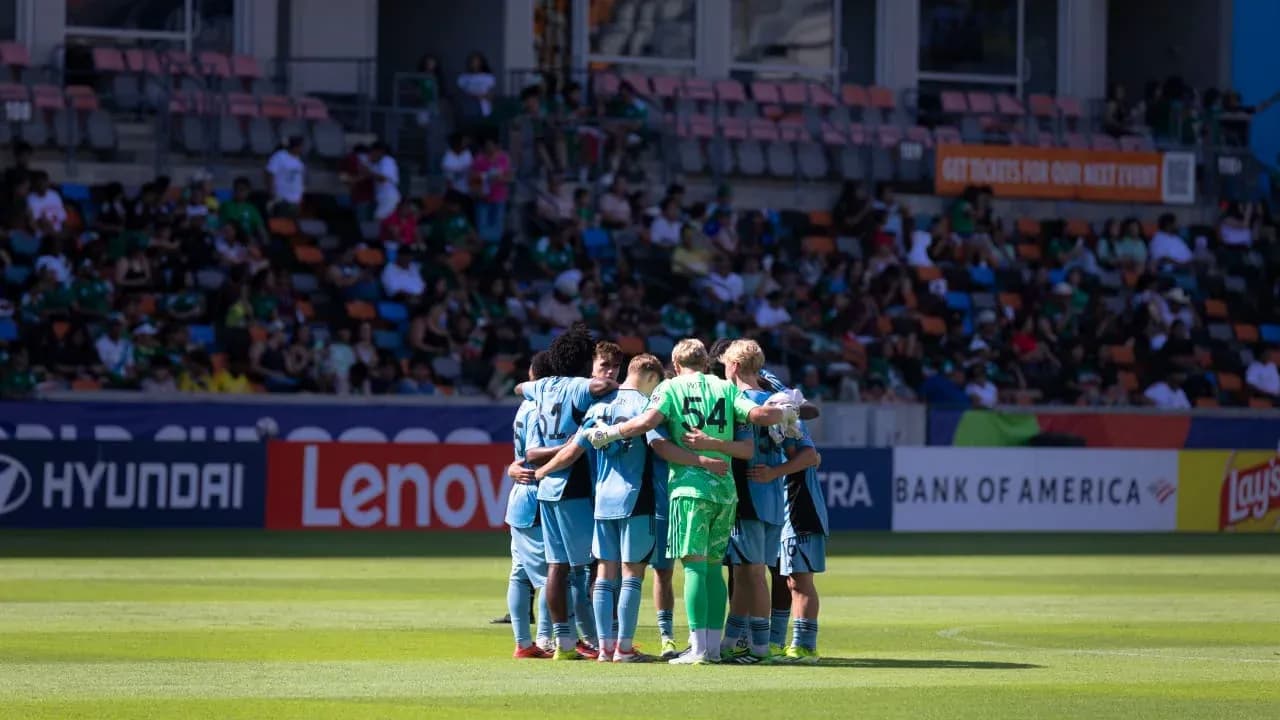
Under the lights at Morrone Stadium, Connecticut FC and New England II pushed each other through 120 minutes without a goal, then down the razor’s edge of a penalty shootout that finished 6–5 to the hosts. Following this result, the story of these two MLS Next Pro sides feels less like a simple group-stage meeting and more like a snapshot of contrasting footballing identities colliding.
Connecticut arrived as a paradox. Heading into this game they sat 6th in the Northeast Division and 12th in the Eastern Conference, with 8 points from 8 matches and a goal difference of -5. Their season had been streaky: a form line of WLWLLLLW told of brief surges drowned by longer slumps. Overall they had scored 11 and conceded 15, averaging 1.4 goals for and 1.9 against per match. At home, though, the numbers painted a different, more cautious picture: 3 goals for and 5 against across 3 fixtures, with averages of 1.0 scored and 1.7 conceded.
New England II, by contrast, came in with the air of a team that had already defined itself. They were 5th in the Northeast Division and 9th in the Eastern Conference, with 11 points from 7 games and a positive goal difference of 1, built on 9 goals scored and 7 conceded overall. Their form line—WWWWLLL—told of a side that had burned hot, then suddenly cooled. At home they had been formidable: 4 wins from 5, 8 goals for and only 4 against, averaging 1.6 scored and 0.8 conceded. On their travels, however, the vulnerability was clear: 2 away games, both defeats, with just 1 goal scored and 3 conceded, for an away average of 0.5 goals for and 1.5 against.
Into that tension stepped two squads that, on paper, were still finding their best selves.
For Connecticut, the spine began with G. Rankenburg in goal, a presence whose value only grew as the match stretched into extra time and penalties. In front of him, the defensive line built around R. Perdomo, L. Kamrath, J. Stephenson and J. Medranda had to reconcile the team’s season-long defensive fragility—15 goals conceded overall, 10 of them on their travels—with the need for composure in a knockout-style scenario.
The midfield offered a blend of control and verticality. S. Sserwadda and E. Gomez carried the responsibility of linking phases, while R. Mora-Arias and A. Monis operated as the connective tissue between deeper build-up and the front line. Up top, Caua Paixao and L. Goddard were tasked with turning a side that rarely fails to score—Connecticut had only failed to find the net once all season—into a team that could punch above its negative goal difference.
New England II’s XI, shaped by Richie Williams, had its own clear structure. D. Parisian anchored things at the back, with a protective screen likely provided by the likes of G. Dahlin and C. Mbai Assem. Around them, the balance of athleticism and technical quality from S. Mimy, J. Shannon and J. Mussenden was designed to compress space and spring forward quickly. In advanced areas, C. Zambrano, M. Wells, J. Da and M. Morgan formed a rotating cast capable of exploiting transition moments—vital for a team whose best football this season had come at home but who needed to rewrite their away narrative.
The tactical voids in this match were less about missing names and more about structural weaknesses. Connecticut’s card profile hinted at a side that often lives dangerously late. Heading into this fixture, 29.17% of their yellow cards came between 76–90 minutes, with another 8.33% from 91–105. More tellingly, their only red card of the campaign had also arrived in the 76–90 window, a sign that fatigue and emotional spikes can drag them into chaotic finales. New England II, for their part, showed a different disciplinary rhythm: 26.32% of their yellows in the 46–60 minute range, then 21.05% each in 61–75 and 76–90, plus 15.79% from 91–105. They tend to ramp up aggression through the second half and into extra time rather than lose control in one explosive burst.
That context shaped the key matchups.
The “Hunter vs Shield” dynamic was less about an individual top scorer—no such data was available—and more about collective patterns. Connecticut’s overall scoring rate of 1.4 per game, paired with New England II’s overall defensive average of 1.0 conceded, suggested a contest where the visitors’ structure might have the edge. But the away split flipped that equation: New England II conceded 1.5 goals per game on their travels, while Connecticut at home were more conservative but capable of grinding out results, as shown by their biggest home win of 1–0.
In the “Engine Room,” Connecticut’s S. Sserwadda and E. Gomez had to navigate a midfield battle against New England II’s G. Dahlin and A. Oyirwoth, players likely tasked with breaking up play and feeding the advanced quartet. With both teams having zero penalties taken all season—no attempts, no conversions, no misses—the expectation was that any xG advantage would need to be created in open play rather than from the spot.
Defensively, New England II’s season profile suggested a compact, home-strong unit that can be prised open away from familiar surroundings. Connecticut, by contrast, were more porous overall but had shown they could produce clean sheets at home—1 so far this season—and had only failed to score once in total. That combination hinted at a tight game where marginal gains, game management and discipline in the final quarter-hour would matter more than sheer attacking volume.
In the end, the 0–0 across 120 minutes confirmed the defensive discipline on both sides, while the 6–5 shootout underlined Connecticut’s psychological resilience. Following this result, the statistical prognosis for both squads sharpens: Connecticut look like a side whose negative goal difference belies a capacity to survive and advance in high-pressure environments, especially at Morrone Stadium. New England II, meanwhile, remain a strong home force still searching for a way to translate their structural solidity into results away, where their margins grow thinner and, as this night proved, a single kick can tilt the narrative.