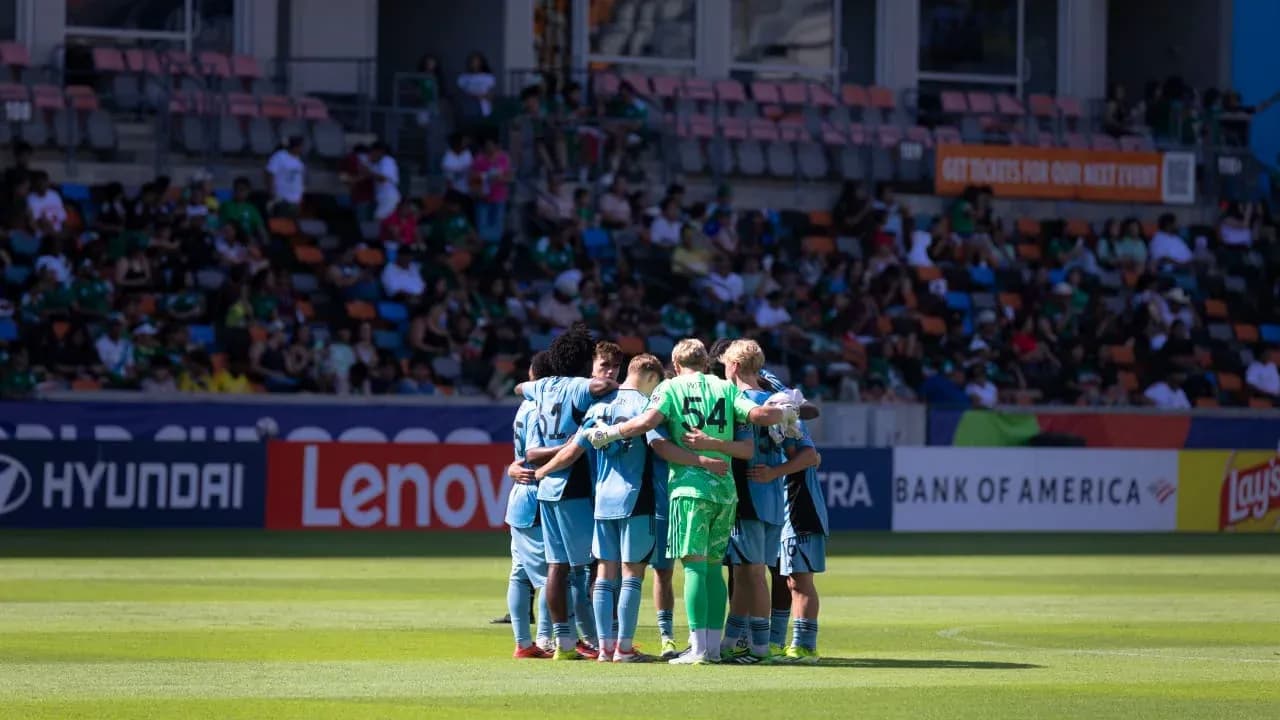
Columbus Crew II vs Toronto II: High-Stakes Drama in MLS Next Pro
Historic Crew Stadium played host to a very modern kind of drama: a developmental showdown with the rhythms of a playoff tie. Columbus Crew II and Toronto II went the full 120 minutes, traded blows in a 2–2 draw, and then trusted the next generation to decide it from the spot. Toronto II held their nerve, winning the shootout 3–1 and walking away with the psychological edge that often lingers long after the final whistle in MLS Next Pro’s group-stage grind.
Team Form and Statistics
Heading into this game, the table already hinted at contrasting identities. Columbus Crew II sat 3rd in the Northeast Division and 4th in the Eastern Conference, with 20 points from 12 matches and a goal difference of 0 overall (20 scored, 20 conceded). Their season has been streaky—“LWWWLWWLWLWL” in form—but at home they had been ruthless: 5 wins from 6, with 12 goals for and 6 against in the standings snapshot. The deeper team statistics sharpen that picture even further: on their own turf, Columbus averaged 2.2 goals for and only 1.2 against, a high-octane, front-foot side whose defensive risk-taking is baked into the model.
Toronto II, by contrast, arrived as an away-side specialist still searching for consistency. They were 5th in the Northeast Division and 10th in the Eastern Conference, also on 16 points from 11 matches with a slender overall goal difference of 1 (18 for, 17 against in the standings). Their season-long numbers confirm the knife-edge nature of their football: 19 goals scored and 19 conceded in total, with away averages of 1.7 goals for and 1.7 against. They travel with ambition, not caution, and this tie in Columbus was always likely to open up.
Lineups
The lineups told their own stories. Federico Higuain trusted a youthful, energetic Columbus XI built on versatility and ball circulation. L. Pruter anchored them from the back, while a back line featuring B. Adu-Gyamfi, Q. Elliot, R. Aoki and I. Heffess was tasked with managing transitions—no easy job given Columbus’ attacking intent. In midfield, T. Brown and K. Gbamble formed the spine, with J. Chirinos and T. Karumanchi offering connective tissue between thirds. Z. Zengue and C. Adams added thrust and verticality, the kind of wide and central movement that makes Columbus so dangerous at home.
On the opposite touchline, Gianni Cimini set up Toronto II with a balanced but fearless core. A. De Rosario’s presence signalled a willingness to break quickly, while R. Campbell-Dennis, R. Fisher, M. Chisholm and L. Costabile formed a defensive unit that has been forced to live on the edge all season. In front of them, D. Dixon and B. Boneau offered legs and bite, with M. Stojadinovic, F. Bank and K. Kerr providing the attacking rotations to disrupt Columbus’ structure. A. Bossenberry completed the XI, giving Toronto a blend of directness and technical control.
Tactical Dynamics
The tactical voids in this match were less about missing personnel—no formal injury list was recorded—and more about discipline and game management. Columbus’ season-long card profile is stark: 30.43% of their yellow cards arrive between 61–75 minutes, with another 21.74% between 31–45. They also carry a red card recorded in the 0–15 window. Toronto II, meanwhile, distribute their bookings more evenly, but with peaks in the 31–45 (25.00%) and 76–90 (20.00%) ranges, plus a late-game 15.00% between 91–105. In a match that stretched to 120 minutes and then penalties, this shared tendency toward mid- and late-game volatility was always going to shape the narrative—tired legs, heavy challenges, and emotional swings just as tactical clarity is most needed.
The “Hunter vs Shield” dynamic in this tie was particularly intriguing. Columbus at home averaged 2.2 goals scored heading into this game, while Toronto’s away defence conceded 1.7 on their travels. That clash—Columbus’ aggressive attacking patterns against a Toronto back line accustomed to being under siege—set the stage for the 2–2 full-time scoreline. Conversely, Toronto’s away attack (1.7 goals per game) went up against a Columbus home defence that allowed 1.2 per match. On paper, that tilt still favoured the hosts, but Toronto’s willingness to trade chances meant they could live with the chaos.
Midfield Battle
In the “Engine Room,” the battle between Columbus’ central trio—anchored by T. Brown and K. Gbamble, with T. Karumanchi knitting play—and Toronto’s midfield of D. Dixon and B. Boneau was decisive. Columbus’ season-long data shows only 2 clean sheets overall and just 1 failed-to-score match in total, underscoring a philosophy of outscoring rather than containing. Toronto, with 3 clean sheets and 3 matches where they failed to score, are more variable but capable of locking things down when their midfield wins duels and controls second balls. Over 120 minutes, neither side truly subdued the other; instead, the match flowed in phases, with each team enjoying territorial and momentum swings.
Penalty Shootout
The penalty subplot added another layer. Heading into this game, Columbus had not taken a single penalty this season—0 total, 0 scored, 0 missed—while Toronto had converted their only attempt, a 100.00% record from the spot with 1 scored and 0 missed. In a shootout context, that small sample still matters: Toronto’s group had at least lived the routine before, Columbus’ had not. The final outcome—Toronto winning 3–1 in the shootout after a 2–2 draw—mirrored those underlying trends in composure and experience from 12 yards.
Conclusion
From a statistical prognosis perspective, the result aligns with the deeper numbers. Columbus’ overall averages of 1.8 goals for and 1.8 against, and Toronto’s identical 1.7 and 1.7, point toward high-scoring, balanced contests decided by fine margins rather than clear superiority. Following this result, the story for both squads is less about structural overhaul and more about refinement. Columbus must decide whether their high-risk, high-reward home template can be tempered just enough to close games before they drift to penalties. Toronto, buoyed by another strong away performance and a perfect season record from the spot, can lean into their identity as resilient travellers—comfortable in chaos, and increasingly ruthless when the match is stripped down to nerve and execution.