Colorado Rapids II vs Sporting KC II: Season Struggles and Tactical Insights
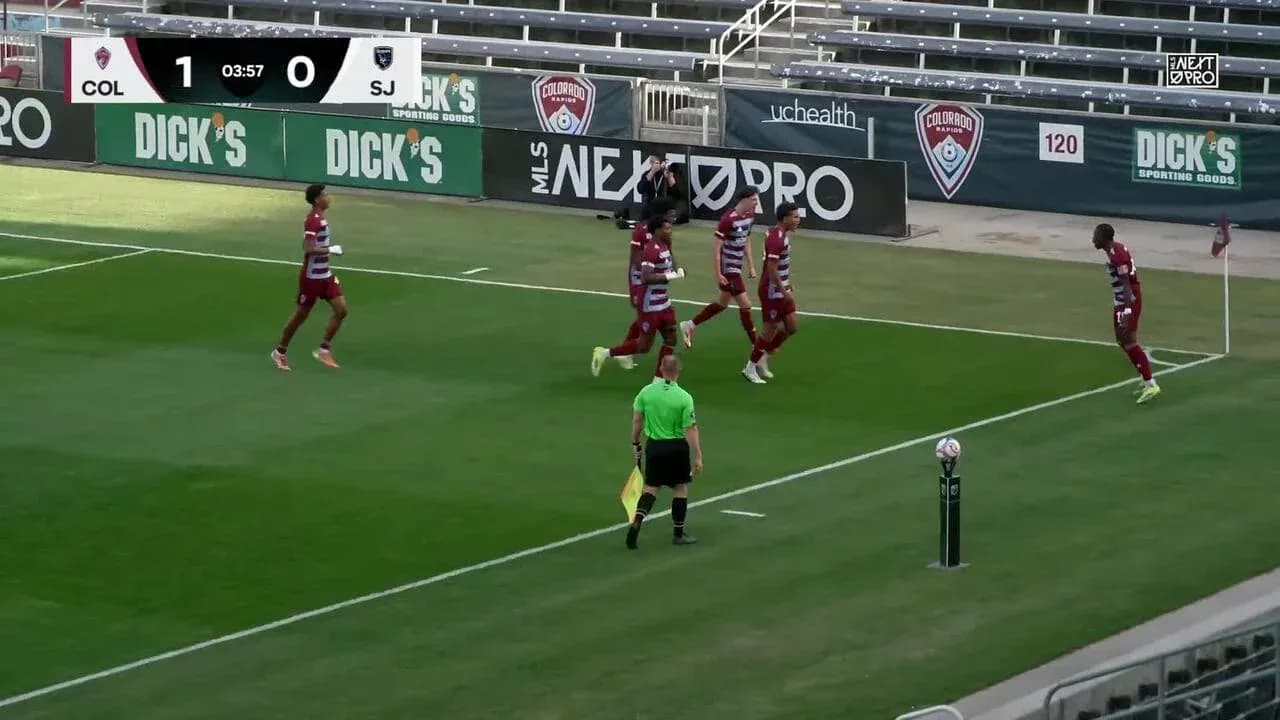
Under the lights at CIBER Field, Colorado Rapids II’s long, bleak start to the MLS Next Pro season met the opportunism of Sporting KC II – and the 3–1 full-time scoreline crystallised where these two projects currently stand.
Following this result, Colorado remain rooted in trouble. Across the season in total they have played 9 matches, lost all 9, and their overall goal difference in the standings is -12, with 10 goals for and 22 against. The season statistics sharpen that picture further: in total they concede an average of 2.8 goals per game, with that figure climbing to 3.0 at home. The updated goals-against tally in the stats (25) underlines how porous they have been even if it does not yet align perfectly with the standings snapshot.
Sporting KC II arrive from a different kind of chaos. In total they have played 12 games, winning 3 and losing 9, with 14 goals for and 29 against in the standings – a goal difference of -15. Yet the trend line is more hopeful: their form string of “WLLLW” in the table hints at a side that, for all its volatility, is starting to pick its moments. On their travels they have been more efficient, with 2 away wins from 4 and 7 goals scored against 9 conceded.
This match – a group-stage clash in MLS Next Pro’s Frontier Division – therefore felt less like a meeting of heavyweights and more like a stress test of resilience and structure. Colorado’s season-long form line of “LLLLLLLLL” and zero wins heading in meant they were searching for identity as much as points. Sporting KC II, meanwhile, saw a chance to turn sporadic promise into something more stable.
Tactical Voids and Structural Fault Lines
With no formal absences listed, both coaches – Erik Bushey for Colorado Rapids II and Istvan Urbanyi for Sporting KC II – had access to deep benches, but the tactical voids came not from missing names, rather from systemic weaknesses.
Colorado’s defensive structure has been their undoing all campaign. At home they have conceded 15 goals in 5 matches in total, an average of 3.0 per game. That fragility forces Bushey into a constant balancing act: how many attacking profiles can he field without exposing an already vulnerable back line? Here, he turned again to Z. Campagnolo between the posts, shielded by a young and relatively inexperienced defensive unit featuring the likes of J. De Coteau, G. Gilmore, K. Sawadogo and J. Cameron.
The midfield core of K. Stewart-Baynes, L. Strohmeyer and A. Fadal was tasked with compressing space and protecting transition lanes – a particular issue given Colorado’s tendency to concede in clusters. Their disciplinary record hints at a reactive, often desperate defensive posture: 33.33% of their yellow cards come between 31–45 minutes, and another 23.81% between 61–75 minutes, suggesting repeated late challenges once the game’s tempo rises. Red cards are spread evenly in four consecutive 15-minute bands (16–30, 31–45, 46–60, 61–75), each with 25.00% of their total, indicating that when Colorado are stretched, they can lose control.
Sporting KC II, by contrast, arrived with their own structural cracks but more clarity. In total they concede 2.6 goals per game, both at home and overall, and 2.5 away – still high, but marginally more manageable than Colorado’s figures. Urbanyi’s choice of starters – J. Kortkamp in goal, protected by a line including J. Francka, P. Lurot, N. Young and Z. Wantland – pointed to a compact, athletic back four. Ahead of them, G. Quintero and Z. Loyo Reynaga offered the dual role of screen and distributor, while B. Mabie, M. Rodriguez and K. Hines provided vertical thrust behind centre-forward S. Donovan.
Disciplinarily, Sporting KC II are more controlled. Their yellow-card spread peaks at 20.00% in three windows (16–30, 31–45 and 76–90), with a notable 13.33% in both 46–60 and 61–75. That pattern suggests a team that plays on the edge during momentum swings but avoids the kind of meltdown that leads to reds; they have no red cards recorded in any time band.
Key Matchups – Hunter vs Shield, Engine Room vs Enforcer
Without explicit top-scorer data, the “Hunter vs Shield” duel is more conceptual than individual, but the shapes are clear. Colorado’s front line – M. Diop flanked by the likes of C. Aquino and J. Copeland – must operate against a Sporting KC II defence that, on their travels, concedes 2.5 goals per game in total. That is not an impregnable shield, but it is sturdier than Colorado’s own, and away from home Sporting have already shown they can absorb pressure and still find goals, with 7 scored in 4 away fixtures.
For Colorado, the real battleground is their own box. Across the season in total they have failed to keep a single clean sheet, and have conceded 25 goals in 9 games per the stats. Sporting’s attack, modest in total output (15 goals overall, 8 of them away), is nonetheless more efficient on the road, averaging 2.0 goals per away game. The pressure point is obvious: if Colorado’s back line cannot reduce Sporting’s away average, the game quickly tilts beyond their reach.
In the “Engine Room” duel, L. Strohmeyer and A. Fadal represent Colorado’s attempt to build a platform while simultaneously firefighting. They must contend with G. Quintero and Z. Loyo Reynaga, who are central to Sporting’s transitions. Sporting’s scoring pattern – better away than at home – hints at a midfield that thrives in broken-field situations, springing runners like M. Rodriguez and K. Hines once the first line of pressure is beaten.
Statistical Prognosis and Tactical Verdict
From an xG-style lens, even without explicit Expected Goals numbers, the shot-quality story writes itself through volume and averages. Colorado score 1.2 goals per home game in total but concede 3.0. Sporting KC II, away, score 2.0 and concede 2.5. Overlay those trajectories and the most likely match script is Colorado needing to overperform their usual attacking output while simultaneously producing a defensive display well above their season norm.
Penalties offer a small but telling subplot. Colorado have yet to win a penalty this season and have neither scored nor missed from the spot. Sporting KC II, on the other hand, have taken 1 penalty in total and converted it, a 100.00% success rate with no misses. In tight moments, that composure from 12 yards can be decisive.
Following this result, the numbers reinforce the narrative: Colorado’s search for a first win continues, and their defensive structure remains the central problem to solve. Sporting KC II, though still carrying a negative goal difference of -15 overall (14 scored, 29 conceded), have shown again that their away blueprint – compact, opportunistic, and disciplined – can tilt chaotic games in their favour.
For Colorado, the tactical preview of the weeks ahead is clear. Bushey must stabilise the back line, reduce the need for last-ditch, card-inducing interventions in that volatile 31–45 and 61–75 window, and find a way to turn the promise of players like M. Diop, C. Aquino and J. Copeland into sustained pressure rather than isolated moments.
For Sporting KC II, Urbanyi’s task is subtler: preserve the away-game efficiency, tighten the defensive margins just enough to drag that 2.5 away goals-against average down, and build around the chemistry of his current XI. If they can do that, this 3–1 win at CIBER Field may be remembered as the night their erratic season began to harden into something more coherent.