Chelsea's Transfer Window Drama: Balogun, Camara, and Missed Opportunities
They thought they were being clever. Instead, as one source with links to both clubs put it, Chelsea and Monaco “played with fire and got burned”.
What unfolded over the final hours of the transfer window was a late‑night tangle that left everyone bruised. Folarin Balogun never signed for Everton. Lamine Camara never joined Chelsea. Monaco never banked the money they wanted. All three clubs walked away feeling short-changed.
Chelsea’s plan after Enzo
Chelsea went into deadline day preparing to wave goodbye to Enzo Fernandez and his £125m move to Manchester City. The plan was clear: sell the World Cup winner, then drop some of that money into a new midfielder. High on the list was Camara, the 22-year-old Senegal international who has been one of Monaco’s brightest assets.
Monaco’s stance was just as clear. Camara was not leaving for the money Chelsea were putting on the table.
“I've been speaking to them for the last 10 days,” Monaco sporting director Thiago Scuro said. “At around 16:00 BST yesterday we got contact from Chelsea. The answer was the same: no.”
So Chelsea looked elsewhere, sounding out Roma’s Manu Kone and other options. Nothing stuck. Even so, as the final hours ticked down and Enzo’s sale loomed, there was no sense of panic at Stamford Bridge. They believed they could live with what they had.
Balogun to Everton – then the twist
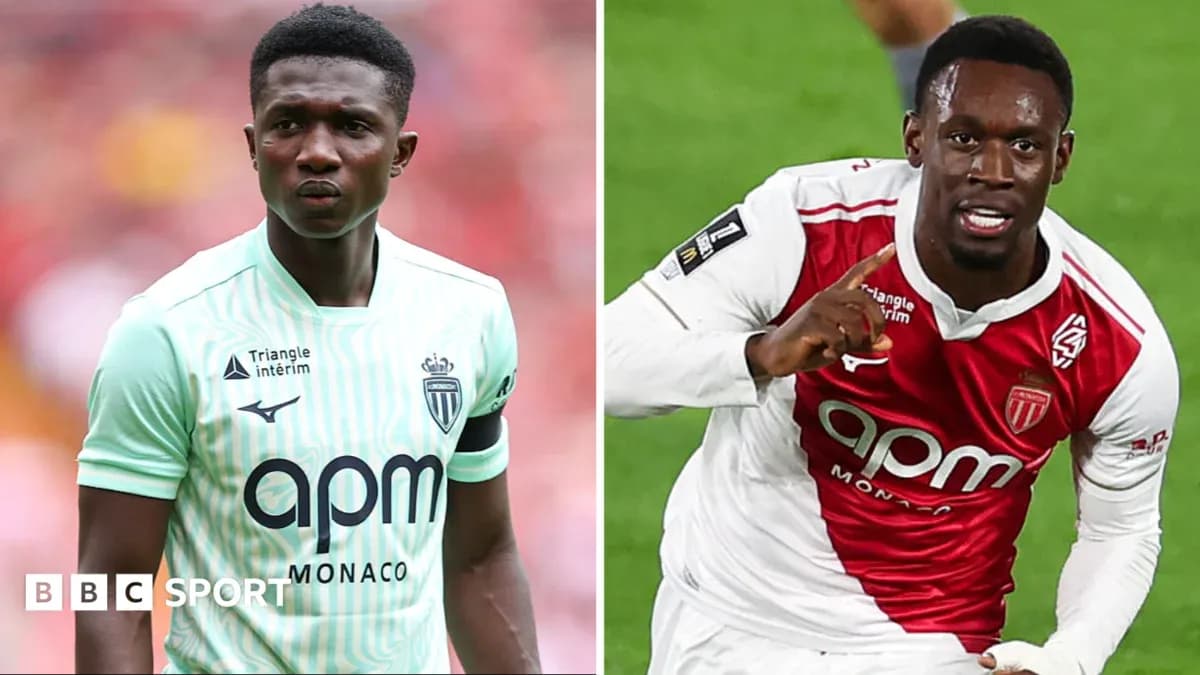
While Camara stayed put, Monaco did sanction one big outgoing. United States striker Balogun, 25, was allowed to fly to Merseyside to complete a £40m move to Everton. Camara, Monaco say, had already agreed to stay.
With three hours left in the window, Chelsea were relatively calm. Enzo was on his way out, but the club had decided they would only move for a replacement on their terms. No inflated fees, no last‑minute scramble.
Then Balogun’s medical at Everton threw everything back into chaos.
Problems flagged in the tests. The £40m transfer stalled. Suddenly, the door that had been slammed shut on Camara creaked open again. At the £47m price point Chelsea had previously floated, Monaco were ready to talk.
Negotiations restarted at 20:00 BST. Chelsea moved quickly, completed all the paperwork and, crucially, did not even need to submit a deal sheet to the Premier League. Camara spoke to Xabi Alonso, passed his medical, signed a contract to 2033. From Chelsea’s side, the deal was done.
Everton, meanwhile, were scrambling. Their hunt for alternatives to Balogun led nowhere. As the clock bled into the final minutes, they circled back to the American.
Monaco’s U-turn
Then came the late twist that detonated Chelsea’s plan.
“What happened was that around 22:00 BST our time, maybe a bit earlier, Everton realised there was no issue and decided they were ready to sign the contract [for Balogun],” Scuro told reporters on Wednesday.
“As soon as we received that information, we came back to Chelsea and said there was no deal. Because that's also fair. It's part of the game.”
From Monaco’s perspective, the logic was simple. They needed a major sale to ease pressure from Uefa’s financial regulations. The club had targeted 150m euros in outgoing transfers this summer and had reached 106m euros. Balogun’s £40m move to Everton, supported by a deal sheet filed five minutes before the 23:00 BST deadline, appeared to give them exactly that.
Chelsea were furious. They say Monaco informed them in writing that the Camara transfer was off rather than picking up the phone for a direct call. Monaco, for their part, accepted that Camara was disappointed. He had spoken to Alonso, completed his medical, signed his long-term deal. Then, in an instant, it was gone.
Scuro stood his ground.
“We had to respect his decision,” he said of Balogun. “We found solutions, challenged the medical assessment and worked through the issues.
“I don't want to create a war with Chelsea or Everton. My role is to protect Monaco and act in the club's best interests. That's what I've done since I arrived. It's not about being loved by people outside the club. It's about doing what Monaco needs.”
Balogun walks away
Monaco thought they had their sale. Everton thought they had their striker. Chelsea thought they had their midfielder.
Then, in the early hours of Tuesday morning, Balogun walked out.
The former Arsenal forward left Everton’s Finch Farm training ground without signing. Scuro says Balogun felt he had been mistreated during his time there, an accusation Everton strongly dispute. Whatever the detail, the outcome was stark: no deal.
The domino effect was brutal. Monaco still needed money. Chelsea still needed a midfielder. Everton still needed a striker. Nobody got what they wanted.
Scuro admitted Monaco may now have to turn to markets where the window remains open to bring in funds. For all the drama, he insists both Balogun and Camara would be welcomed back.
He expects Camara to return with “full power” for Friday night’s trip to Paris St‑Germain. The midfielder, who had one foot in London, is now being asked to reset and lead Monaco into one of their toughest fixtures of the season.
“I really understand because a player can get excited by conversations with a coach and by everything a club like Chelsea can offer,” Scuro said.
“This is not the end of the world. It's one opportunity. For a player with his level of talent, I'm very confident he will soon have even better options and offers than the one he had yesterday.”
Sources close to Camara suggest Liverpool’s long-standing interest remains alive for the future.
Chelsea’s midfield gamble
Inside Chelsea, Camara had been under consideration for the final 10 days of the window as the preferred Enzo replacement. They could have forced the issue earlier, but that would almost certainly have meant overpaying. Monaco, as sources put it, viewed Camara as “not for sale” for most of the summer, outside of that brief window on Tuesday evening when circumstances changed.
When the deal collapsed, Chelsea were blindsided. By that point, there was virtually no time left to pivot to an alternative. Technically, they could have pulled the plug on Enzo’s move to City. They chose not to, describing the decision as one rooted in “professionalism”.
They wanted a midfielder, yes, but not at any cost. Not on someone else’s terms.
Alonso now leans heavily on Reece James as a central option, alongside Moises Caicedo, Romeo Lavia and new arrivals Jordan Henderson and Valentin Barco in a 27-man squad. Injuries to Caicedo and Henderson, plus the physical load on James, have already forced improvisation.
In the 4-3 win over Brighton, full-back Malo Gusto was pushed into midfield. Chelsea saw just 25.6% of the ball, their lowest possession figure since records began in 2003-04. Barco, 21, did come on as a second-half substitute, but the club are treading carefully with the former Strasbourg man after his brief, stuttering spell at Brighton.
Inside and outside the club, the argument rumbles on: is this midfield deep and good enough to carry Chelsea through to January?
The option to return for Camara in the winter is very much alive. So is the possibility of targeting another midfielder or strengthening elsewhere. For all the chaos, Chelsea are pleased with the broader picture: a net profit in the market, a squad they believe has been upgraded, and room to manoeuvre when the window reopens.
They have brought in World Cup winner Emiliano Martinez, France international Maxence Lacroix, club-record £117m signing Morgan Rogers, experienced striker Danny Welbeck and full-backs Pep Chavarria and Marco Palestra.
The board have moved their pieces. The window is shut. The numbers are locked.
Now it is on Alonso and the squad in place to justify those decisions, starting with a trip to champions Arsenal on Sunday that will show whether this midfield gamble can survive the Premier League’s sharpest tests.