Chelsea Stumbles Again Against Hull in 2-2 Draw
Hull refused to play the part of grateful visitors. They came to Stamford Bridge with a plan, with nerve, and with enough quality to stretch Chelsea to breaking point. By the end, a 2-2 draw felt like the very least Sergej Jakirovic’s side merited. Their unbeaten charge at the start of the season rolls on; their reputation as a promoted side to be patronised most certainly does not.
This was the first league game this season in which Chelsea truly monopolised the ball. It did them few favours. Xabi Alonso’s team still look chaotic without it, still concede at a rate of two a game, and still cannot shake a nagging habit of stumbling at home to newly promoted opponents. The winless run in those fixtures is now five. Hull, organised and ruthless, made sure of that.
Chelsea’s fast start, Hull’s ruthless reply
Alonso had tried to redraw the blueprint. Maxence Lacroix dropped out, the back three was shelved, and Chelsea lined up in a 4-2-3-1. It was bold, it was attacking, and for a few early minutes it looked like a masterstroke.
Seven minutes in, Chelsea pounced. Hull sent men forward for a corner; Chelsea left four upfield and sprang. One scorching counter later, João Pedro slipped in Morgan Rogers on the left. Rogers skipped past Regan Slater and drilled a low finish inside Konstantinos Tzolakis’s near post. Clinical. Slick. Exactly what Alonso wants this team to be.
Hull looked in danger of being dragged into Chelsea’s favourite kind of game: stretched, frantic, full of space to run into. Pedro Neto almost doubled the lead with a drive from the right that Tzolakis pushed away. At that stage, Chelsea were strutting.
Then they simply stopped sensing danger.
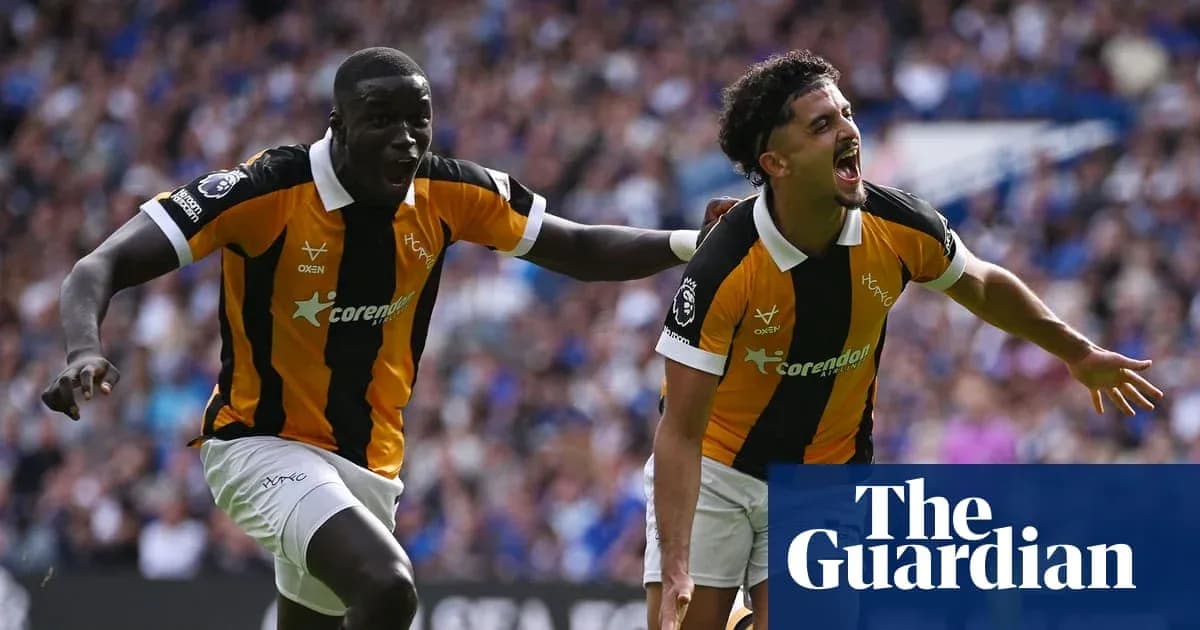
Tzolakis launched a routine clearance into Chelsea territory. Malo Gusto hesitated, then lost out in a physical duel with Ryan Giles. The Hull left-back hooked a cross to the far post, where Jorrel Hato misjudged the bounce. Mohamed Belloumi didn’t. He arrived, unmarked and unhurried, and lashed a ruthless finish beyond Emi Martínez. One hopeful ball, one lapse, one goal. Hull were level and suddenly snarling.
Chelsea unravelled. Basic defensive habits vanished. The spaces grew, the marking loosened. Another attack down the left unsettled them again. Belloumi helped the ball on, Lewie Coyle arrived untracked from deep, and his low effort beat Martínez only for Levi Colwill to hack clear from the line.
Chelsea did not wake up. From the resulting corner they were shambolic. Martínez flapped at the delivery, Semi Ajayi climbed highest and thudded a header against the bar, and the loose ball dropped to the most confident player on the pitch. Belloumi swung his boot first time. A deflection wrong-footed Martínez and Hull, improbably but deservedly, led.
From there until the interval, Chelsea hammered away at an orange-and-black barricade. Possession meant little. Territory meant less. Hull sat in, squeezed space, and relished every clearance. Alonso, who had sparked a Carabao Cup turnaround against Leeds with a ferocious half-time team talk, this time turned to his bench. Hato made way for Pep Chavarría at the break. Chelsea needed clarity and control. They got anxiety and impatience.
Hull dig in as Chelsea lose their way
Hull emerged for the second half in containment mode, but not in retreat. They defended high when they could, dropped when they had to, and trusted Ajayi and Nobel Mendy to dominate their box. Cross after cross came in. Time after time, Hull’s centre-backs rose and cleared.
Reece James tried to drag Chelsea back into it with a whipped free-kick that Tzolakis beat away. Open play was a different story. Chelsea’s patterns were slow, their ideas predictable. The home crowd grew restless as Hull took their time over goal-kicks and throw-ins, every pause another twist of the knife.
A nasty clash of heads between João Pedro and Mendy brought a long stoppage. Mendy could not continue and Lucas Herrington replaced him, a blow for Hull’s defensive structure. It did not break their resolve. If anything, it sharpened it.
They almost landed a knockout punch. Slater’s shot squirmed out of Martínez’s grasp and fell invitingly for Oli McBurnie. The rebound looked certain to be 3-1, but Martínez recovered brilliantly to block. Stamford Bridge exhaled. It felt huge. It was.
Because that escape jolted Chelsea. Cole Palmer, subdued until then, suddenly came alive. The No 10 drove down the left with rare directness, Hull’s back line backing off for the first time. Palmer’s cutback was precise, João Pedro’s finish emphatic – a rising strike that gave Tzolakis no chance. Chelsea were level, not because they had solved the puzzle, but because their two most inventive players forced it open.
Still, control eluded them. Alonso tried to tilt the game by introducing Danny Welbeck and shuffling his front line, with Gusto making way. Welbeck’s movement immediately carved out an opening for Palmer, who curled over from a promising angle. Palmer then slid a clever pass into Rogers, only for Tzolakis to stand tall and deny the £117m forward.
Jakirovic’s Hull refuse to fade
Jakirovic refused to settle. His changes were not about clinging on; they were about carrying a threat. Hull’s substitutes injected fresh legs and, crucially, fresh ambition. Brooke Norton-Cuffy surged forward and saw a shot blocked. Mohamed-Ali Cho, on in the closing stages, found himself with the chance to steal all three points. He shot straight at Martínez from close range, a huge opportunity spurned.
Even so, Hull finished the game with their heads high and their position in the table underlined. Third place, unbeaten, and leaving Stamford Bridge knowing they could – perhaps should – have taken everything.
Chelsea, by contrast, walked off with more questions than answers. Possession without control, territory without security, goals without stability. For all the talk of Alonso’s new era, his team still look one bad clearance away from chaos every time they defend.
Hull exposed that. How many more will?