Canada’s Historic World Cup Win Marred by Koné Injury
Canada finally had its World Cup moment. A 6–0 win, a hat trick from Jonathan David, a statement to the rest of Group B. Yet as the crowd in Vancouver roared, the night turned cold in an instant.
Ismaël Koné lay on the turf, screaming.
The 24-year-old midfielder went down in the second half after a brutal tackle from behind by Qatar’s Assim Madibo, his left leg caught and twisted under him. Players sprinted toward the incident, waving frantically to the bench before they even reached Koné. Some turned away when they saw the damage.
“I saw his leg. I saw that something wasn't right,” captain Stephen Eustáquio said later, still shaken. He was one of the first to reach his teammate.
The tackle brought an immediate red card for Madibo, who had left Koné in a heap just yards from the Canada bench. Jesse Marsch and his staff heard what the coach later described as the “bones snap.” The sound cut through the noise of a World Cup crowd.
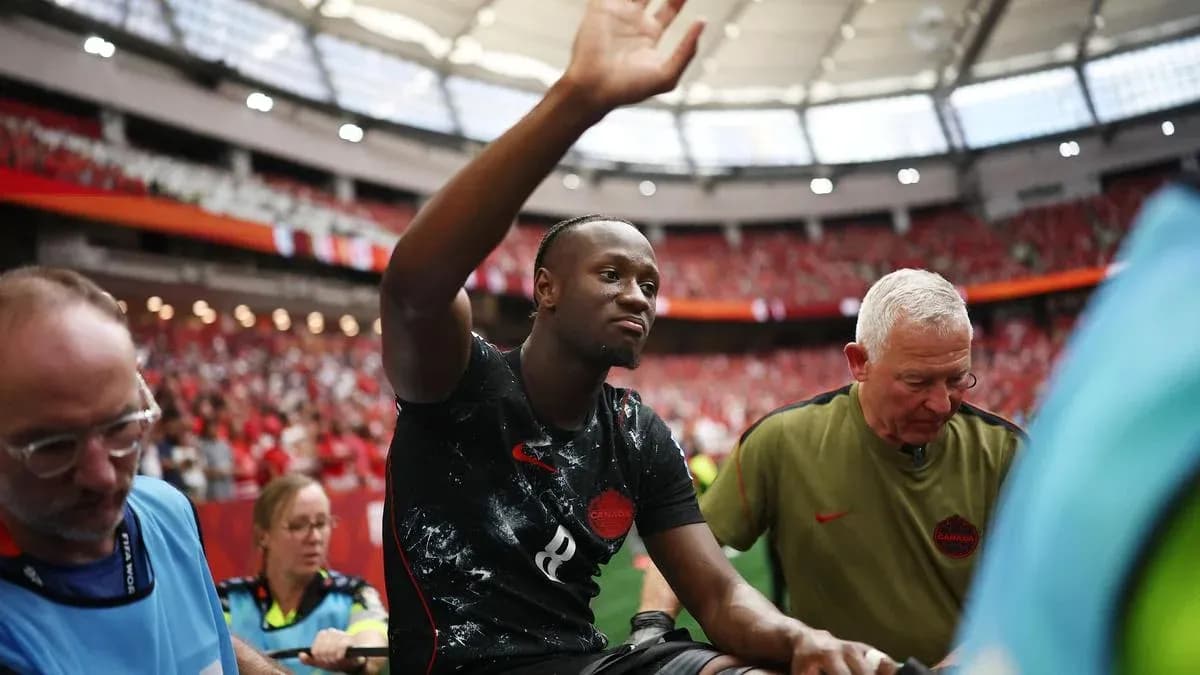
For long minutes, the match stopped being a match. Canadian players formed a protective ring around their teammate as medical staff worked on him, shielding him from cameras and the stadium’s gaze. Koné was eventually stretchered off, his teammates’ faces telling the story the stadium already knew: this was bad.
He was rushed to a local hospital and prepared for surgery, surrounded by family, Marsch confirmed. The full extent of the damage has not yet been released, but images from the field showed a lower left leg that looked clearly, horrifyingly broken.
“Everybody was crushed when it happened, but we had to find a way to stay focused, we knew that Ismaël wanted us to finish the job," Marsch said. "There's a lot of thoughts that go through our heads right now, we're all thinking about him, but we're all very proud of what we are.”
Madibo later offered a personal apology to Koné, according to Marsch. On the pitch, though, his dismissal left Qatar down to nine men, with Homam Ahmed already sent off in the first half. The contest, as a contest, was over. The emotional test for Canada was only beginning.
The response was ruthless, and deeply human.
Less than 10 minutes after coming on as Koné’s replacement, Nathan Saliba arrived in the box to score Canada’s fourth goal. He didn’t celebrate for himself. He grabbed Koné’s jersey, lifted it high, and held it to the crowd. The stadium erupted, not in joy, but in defiance and solidarity.
The goals kept coming. David, already the centerpiece of Canada’s attack, completed his hat trick in the rout. Yet even he could not hide his anger at the challenge that changed the night.
“If there's a play where you cannot win the ball, there's no point,” David said. “It's just to hurt people.”
On a night that should have been remembered purely for history — Canada’s first-ever World Cup victory, a 6–0 demolition on home soil — the story became something darker, more complicated. Triumph wrapped around trauma.
Eustáquio didn’t try to dress it up.
“We're going to miss (Koné),” the captain admitted. “He has that X factor that our team really needs.”
Canada walked off the field with three points, six goals and a statement to the tournament. But as they left, their thoughts were already at the hospital across town, with the midfielder whose injury had jolted them, then galvanized them.
Their World Cup has truly begun. The question now is how far they can go without the player who helped bring them here — and whose absence they’ll feel every time they look at that empty place in midfield.