
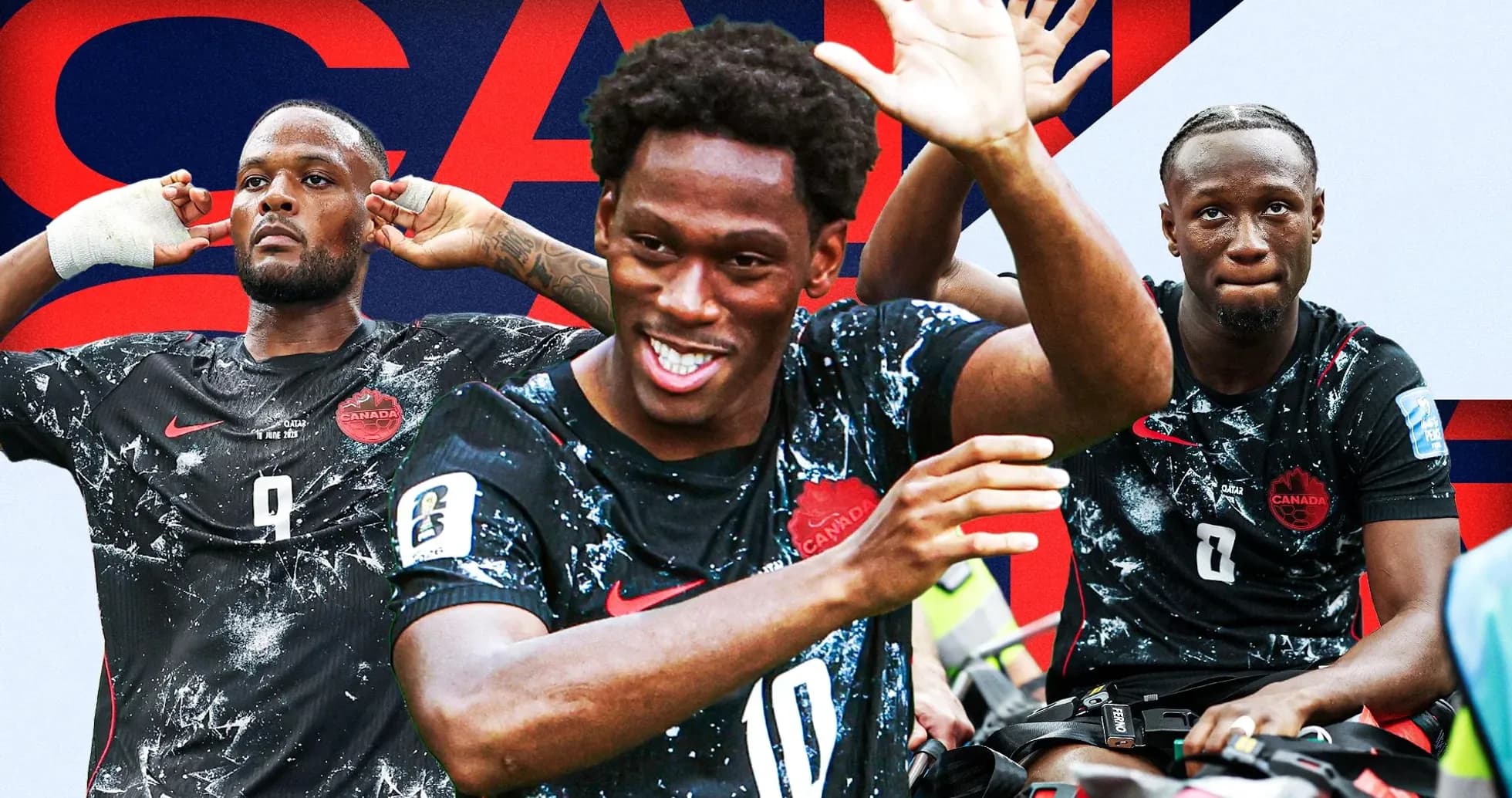
Canada Dominates Qatar: Jonathan David's Hat-Trick Shakes Off Doubts
Jonathan David walked into this World Cup week with questions swirling and criticism humming in the background. By the final whistle against Qatar, the noise was gone. Buried under a hat-trick, a statement performance, and a 6-0 demolition that announced Canada as something far more dangerous than plucky co-hosts.
They looked like they belonged. David made sure everyone knew it.
David answers the noise
Dragged off before the hour in the opening draw with Bosnia and Herzegovina, the Juventus striker spent days under the microscope. His response was as simple as it was ruthless: run, press, finish. Let the goals talk.
From the opening minutes, his intent crackled. He hounded Qatar’s defenders, snapped into duels, hunted second balls. Sixteen minutes in, that aggression broke the game open. David unleashed a thunderous right-footed volley, the ball cannoning off the keeper and dropping perfectly for Cyle Larin to sweep home his second goal of the tournament.
The pressure had barely eased when Canada sliced Qatar apart again. A sharp, triangular exchange down the right – Tajon Buchanan into Alistair Johnston, back into David – and the striker did what elite forwards do. One touch, then a precise, controlled finish for his first World Cup goal. The doubts that had followed him into the night started to evaporate.
Later, the roles reversed. Larin took on the initial effort, David followed in like a freight train and buried the rebound. Qatar’s resistance disintegrated, and Canada smelled blood.
In stoppage time, David twisted the knife. Another burst, another finish, Canada’s sixth of the evening and his third of the night. With it, he became the first Canadian ever to score a hat-trick at a World Cup, a landmark moment delivered with icy composure rather than wild celebration. The joy was there, but it was tempered. Everyone could see Ismaël Koné on the sideline.
“It was amazing. After every goal, it got louder and louder,” David said of the crowd. “It gave us motivation to get the next goal and the next goal.”
For a player accused of shrinking in the biggest moments, this was a resounding rebuttal. Already his country’s all-time leading scorer, he moved to 42 international goals and finally looked like the confident, ruthless version of himself Canada had been waiting to see.
“That’s a player, that's a striker, that's a goal scorer. I never had any doubts in Jonny, and the one thing I said is, for us to really be successful as a team, we need Jonny driving what we do in the attacking part of the pitch,” head coach Jesse Marsch said. “He set up the first goal with the shot, then he obviously scored the hat trick, but I thought he was fantastic in general.”
David wasn’t the only forward to flip the script. Heading into the opener against Bosnia, the noise had been about Larin’s form, loud enough that Marsch dropped him from the starting XI for Tani Oluwaseyi. Two games later, Larin has scored in both matches. The doubters on one striker quieted in Toronto; the doubters on the other were silenced in spectacular fashion here.
A brutal cost: Koné goes down
For all the swagger in attack, Canada left with a hole in their midfield that could reshape the rest of their tournament.
Koné had been the hinge of their transitions, the player who could glide away from pressure, punch passes through compact lines, and change the tempo with a touch. His “elusive moments on the ball,” as the staff call them, were central to how Canada moved from defence to danger.
Then came the snap.
“You could hear the bone snap,” Marsch said afterwards, confirming Koné had gone to hospital for surgery. “Your heart goes out to him. Everybody’s shaken for him.”
There has been no official timeline, but the expectation around the camp is grim: Canada may have to play the rest of this World Cup – and possibly much longer – without the one midfielder on the roster who combines line-breaking passing, press resistance, and that rare calm in tight spaces. There is no like-for-like replacement.
They do have options. Alphonso Davies is coming back into the fold. Saliba stepped off the bench for Koné and promptly scored from a free kick, a bright moment on a dark night for the midfield. They are, as Marsch keeps repeating, built on a “next man up” mentality after injuries ravaged their preparation.
Still, this is different. This is the heartbeat of their central game plan gone in an instant.
“For us to be at our best, he's a big part of it. But, look, it's given us now something else to play for," said Alistair Johnston. “That's what this team is all about, it really is a brotherhood. So it's really difficult to see one of your brothers go down. But, look, if we needed any extra motivation for this tournament, we got it now.”
Johnston walks the tightrope, then takes over
Johnston played like a man balancing on a wire all night – and somehow never slipped.
One yellow card would have ruled him out of the Group B finale against Switzerland. Lesser players would have dialed it back, played within themselves. Johnston did the opposite. The Celtic fullback snarled into tackles, overlapped relentlessly, and became a central figure in Canada’s wide overloads with Buchanan, Koné, and David.
He threaded the assist for Canada’s second goal, then kept creating. By the end of the night he had four accurate crosses and six big chances created, numbers that underline just how often he bent Qatar’s back line out of shape. Crucially, he did it all without drawing the caution that would have sidelined him, keeping him available for the group decider, with cards wiped before the Round of 16.
Tactically, Canada leaned hard into his flank.
“We knew that the idea was kind of to build up against the Akram Afif. He's a maverick; you could see some of the quality he had on the ball. Defensively, though, the idea was to play against him, make him defend, because we didn't think he was going to,” Johnston explained. “We're trying to find that balance of me being in the defensive three in a build-up, but then also give me the license, as I have with my club, to really join in and help Tajon.”
When Koné went down, Johnston’s role shifted from tactical fulcrum to emotional anchor. One of the most vocal figures in the dressing room, he moved quickly to console shaken teammates while glancing repeatedly toward the stricken midfielder. It was a glimpse of why his presence matters as much off the pitch as on it.
Qatar crumble again
On the other side, Qatar unravelled in a way no team had managed to in this tournament so far.
Four years after finishing bottom at their home World Cup, they arrived with talk of lessons learned and scars turned into steel. That story never materialised. Against Canada, they looked overwhelmed, unprepared for the speed, aggression, and clarity of a side determined to impose itself.
There had been signs of resilience in their 1-1 draw with Switzerland, where they defended with grit and snatched a late equaliser to earn a point. Those qualities deserted them here. Once Canada’s first goal went in, panic seeped into their shape. As David and Larin took turns twisting the knife, Qatar’s structure fell apart.
Head coach Julen Lopetegui, a veteran of some of the sport’s biggest stages, could not steady them. The touchline instruction, the gesturing, the adjustments – none of it stuck. His team will now almost certainly exit Group B and must play their final match without two starters. If this is the level they plan to carry into the next cycle, a return to the World Cup could be a long way off.
Canada’s ceiling shifts
Strip away the emotion and the injuries, and one thing is clear: Canada didn’t just compete. They dominated. Without Davies, their captain and superstar, they still produced a performance that felt like a warning shot to the rest of the group.
They have forwards rediscovering their edge. Larin, questioned and briefly dropped, now has a goal in each game. David, doubted on the biggest stage, left with the match ball and a nation exhaling in relief. Behind them, a system that looks increasingly sure of itself, even as it absorbs blow after blow on the injury front.
The Switzerland game now carries a different weight. It’s not just about reaching the knockouts; it’s about playing for the top of the group, for seeding, for belief. Davies should be back. Johnston is available. The attack is humming.
What they no longer have is Koné, the midfielder who made their transitions sing.
So the question facing Canada is no longer whether they belong at this World Cup. That has been answered, emphatically, under the lights against Qatar. The real test now is whether this group can take the loss of its most gifted midfielder, turn it into fuel, and keep marching into the tournament’s biggest moments with his name quietly driving them on.





