Bradley Barcola's Journey to Liverpool: A Dream Realized
Bradley Barcola used to talk about Liverpool when he was barely a teenager, long before the money, the trophies and the Champions League nights.
“As a kid, he always spoke to me about Liverpool,” recalls Amaury Barlet, one of his youth coaches at Lyon. So when the call finally came from Anfield, the 24-year-old barely paused for breath. No haggling, no doubts. As he put it in his first interview after the move: he “didn’t ask any questions”.
Liverpool have paid £123m (€143m) to turn a boyhood fixation into reality. For Barcola, it is the end of one long wait and the start of another: the wait to see whether he can be the winger this team has been crying out for.
From Lyon late bloomer to PSG record sale
Barcola arrives on Merseyside by way of Paris Saint-Germain, where he spent three seasons and learned how ruthless elite squads can be. He is a product of Lyon’s academy, though, and it was there, in one of the club’s routine interviews with returning youth players, that he first confessed the scale of his Liverpool obsession.
“When he was 15, 16, it was his dream [to play for Liverpool],” says Barlet. “Maybe that changed when he was 19 or 20 ...” It clearly did not.
Despite a contract at PSG that ran until 2028 and a place in a star-studded attack, Barcola made leaving this summer a priority. He had the talent to belong among the club’s world-class forwards, but not the guaranteed status. Last season he started every Champions League match up to and including the last-16 second leg against Chelsea. Then the door quietly closed. From the quarter-finals onwards, he watched the biggest games from the bench.
He has featured in the past two Champions League finals, but only as a substitute. That stung. And then came Khvicha Kvaratskhelia.
Luis Enrique’s decision to sign the Georgian in January 2025 made the picture brutally clear. Barcola could not yet influence games as effectively on the right or through the middle, and Kvaratskhelia’s arrival squeezed his minutes in the matches that matter most. Logic took over. If he wanted to be a leading man, he would have to leave.
Yet he did not storm his way out. PSG, European champions and a club accustomed to noisy departures, found themselves dealing with something unusual: a record sale without the drama.
A €143m move and no slammed doors
Barcola’s World Cup form with France, where three of his six international goals came at the most recent tournament in North America, made him a premium asset. PSG cashed in at the perfect moment.
They paid €45m to sign him from Lyon. Liverpool’s fee means PSG make close to a €100m profit on a player who never quite nailed down an undisputed starting role. He leaves as the most expensive sale in the club’s history, overtaking the €90m received from Al-Hilal for Neymar, and a central figure in a summer that brought in around €350m in player sales – a record for a Ligue 1 side.
Inside the dressing room, he will be missed. Team-mates flooded social media with goodbye messages, a measure of his popularity. At board level, there is no bitterness either. PSG did not exile him from matchday squads at the start of this season as punishment; the club wanted to protect an asset whose future was being thrashed out behind the scenes.
“He’s got good people around him,” says Barlet, who coached him at under-12 and under-13 level and again at under-16s. “His parents always said the same things as us, the coaches ... I know his family. He has the perfect entourage to come through at an academy.”
The evidence is not just Bradley. His older brother Malcolm, a goalkeeper, also carved out a professional career and now plays for Ittihad Tanger in Morocco after coming through at Lyon. Neither brother was rushed. Malcolm bloomed late; by modern standards, Bradley did too.
At Lyon, the staff resisted the temptation to fast-track him through the age groups. He did not make his first-team debut until 19, a stark contrast with Rayan Cherki, who played for Lyon at 16. Barlet remembers why.
“He wasn’t small, but he was ... very fresh,” he says. “He was very thin. He hadn’t yet grown. At under-16s, he played the whole year with us, apart from a couple of games with the under-17s at international level in April-May. He was someone we were waiting to develop on an athletic level.”
When the growth spurt arrived, the impact was immediate. Barcola broke into Lyon’s senior side midway through the 2021-22 season and needed just one full campaign to convince PSG to pay big money.
From fox in the box to transition specialist
The player Liverpool have signed is widely viewed as a winger, but that is not how he started.
“He was a bit of a fox in the box; he scored a lot of goals,” Barlet says. “He scored acrobatic volleys, toe-pokes, left foot, right foot ... it was just his heading that wasn’t necessarily his strong suit.”
His delayed physical development shaped his instincts. Lighter and less powerful than many of the defenders he faced, he looked for ways to beat them before the contact came.
“Because he was playing against defenders that were stronger than him, he always wanted to get ahead of them,” Barlet explains. “He was very often offside ... he is always someone who has had a habit of making a lot of runs in behind the defence.”
Those runs have become his calling card. The numbers back it up. His most prolific season came in 2024-25: 21 goals and 21 assists, a staggering return for a wide forward. Yet doubts lingered in France about his end product. The volume of chances he created and took sometimes came with a streak of wastefulness.
One particularly erratic display against Newcastle in the Champions League in November 2023 prompted a pundit to label him a “little lamb”. Barcola’s response was to shut out the noise.
“I didn’t know what was being said about me, but I knew that there would be criticism,” he told Le Parisien. “I don’t pay any attention to it, whether what they say is good or bad.”
He listens to a smaller circle.
“I don’t have many friends. I have very few, in fact, so when they say, ‘You’re doing something stupid,’ it is because they’re right, and if they say that I played well, it’s also because it’s true. I don’t listen to what is said on the outside. To be completely honest, it’s my friends who send me the things [being said] in the media. Sometimes we laugh about it, but it doesn’t go any further than that.”
That narrow filter, in a city like Liverpool and a league like the Premier League, might be his greatest protection.
Loyalty, edge and the Liverpool fit
Barlet remembers a competitor as much as a technician. As a youth, Barcola was close to Castello Lukeba, now at RB Leipzig, and Billy Koumetio, the former Liverpool defender who is currently at Charlton. The trio pushed each other hard.
“He’s a very loyal person,” Barlet says. “When he was young, he had tears in his eyes; he was annoyed when he lost, but he wouldn’t criticise his team-mates. He was more annoyed with himself because he is a real competitor.”
Barlet calls him “the ideal team-mate” and “endearing”. Liverpool now need him to be something more: a difference-maker.
The context is unforgiving. Andoni Iraola’s side have made a middling start to the season. The fee is enormous. The expectations, given Liverpool’s attacking lineage, even bigger. Yet the profile fits almost too neatly.
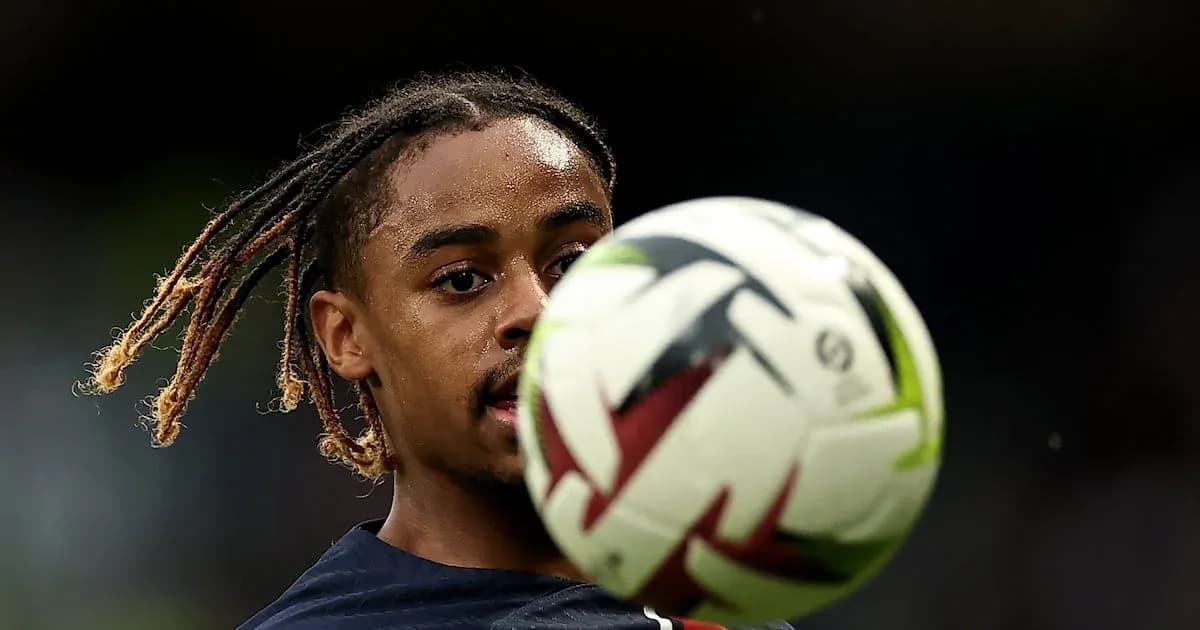
Luis Enrique once described Barcola as “one of the best dribblers in Europe”. That matters in a Premier League shifting towards chaos and transition, where the best teams punish opponents in the split second between turnover and organisation.
Liverpool have laboured against low blocks in recent weeks, running into walls of defenders and running out of ideas. The modern game, though, increasingly belongs to those who can exploit space as it appears, not batter it down once it has closed. Barcola lives in that split second. He runs behind, he dribbles at full tilt, he stretches defences that think they are safe.
Iraola has been blunt about what he wants from his wide players. They must be “game-changers”. No passengers on the touchline, no quiet nights.
Barcola has spent the past two seasons waiting his turn in Paris. Now, finally, he has been handed a starring role at the club he dreamed about as a teenager. The question is no longer whether Liverpool suits him.
It is whether the Premier League is ready for a winger who has been chasing this moment since he was 15.