
Bellingham's Impact on England's World Cup Strategy
Thomas Tuchel walked out of Panama with a win, a clean sheet – and a problem he probably didn’t expect to have.
Jude Bellingham, unleashed from deeper in midfield, ran the game in England’s 2-0 victory and left one of the most settled positions in this team suddenly up for debate. Declan Rice is due back. Rice plays when fit. Everyone knows that. But Bellingham has just shown a different version of himself, and now the England manager has to decide what to do with it.
Bellingham rips up the script
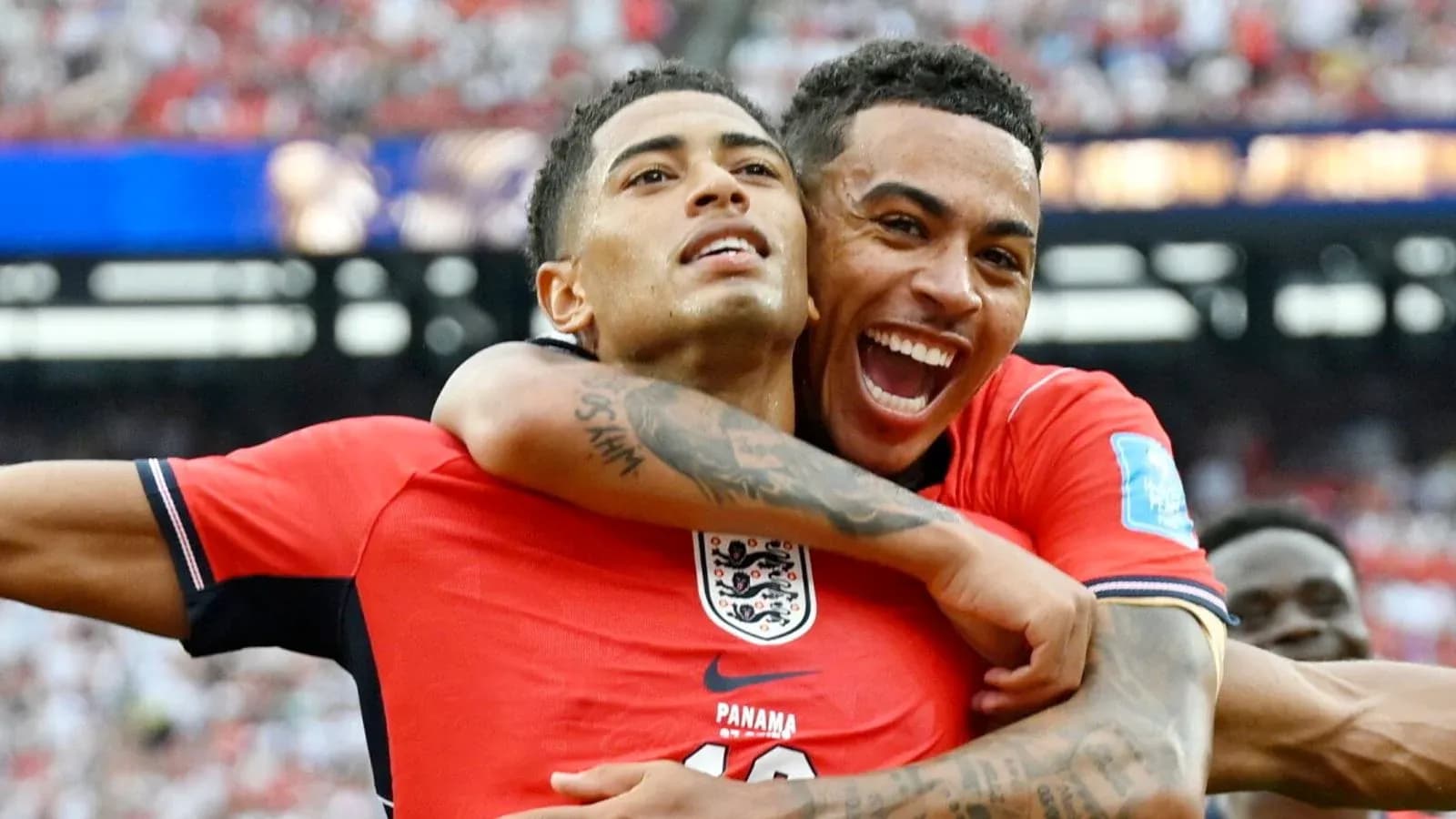
Against Panama, Bellingham lined up alongside Elliot Anderson, not as the headline No 10 but as a driving force from deeper. He grabbed a goal, laid on an assist and seemed to be everywhere at once – a performance Paul Merson described as “all-action” and one that has changed the conversation ahead of Wednesday’s last‑32 tie with DR Congo.
This is Rice’s territory. The anchor. The safety net. The man you need when the tournament sharpens and the opposition improves. Merson is adamant: if Rice is fit, Rice starts.
Yet Bellingham’s display from the engine room exposed a different kind of threat. Coming from deep, he was harder to track, harder to pin down. When he arrived, he arrived late and with purpose. Panama never really got a grip of him.
Compare that to Morgan Rogers, who toiled in the No 10 role and barely got a touch. Bellingham himself had found life similarly suffocating against Ghana, who sat in and clogged the central spaces. It was the same picture: the pocket behind the striker packed, the man in the hole starved.
From deeper, the picture changes. There is grass to run into, angles to exploit, defenders turning towards their own goal rather than stepping out to suffocate.
So Tuchel’s question is blunt: where does Bellingham do the most damage for England in this tournament?
Rice, Bellingham… and then what?
Rice comes back into the XI. That feels non-negotiable to Merson, and to most who have watched England grind their way through enough knockout football to know how vital a true holding midfielder is.
Could Tuchel simply pair Rice and Bellingham and let them sort it out? Possibly. It would be harsh on Anderson after a strong showing, but that’s the level now. The problem then shifts up the pitch: who plays as the No 10, and how do England actually feed that player?
Rogers did not seize his chance against Panama. Bellingham did not sparkle there against Ghana either. The role is only as good as the supply line, and right now England are struggling to get the ball into that zone in any kind of rhythm.
Merson’s concern is not about names on a teamsheet, but patterns. How do England consistently find their No 8s and No 10? How do they get their best players on the ball where it matters?
Let Jude have the ball
Bellingham’s mentality is not in doubt. He wants the ball, wants responsibility, wants to be at the heart of everything. Merson likens that hunger to Wayne Rooney – the restless, schoolyard urgency of a player who cannot bear to stand on the periphery.
Against Ghana, Bellingham kept showing, kept making angles, but England rarely trusted the pass into him in tight spaces. The instinct was safety, not incision.
Merson makes a sharp comparison: he’s not putting Bellingham on Lionel Messi’s level, but he points out how Argentina treat their star. They give Messi the ball, even when he is surrounded, even when the pass is risky. They back his ability to wriggle free and create.
England, he argues, need to develop that same confidence with Bellingham. If he is the man you believe can change a game, you have to keep feeding him, whether he’s operating as a No 8 or a No 10.
That becomes even more important against DR Congo, who are expected to sit deep with bodies behind the ball, just as Ghana and Panama did. If Bellingham is moved back into the No 10 role, he may again find himself boxed in, staring at two lines of defenders and waiting for passes that never come.
Wide men stuck in second gear
The congestion in central areas has pushed England out wide, but the wingers have not yet caught fire.
Against Panama, Marcus Rashford saw plenty of the ball in the first half. The end product never arrived. This was the start many had demanded for him ahead of Anthony Gordon, yet the performance never quite backed up the noise.
On the opposite flank, Bukayo Saka looks short of his usual spark. Merson suspects he may be carrying a minor issue, but he cannot envisage a serious England knockout game without Saka in the XI. Even at something below his best, Saka’s intelligence and threat make him hard to leave out.
The pattern, though, is clear. Every time an England player receives the ball, there are two, sometimes three defenders snapping around them. The ball is being moved wide quickly, but the wide men are being doubled up on, funneled into blind alleys.
Merson gives the wingers a “six out of 10” so far. Not disastrous, but not decisive. The positive spin is obvious: if that group suddenly finds an extra gear in the knockouts, England’s ceiling rises sharply. One of them could easily become the match-winner this tournament has not yet seen.
England still searching for their peak
Tuchel has insisted that “the bigger the game, the bigger England will be.” Merson understands the logic – that better opposition can draw more out of top players – but he also issues a warning: you cannot treat form like a light switch.
Teams grow into tournaments. They build, layer by layer, performance by performance. England, in his view, have been a “seven out of 10” through the group stage. They did what was required against Croatia, Ghana and Panama. No more, no less.
That won’t be enough when the real heavyweights arrive.
France, with their attacking depth, look ominous going forward. Spain are Spain – technically superb, always in control, but they tend to leave you in the game rather than blowing you away. Colombia, who impressed Merson with their pace and energy against Portugal, understand these conditions and look dangerous.
This World Cup feels open. Many teams have match-winners. On any given day, someone can hurt you.
For England, that reality cuts both ways. They have had “reality checks” against Ghana and, in Merson’s eyes, even against Panama despite the 2-0 scoreline. The warning signs are there. So is the opportunity.
Tuchel does not need perfection yet. He does need progression. He needs his midfield puzzle solved, his wide players to rise above “six out of 10”, and his team to rediscover the level they showed against Croatia.
Because while England are still in this tournament, they have a chance to win it. The question now is simple and brutal: can they turn that chance into something more than hope?





