Barcelona's 2026-27 Captains: Raphinha, Pedri, and the Leadership Debate
Barcelona have named their five captains for the 2026-27 season – and the list says as much about the club’s hierarchy as it does about its talent.
Hansi Flick has torn up a bit of tradition by personally appointing his two main leaders: Raphinha and Pedri. No quiet seniority, no gentle passing of the armband. The coach stepped in and pointed to his men.
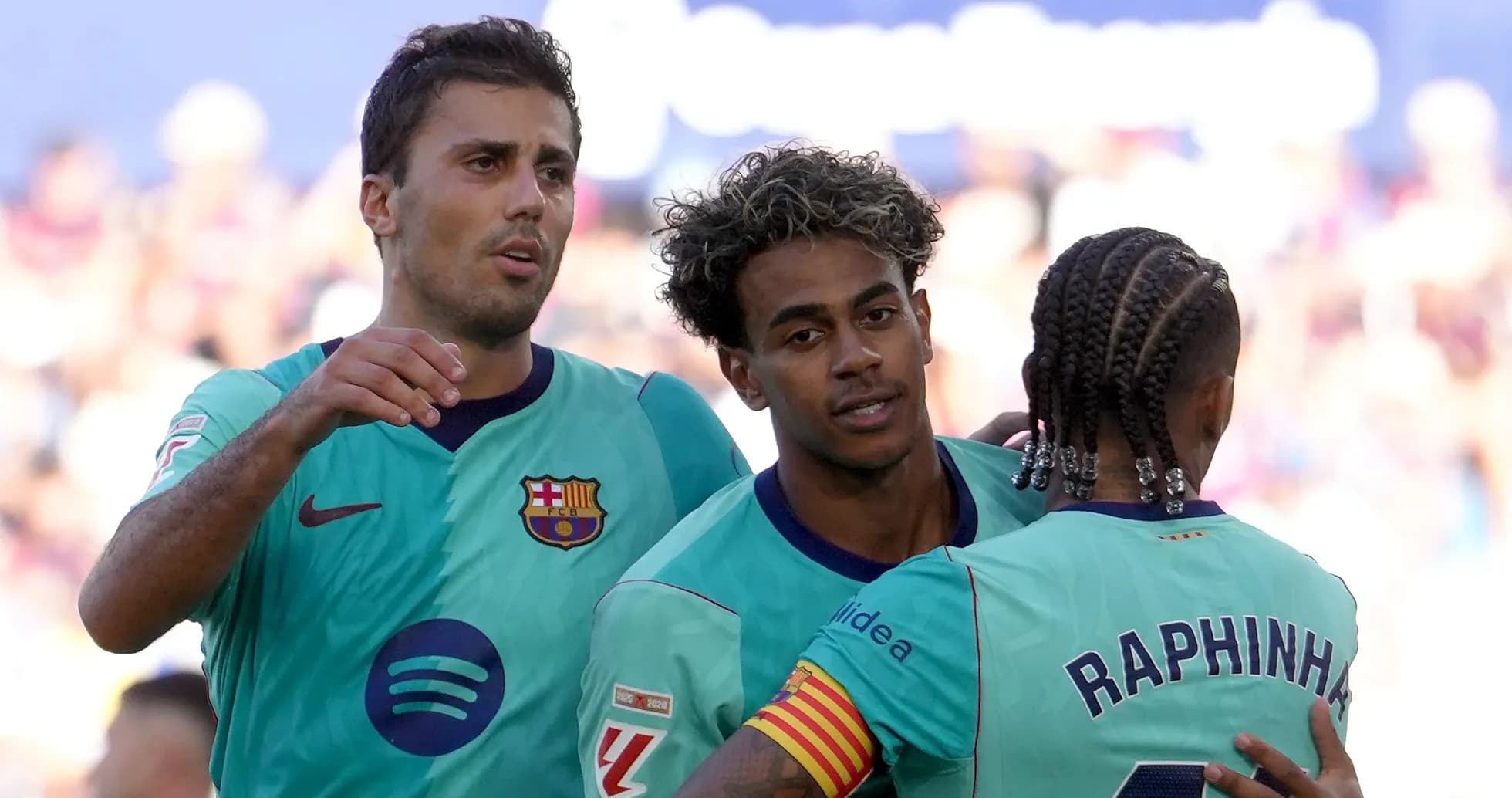
The other three slots went to a dressing-room vote. Eric Garcia, Frenkie de Jong and Lamine Yamal emerged with the most backing, with the inclusion of the 19-year-old winger instantly sparking debate. Not because of his quality. Because of who missed out.
Rodri, the €76.5m signing from Manchester City and freshly crowned World Cup-winning captain with Spain, did not make the group. On paper, few players in world football arrive with a stronger leadership CV. At Barcelona, though, the rules are different.
According to The Athletic, when players vote for captains at Barça, they tend to lean on club seniority rather than overall career achievements. Yamal has already lived three seasons inside the first-team environment. Rodri only walked through the Camp Nou doors in mid-August.
So the armband stayed out of his reach. His influence did not.
Flick has already nailed his colours to the mast regarding the midfielder’s importance. After Rodri’s first start, against Valencia, the German coach was openly impressed.
“We’re pleased to have Rodri in our team,” he told reporters. “You can also see everything he does with the ball, everything he does on the pitch. It makes sense. He gives the team structure in attack with the ball, but also without it.”
That structure has not just come with his boots on. Rodri’s voice has carried too.
During Barcelona’s 5-0 demolition of Valencia, television cameras picked up the veteran on the bench turning to Pau Cubarsi and delivering a blunt assessment: “They’re really weak, they haven’t got past the halfway line.”
The comment travelled quickly. So did his response. As soon as he realised the exchange had been broadcast, Rodri picked up the phone and called Valencia captain Jose Gaya to apologise. He then addressed the incident publicly after Barcelona’s Champions League win over Feyenoord, underlining the standards he expects from himself as much as anyone else.
Inside the dressing room, his lack of official status has not stopped him from becoming a reference point. Club figures already see him as a key mentor for 19-year-old defensive midfielder Marc Bernal. The two have begun to share the pitch, with Bernal coming on to partner the former City lynchpin in recent victories over Feyenoord and Levante, learning the role beside one of its modern masters.
At Barcelona, the captain’s armband is not just a strip of fabric. It represents years of shared battles, academy roots, and scars collected in blaugrana. Rodri has not yet had time to build that institutional weight. The hierarchy reflects that.
But within a young, evolving squad, his elite experience still cuts through. Players listen. The tempo of games bends around his decisions. Whether the referee notes it on the teamsheet or not, he already behaves like a captain.
That presence will be tested immediately.
Next month brings a brutal 12-day stretch that could shape Barcelona’s season. Flick’s side must go away to Galatasaray, Real Betis and Paris Saint-Germain, three hostile environments where composure and control in midfield often decide everything. The run then crashes into an El Clasico at Camp Nou on October 25, a fixture that rarely allows passengers and never forgives hesitation.
For Rodri, that night against Real Madrid carries a sharper edge. He turned down serious interest from Jose Mourinho’s Madrid project to wear Barcelona colours. Now he faces the club he rejected, in the stadium he chose, at the heart of a team that already looks to him for calm.
He may not wear the armband when they walk out. The question is whether, by the end of that run, anyone will still be talking about who does.