Balogun and Pepi: American Strikers Eyeing Premier League Success
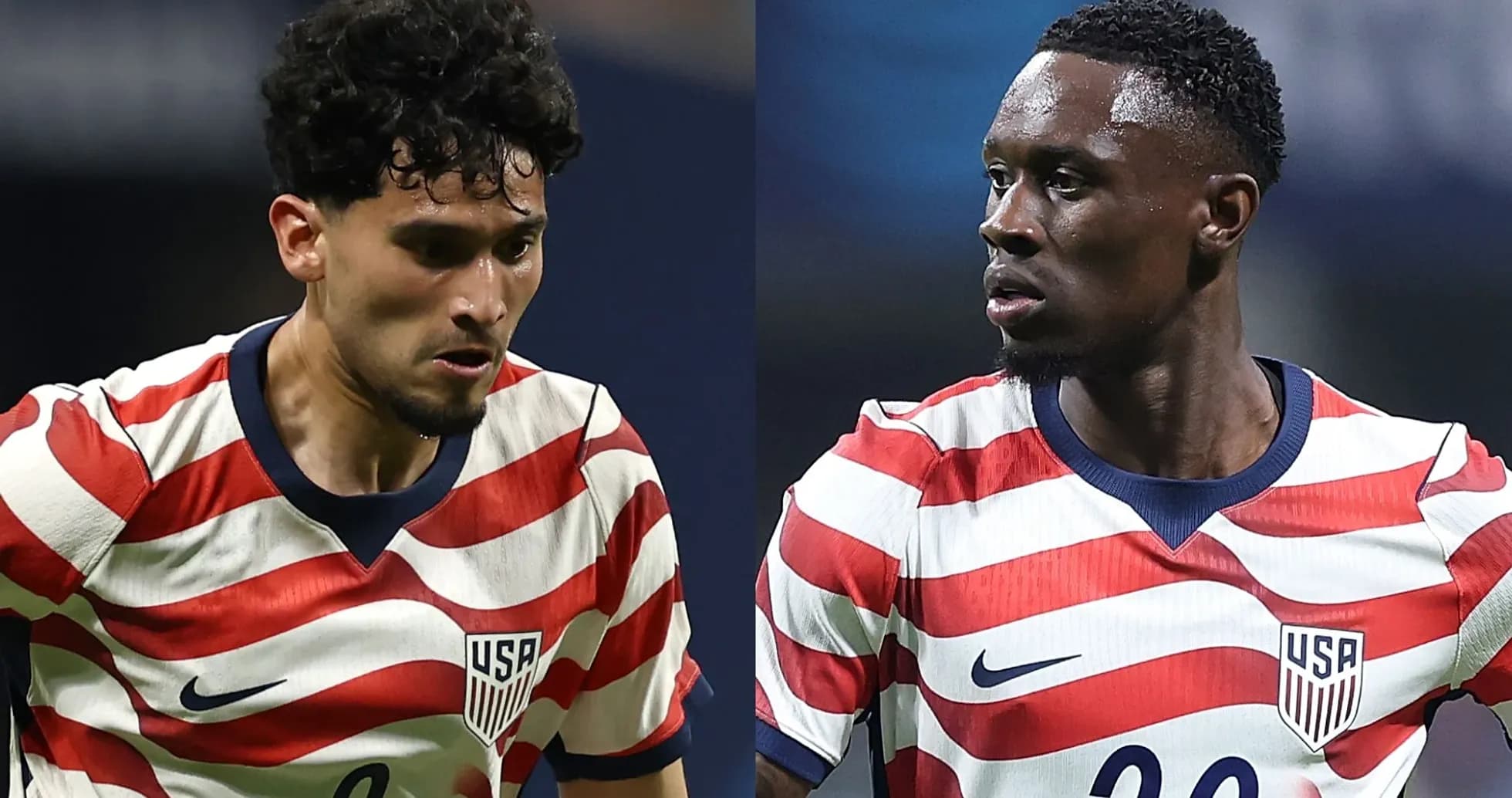
Folarin Balogun and Ricardo Pepi are walking into the summer with the same destination and very different reputations.
One is the €40 million striker who fought his way out of Arsenal’s shadow and into Monaco’s starting XI. The other is the opportunist from El Paso who keeps finding the net in Europe even when he’s not first choice. Both are heading toward a home World Cup. Both are catching Premier League eyes.
And Brad Friedel thinks England will suit them just fine.
Balogun: From Hale End to headline act
New York-born but forged in north London, Balogun did everything right at Arsenal except get a real run. Ten competitive appearances, two goals in the Europa League, and a sense that his path to the first team was always blocked by someone more established, more trusted, or simply more convenient.
So he left. Reims first, where he exploded with 22 goals on loan and turned himself from academy prospect into serious asset. Then Monaco, who paid €40 million in 2023 and have just seen him complete his most productive season yet: 19 goals in all competitions, delivered with the conviction of a striker who knows this is his level.
That body of work, Friedel believes, changes the conversation.
“With Balogun, I think Balogun could play at one of the big boys and deal with the perception and reality situation, because I think he would be deemed more of a seasoned player,” the former USMNT goalkeeper said, speaking to GOAL in association with MrQ.
Seasoned. Trusted. Ready for the noise. In Friedel’s eyes, Balogun is already built for a Manchester United or an Arsenal-type environment, where scrutiny never sleeps and every missed chance becomes a talking point.
Pepi: The poacher built for pressure from below
Pepi’s path has been different, more jagged, and arguably more impressive for it.
He arrived in Europe at Augsburg in January 2022, a teenager dropped into the grind of the Bundesliga. The move never truly caught fire there, but the forward kept moving, kept adapting, and at PSV he has found a platform and a purpose.
He has just matched Balogun’s 19-goal haul while helping PSV to another Eredivisie title. He has not always started in Eindhoven, but he has always threatened. Impact sub, rotation option, penalty-box predator – whatever the role, Pepi has grown into it.
Friedel sees a Premier League future for him too, but a different kind.
“I think someone like Pepi would need to be one of the mid to lower teams. Something like Brentford, Bournemouth, Fulham,” he said. “They’re more mid-tier in terms of expectation and pressure. The teams I’ve mentioned, they’re fantastic clubs, but I think if he moved to a Manchester United or Arsenal, it would be too much for him, too quick.”
That’s not a slight, it’s a fit issue. Pepi, in Friedel’s mind, belongs at a club where the stadium is tight, the fanbase is demanding, but the spotlight isn’t blinding every weekend. A place where development and results can live side by side.
Fulham, in particular, intrigues him. Pepi has been linked with the west London club, and Friedel sees a natural successor to Raul Jiménez.
“If you look at that, you see Raul Jiménez and his style and Pepi’s, they’re very similar. I think that would actually be a seamless transition,” he said, before drawing a line back to the days of Brian McBride and Clint Dempsey. Different players, same idea: one era’s focal point handing the baton to the next.
“I wouldn’t be surprised at all to see Balogun or Pepi in England next season,” Friedel added, “and I think they could both be successful in the Premier League.”
Pochettino’s dilemma: who starts a home World Cup?
Before any transfer dominoes fall, there’s something even bigger on the horizon: a World Cup on home soil in 2026. Balogun and Pepi are not just linked by nationality and ambition; they are locked in direct competition for the same shirt.
Mauricio Pochettino, tasked with turning this generation into something more than a promising story, will have to pick a No. 9. Asked which way he would go if he were in Pochettino’s position, Friedel did not hesitate.
“Balogun would be my pick,” he said. “If you look historically at Pochettino’s teams, he usually likes to have players who play very vertically and who are really dynamic, and that’s more of what Balogun is.”
Pochettino’s football thrives on verticality, on forwards who stretch lines and run at defenders with conviction. Balogun fits that template: direct, aggressive, and comfortable leading the press as well as the attack.
Pepi, in this vision, becomes the change of pace, not the understudy.
“And then to have the option of Pepi, who again will work really hard, but is very good in the box, good in the air, to come off the bench,” Friedel said.
Different tools, same goal. One striker to harass and hurt teams over 60 minutes, another to punish them when legs get heavy and crosses start to rain in.
Heat, rotation and a dangerous final hurdle
The World Cup draw offers opportunity and danger in equal measure. Group games against Paraguay and Australia set the stage. Turkiye lurks at the end.
Friedel can already see the tactical juggling act coming.
“I could also see a little bit of a rotation in the group phase, because it’s also going to be very hot over here,” he said. “And the players have just come off, those two especially, a long season. So you could see Mauricio maybe wanting to take a different tactical approach against Paraguay and Australia.”
Heat, travel, and club workloads will all feed into Pochettino’s choices. One game might demand Balogun’s vertical chaos, the next Pepi’s penalty-box craft. Both will have to be ready, both will have to accept that the role can change by the match.
What cannot change, Friedel warns, is the margin for error by the time Turkiye appears on the schedule.
“Hopefully, they have points in the bag by the time they play Turkiye,” he said. “Because if they’re not careful by the time they get to Turkiye, and they have to win that match, Turkiye is a very talented possession-based team.”
That is the backdrop to every decision: the risk of walking into a must-win final group game against a side that can keep the ball and suffocate rhythm. By then, Pochettino will need not just a starting striker, but a fully engaged partnership, even if only one of them takes the first kick.
Balogun and Pepi know what’s coming. A home World Cup. A fight for minutes. A Premier League shop window opening at the same time.
Two American forwards, one jersey, and a European summer that could decide where – and how – they lead the line when the world arrives.