Australia vs USA: A Dramatic Football Match at Enmore
The first roar came early, and it wasn’t for the football.
Inside Enmore’s Golden Barley, every glimpse of US manager Mauricio Pochettino on the big screen drew a wall of boos. The military flyover before kick-off copped even more. Hundreds of Sydneysiders, bleary-eyed but buzzing, had turned a morning watch party into something closer to a late-night derby.
Then Cameron Burgess silenced the room.
His early opener for the USA cut straight through the noise. For a few seconds you really could have heard that pin drop. The bar that had been rattling with chants and jeers suddenly felt tight, anxious, as the reality of the occasion started to bite.
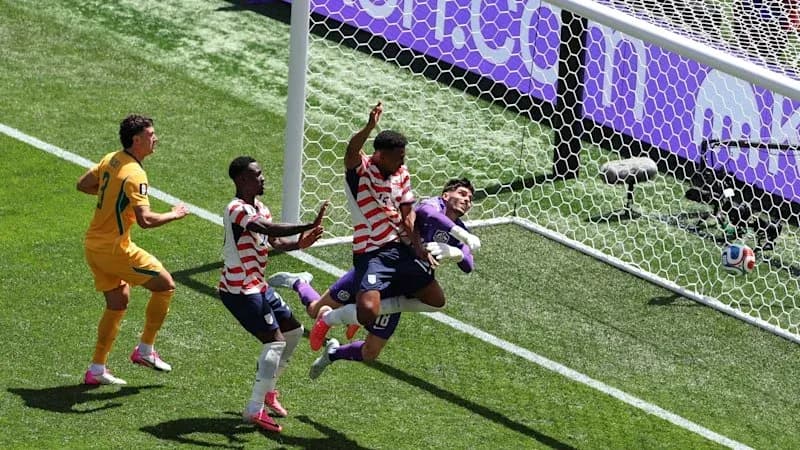
The mood darkened further as the half wore on. The USA hogged the ball, dictated the tempo and, from the locals’ point of view, got the rub of the green. A controversial decision in the build-up to the Americans’ second goal only deepened the sense of injustice. The call went their way, the net bulged, and the volume in the Golden Barley dropped again.
One fan muttered that he was ready to go home. Nobody argued with him. For a moment, the idea of slipping out into the Sydney morning and pretending this never happened had its appeal.
But half-time in Australia means something else: a reset, another round at the bar, a dash to the bathroom and a tray of party pies passed over heads. The Socceroos might have been second best on the screen, but in this corner of Enmore, they weren’t done yet.
There were still 45 minutes left. And there was still Nestory Irankunda.
“It's not over yet,” another punter declared, half to his mates, half to himself.
Wise words. Play on.
Heat, fatigue and a tactical bind
On the touchline, the Socceroos’ problems were clear enough. Assistant coach Paul Okon, speaking to SBS, didn’t sugarcoat the first-half issues.
“Conceding so early wasn’t ideal,” he admitted. “It’s hot out there. We struggled a little bit in the heat. We’re not getting our line high enough to put pressure on the ball. But it’s difficult.”
Australia’s block sat too deep, too often. The USA’s midfielders strolled into pockets, turned, picked passes. The Socceroos chased shadows.
“What we don’t want to do is fall out of our structure and start chasing the ball,” Okon said. “We need to stay compact as much as possible and obviously try and have enough legs that once we get the ball we can hurt them.
“We’ll see some fresh legs in the second half, a bit of speed to hurt them once we have the ball.”
Those fresh legs arrived. Last weekend’s scorers, Irankunda and Connor Metcalfe, came on, joined by Jason Geria. Toure, Velupillay and Burgess made way. Mathew Leckie shuffled across to the left, Metcalfe taking up station on the right. A tactical gamble, but also a statement: if Australia were going out, they were going out swinging.
Fed Square: rain, flares and stubborn belief
Across the country, in the heart of Melbourne, the commitment bordered on the absurd.
Fans had queued from 2am to get into Fed Square, staking their spot on the wet concrete hours before kick-off. Persistent rain lashed the big screen, but the crowd stayed put, wrapped in green and gold, jumping to keep warm and keep the energy up as the USA tightened their grip on the scoreline.
Flares cut through the drizzle. A beach ball bobbed over ponchos and flags. The football on the pitch was one-sided; the atmosphere off it was anything but.
Mel, a veteran of two decades of Fed Square matchdays, turned up in a Socceroos jersey and a Donald Trump costume that made it look like he was being carried on Trump’s shoulders. It was ridiculous, theatrical, and perfectly in tune with the night.
He didn’t hesitate when asked who would win.
“Aussies of course.”
For Madison Cambora, it was a first. First time getting up in the middle of the night. First time joining the Fed Square pilgrimage. Even with the USA leading, she felt it had been worth the sacrifice.
“I hope they come back from this,” she said. “I’m hoping all good things, but it’s not looking good.”
USA in control, Australia on the brink
On the evidence, her realism matched the performance.
The USA looked a level above in almost every facet. Stronger in the duels. Sharper in the mind. Cleaner with the ball. Every 50-50 seemed to break their way, every loose touch from Australia punished by a swarm of white shirts.
Tony Popovic’s side struggled to build anything coherent. Passes went astray, clearances came straight back, and any attempt to press left gaps for the USA to exploit. The Americans didn’t just lead; they looked comfortable, almost serene, in hostile conditions thousands of kilometres from home.
The tactical equation for Australia was brutal. They had to attack after the break. They had no choice. But opening up the game suited the USA perfectly. More space for their runners. More room for their technicians. More chances to twist the knife.
At an absolute minimum, Irankunda had to start the second half, if only to plant a seed of doubt in American minds. A burst of pace, a fearless dribble, a shot from distance – something to make them think twice before throwing bodies forward.
Because right now, the truth was stark.
USA had nothing to worry about. The question was whether Australia, fuelled by those bars and squares and stubborn believers in the rain, could change that in 45 frantic minutes.