Arsenal's Pursuit of Victor Osimhen: A Risky Move?
Arsenal have opened talks with Galatasaray over a sensational move for Victor Osimhen – but the deal that once got away might now be the wrong one to chase.
The Nigeria striker has been on Arsenal’s radar for almost a decade. He first flashed across their scouting reports at the U-17 World Cup in 2015, when he tore through defences and forced Europe’s elite to take notice. Arsenal pushed then, tried to bring him to north London as a teenager. He turned them down.
“Yes Arsenal is a good team for young players,” he said back then, “but Wolfsburg is the best club for me.”
From Wolfsburg to Lille, from Lille to Napoli, and from Napoli to Galatasaray, the Premier League link never really faded. Arsenal’s name kept circling around him. Now, at 27, that long-rumoured move is back on the table, with The Telegraph reporting that discussions have taken place between the champions of Türkiye and England.
Who picked up the phone first is unclear. So is the price. Galatasaray paid around $86 million (€75 million) for Osimhen only a year ago, and they did not do that to flip him cheaply. He is under contract until 2029, the face of their attack and the obvious star of their title defence.
He is not exactly rushing to shut the door, either.
Asked this week about a possible exit from Istanbul, Osimhen did not deliver the usual, neat denial that kills a story.
“There are always rumors during the transfer windows,” he said. “I’ll focus on my job. I’m focused on my work. We’ll see and think about what comes next then.”
Those are not the words of a man desperate to end the speculation.
Galatasaray’s talisman, Arsenal’s dilemma
On the pitch, the numbers are loud. Osimhen has smashed 61 goals in 75 appearances for Galatasaray since arriving on the Bosphorus two years ago. He plays with a restless, infectious energy, forever on the move, forever threatening the space behind. His highlight reel is built for social media – towering headers, ruthless finishes, celebrations that whip crowds into a frenzy.
On paper, he looks like the prototype for a Premier League No. 9.
But Arsenal have seen this film before.
A physically dominant centre forward. Heavy scoring in a league outside Europe’s traditional top five. A fee that makes you blink. It all sounds uncomfortably similar to Viktor Gyökeres.
The Swede arrived from Sporting CP with an even better goal ratio than Osimhen currently boasts in Türkiye. He also arrived with the reputation of a battering ram who thrived when given grass to attack and defenders to bully. In Portugal, he looked unstoppable.
In England, he found a different reality.
Premier League defences, especially at the top end of the table, rarely give up the space that strikers like Gyökeres – and Osimhen – feast on. Arsenal’s new No. 9 discovered that running channels is one thing; finding room against compact, organised back lines is another.
Gyökeres still finished last season with 21 goals in all competitions. On the surface, that sounds respectable. But not one of those goals from open play came against a side in the Premier League’s top six. When the level rose, his impact dipped.
At least he stayed on the pitch.
Osimhen’s body has not been so reliable. Across the last six seasons, he has missed 82 matches through a range of injuries. That is an average of more than 13 games per year. For a club that has already had to manage recurring fitness issues in attack, committing huge money to another forward with a fragile record is a serious risk.
The talent is obvious. The availability is not.
Do Arsenal even need another No. 9?
There is a broader question hanging over all of this: is an orthodox centre forward really what Arsenal need right now?
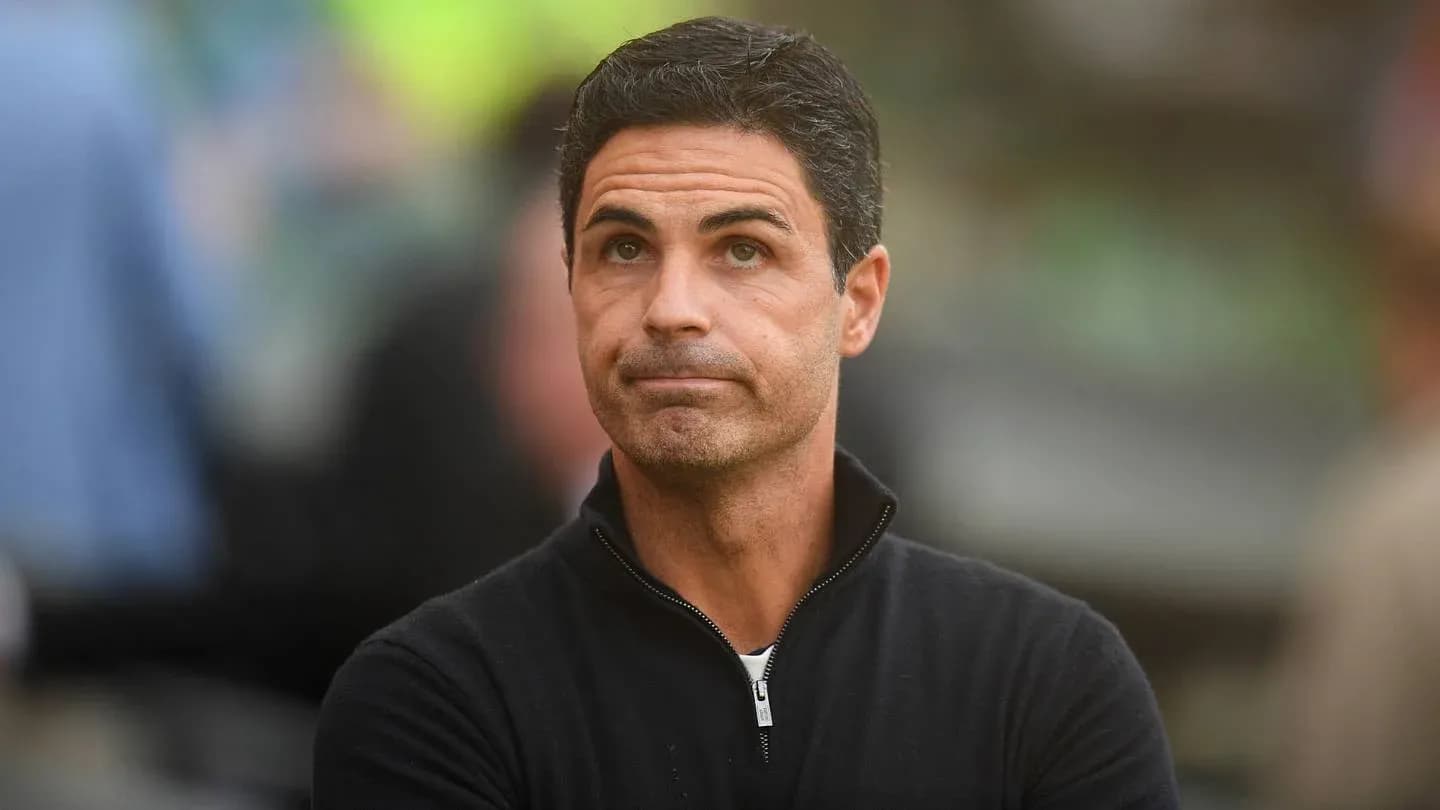
Mikel Arteta has been clear that the champions must strengthen from a position of power. He did not hide the ambition this week.
“The ambition of the club, it’s big,” he said. “We want to improve the squad, we want to evolve the squad, and in order to achieve that, we have obviously detected some areas that can be strengthened. That’s what we are trying to do.”
Up front, though, he already has options. Gyökeres is still adapting but remains a significant investment and a presence through the middle. Kai Havertz has grown into the role as a roaming, technical forward who links play and drifts into pockets. Mikel Merino has shown he can step in as an emergency central option if needed.
What Arsenal lack is not another body at centre forward. It is a game-changing left winger.
With Gabriel Martinelli’s future uncertain, that flank looks like the natural area for a marquee signing. Vinícius Júnior is off the table, but the market is not empty. Bradley Barcola could be prised from Paris Saint-Germain for a premium fee, while Atlético Madrid’s Julián Álvarez offers the sort of flexibility Arteta craves, able to play wide or centrally without distorting the team’s structure.
Arteta has spoken often about how few players in world football could genuinely improve his starting XI. Any huge outlay has to be reserved for that rare group.
Osimhen’s goal record screams for attention. His name carries weight. His style brings chaos and excitement. But when you strip away the noise and look at the demands of this Arsenal side – the tactical nuance, the physical reliability, the specific gaps in the squad – the question lingers.
Is he the transformative piece they are missing, or just another expensive mirage from a league that flatters strikers before England exposes them?