
Arsenal's Summer Choices: Navigating Key Transfers and Squad Evolution
Arsenal’s summer of hard choices has already begun. The Premier League champions have barely finished celebrating before Mikel Arteta and new sporting director Andrea Berta are deep in the most delicate phase of any successful cycle: evolution without erosion.
This is not a quiet tune‑up. It’s a rebuild on the move.
Big names, bigger decisions
Two deals are already done. Jakub Kiwior’s loan at Porto has turned permanent, the Portuguese club paying an initial £14.7million that could rise to £19m. Karl Hein has also gone, joining Werder Bremen for around £2.6m after a year in the Bundesliga. Eight academy players have been released.
Those are the easy exits.
What comes next cuts far closer to the core. The futures of Gabriel Martinelli, Leandro Trossard, Gabriel Jesus, Fabio Vieira, Reiss Nelson and even Ben White sit firmly in the “if the right offer comes in” column. Christian Norgaard, signed to add experience and depth, is another whose position is under review.
Arsenal want a new attacker, a midfielder and a full-back. To fund that, and to keep the squad lean enough to manage, some familiar faces may have to walk away from a title‑winning dressing room.
Barcola, Diomande and the hunt for a new edge
The search for a forward is already well underway. Bradley Barcola is right at the heart of it.
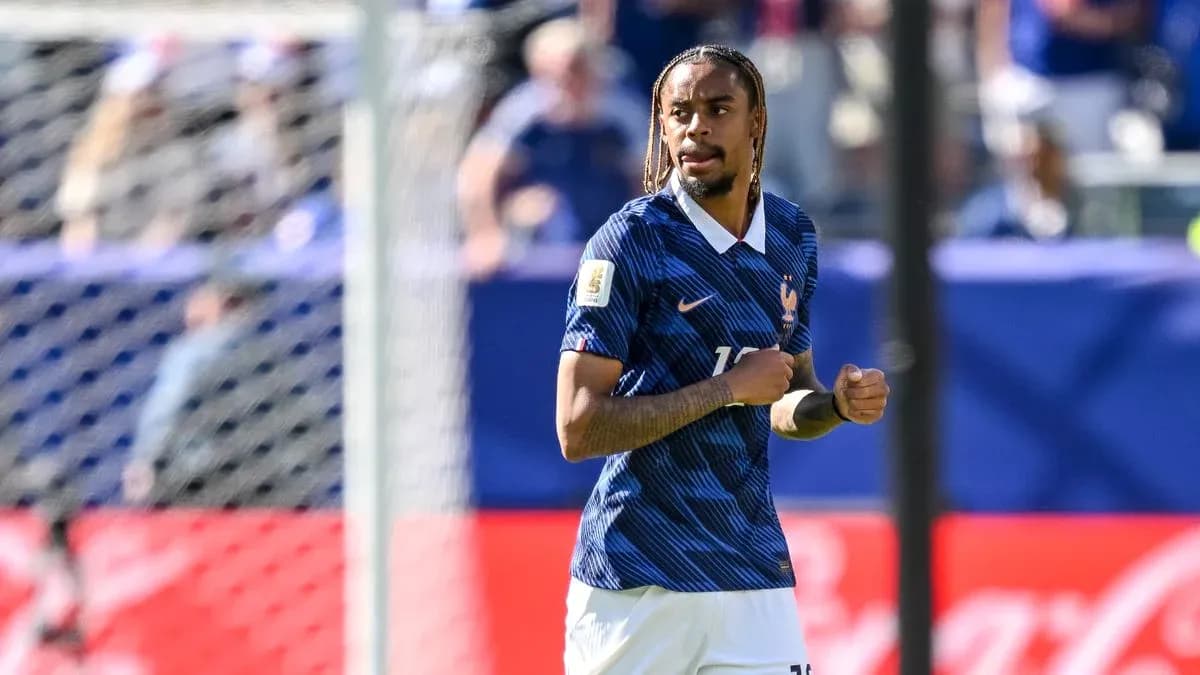
The PSG winger, reportedly unhappy with his minutes in Paris, needed just two minutes on the World Cup stage to remind everyone why Europe’s elite are circling. Off the bench for France against Senegal, he darted onto Adrien Rabiot’s clever pass and nonchalantly lifted the ball over Edouard Mendy. One touch to announce himself.
Arsenal like him. Liverpool do too. PSG, for now, do not want to sell. But Barcola has two years left on his deal, contract talks have stalled and, crucially, he is understood to have asked to leave in search of regular football. A fee of around £70m has been floated. That is the going rate for a 21‑year‑old who scored 13 goals in 49 games last season and looks ready for more.
He is not the only wide option on the radar. RB Leipzig’s Yan Diomande, 19, has exploded at the World Cup and bookmakers already have Liverpool and Arsenal as the two leading contenders for his signature. Any move would be enormous – the price is expected to hover around £100m – but Arsenal’s interest underlines how serious they are about refreshing the forward line if Martinelli moves on.
Alvarez, Gyokeres and a striking subplot
There is another intriguing thread developing up front. Reports in Spain claim Arsenal have reached an agreement with Atletico Madrid for Argentina international Julian Alvarez, a prolific presence in La Liga with 49 goals in 106 games.
The suggested structure is striking: Arsenal would pay £43m and send Viktor Gyokeres the other way to the Riyadh Air Metropolitano Stadium. Gyokeres only arrived from Sporting CP last summer for £55m and finished as the club’s top scorer with 21 goals in 55 matches, then carried that form into Sweden’s World Cup campaign.
For a player in that kind of rhythm, the idea of him being used as a makeweight has raised eyebrows. Gyokeres himself is in combative mood. When pundit Martin Aslund criticised his first touch during Sweden’s 5-1 demolition of Tunisia, the striker coolly pointed to his output: “I got one assist and could have gotten two more. I don't know how many assists you should get in a game.”
If Arsenal really are prepared to sacrifice him to land Alvarez, it would be a ruthless move – and a clear signal that nobody, not even the top scorer in a title-winning season, is untouchable.
Midfield: Tonali, Kone and a crowded market
In midfield, Arsenal are walking a tightrope between ambition and cost.
Sandro Tonali is the headline name. Newcastle United, squeezed by financial rules after missing out on Champions League football, are open to a sale and value the Italian at over €100m (£86m). Manchester City and Tottenham are hovering; Roberto De Zerbi has reportedly marked Tonali as the ideal fit for Spurs.
Arsenal’s admiration is no secret. Tonali was on their radar in January and remains there now. Manchester United have reportedly stepped back from the race, which could open a clearer path, but the numbers remain eye-watering. Newcastle hold him on a long-term contract with an option to extend, and they will not sell cheaply.
So the club are working on other lines. Manu Kone, fresh from a strong season at Roma, has emerged as a serious option. The 25‑year‑old made 37 appearances last term with two goals and three assists, and is part of France’s World Cup squad.
Italian reports claim Arsenal have already agreed personal terms with Kone and are now haggling with Roma over a fee in the region of £43m. Kone himself is keeping a strict focus on the tournament, insisting he is “only thinking about the World Cup” and will address his future once France’s campaign ends. Behind the scenes, though, the groundwork appears to be done.
At the other end of the age scale, Lille’s Ayyoub Bouaddi has been on Arsenal’s radar since 2025. The 18‑year‑old lit up Morocco’s World Cup opener against Brazil, and Berta has been in contact with his camp since early this year, convinced the teenager is a “world-class prodigy”. Bouaddi is in no rush, stressing his attention is locked on the World Cup, but the courtship is long-standing.
Fresneda and the full-back question
The need for a new full-back has led Arsenal back to a familiar name: Ivan Fresneda.
Once a Real Madrid youth product, the 21‑year‑old has blossomed at Sporting under Rui Borges after a frustrating spell under Ruben Amorim. Injury and tactical misfit restricted him to 16 appearances in 18 months; under Borges he has racked up 63 games and re-established himself with Spain’s under‑21s.
What catches Arsenal’s eye is not a highlight reel of assists but his defensive intelligence. Fresneda has just four goals and four assists in his club career, yet his positioning, reading of danger and discipline have drawn admiring glances from both Arsenal and Real Madrid. Sporting, having finally unlocked his potential, will not let him go cheaply.
Odegaard sharpens another weapon
On the international stage, Martin Odegaard used Norway’s World Cup opener against Iraq to showcase a new string to his bow.
In a 4-1 win, the Arsenal captain delivered a wicked corner for Leo Ostigard to glance in at the near post, the precision of the cross doing most of the work. Erling Haaland’s brace naturally grabbed the headlines, but Odegaard’s control of the game was immaculate: 41 completed passes from 42, a completion rate of 97.6 per cent.
He rarely takes corners for Arsenal. On this evidence, that may change. With Declan Rice already a reliable set-piece taker, Arteta suddenly has another elite technician to call on. For a team that squeezes every marginal gain, that matters.
William Saliba, meanwhile, continued his serene rise with France in their 3-1 win over Senegal, starting alongside Dayot Upamecano as Kylian Mbappe did the damage further forward.
Fitness gambles on the World Cup stage
Arsenal’s influence on this World Cup runs deep, and so do the risks.
Declan Rice gave England a scare when he left their 4-2 win over Croatia on 72 minutes with discomfort in his lower back and upper hamstring. Thomas Tuchel, managing England at the tournament, explained he withdrew Rice immediately after the midfielder pointed to the problem area. Tuchel insisted it was a precaution and later relayed Rice’s own reassurance that “it’s good, it’s good”, calling it “nothing big to worry about”.
Bukayo Saka is taking a more calculated gamble. The winger is still managing the Achilles problem that disrupted the end of his domestic season and forced him to miss a month, including an international window. He admitted he chose to play through the pain during Arsenal’s Premier League and Champions League run‑in, fully aware of the scrutiny.
“As players, it’s the biggest gamble, especially if you’re not feeling your sharpest,” he said, accepting that the outside world will judge performances, not fitness bulletins. He is prepared to keep taking that risk, though he credits Arsenal and England’s medical teams for handling him carefully since March and insists he now feels much better.
Noni Madueke, another Arsenal winger in the England camp, has set himself an uncompromising target. Speaking in the US, he declared his intention to become “one of the best wingers in the world”, acknowledging that the next step is to translate his all‑round contribution into more goals and assists. The bar at Arsenal is high; he knows it.
Youth, loans and the Nwaneri dilemma
Arsenal’s recruitment drive is not just about the here and now. The club are aggressively stockpiling elite young talent.
Talks are underway with Leicester City for 16‑year‑old Jeremy Monga, a teenager who has already been part of the Foxes’ first‑team squad for two seasons. A fee between £10m and £15m has been suggested. Victor Ozhianvuna is already lined up to join in January, while Ecuadorian twins Edwin and Holger Quintero are due to arrive in August 2027.
But for every incoming prodigy, there is a question about the pathway. Ethan Nwaneri embodies that tension.
Once hailed as the next Hale End jewel, the teenager struggled to impose himself on loan at Marseille despite scoring on his debut. Now Liverpool are said to be “keeping a close eye” on him, just a year after he was first linked with a possible exit.
Chris Waddle, who knows both Marseille and England at the highest level, believes the answer is simple: he has to play. Waddle argues that another loan, ideally to a promoted side or a lower‑half Premier League club, would give Nwaneri the regular minutes he desperately needs. Without that, he warns, confidence drains away and careers stall.
With Bukayo Saka and others blocking his path, Arsenal and Berta must decide whether to loan him again, cash in, or clear a route into the first team. None of those options is risk‑free.
Tonali, Tottenham and a looming tug-of-war
The Tonali saga could yet define the Premier League’s midfield market this summer.
Fabrizio Romano has reported that Tottenham have formally joined Arsenal and Manchester City in the race, with De Zerbi pushing hard. The Athletic has confirmed that Newcastle are open to a sale at the right price, though no concrete offers have landed yet.
Arsenal’s interest is real, but the club are wary of being dragged into a bidding war that inflates an already huge fee. For now, they are watching, weighing Tonali’s cost against the more attainable Kone and the longer-term play for Bouaddi.
If Arsenal move, they will not be alone. If they walk away, they must be certain they have backed the right alternatives.
A title to defend, a squad to reshape
This is the backdrop to Arsenal’s summer: Premier League champions for the first time in 20 years, Champions League finalists, and yet still hungry enough to rip up parts of a winning squad in search of something sharper, deeper, more resilient.
The market will test that resolve. So will the World Cup, where every good performance from a target nudges the price up another notch and every injury scare – like Rice’s twinge or Saka’s Achilles – reminds the club how fragile their foundations can be.
New faces will arrive. Big names may leave. The only certainty is that Arsenal cannot stand still.
They have climbed back to the summit. Now comes the harder question: how bold are they prepared to be to stay there?





