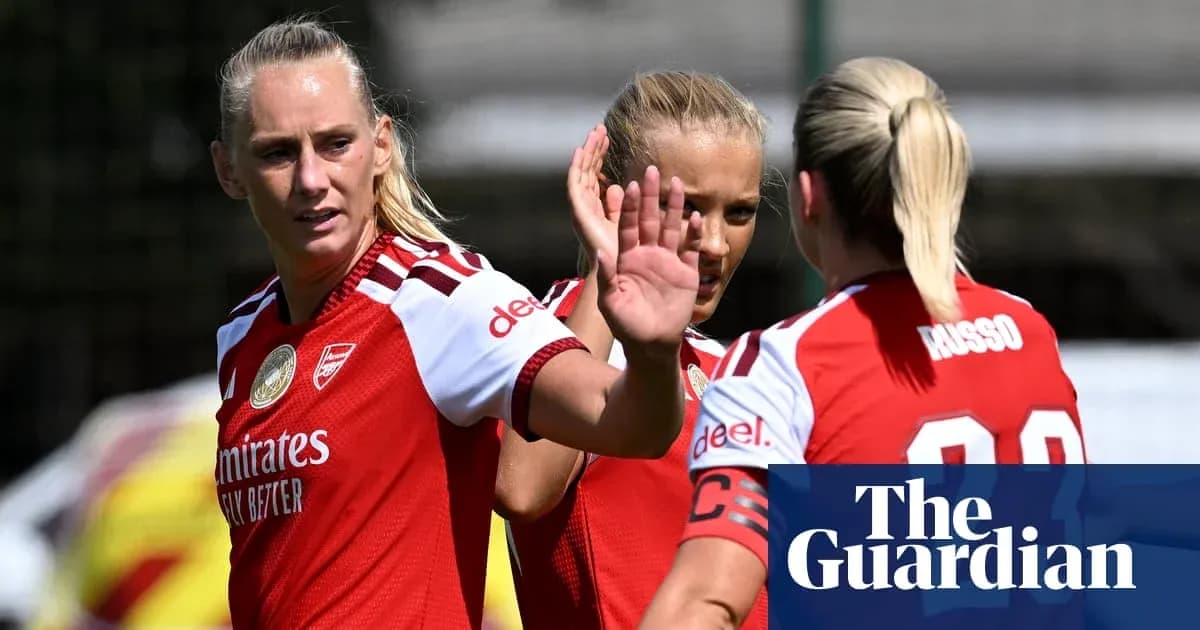
Arsenal 2026-27: Aiming for League Glory
Arsenal finished last season with a medal haul that felt light, an empty space on the shelf where a league trophy should have been. The inaugural Fifa Champions Cup barely scratched the itch of a club still living off the glow of their 2025 Champions League triumph. That European high masked something more uncomfortable: a squad that had grown old together and needed breaking apart.
This summer, Arsenal ripped off the plaster.
Eleven players have gone, among them two club legends in Beth Mead and Katie McCabe. Seven have arrived. The dressing room looks and sounds different, the age profile sharply reduced, the edges of the team re-cut.
Ona Batlle, Georgia Stanway, Géraldine Reuteler and Selina Cerci headline the rebuild. Between them: Champions League pedigree, international experience and a clear shift in style. Batlle brings thrust and bite at full-back. Reuteler adds control and intelligence in midfield. Cerci offers directness and goals from the front line. And Stanway? She changes the mood of a team.
Letting Mead and McCabe go to direct rivals – Manchester City and Chelsea – is a decision that will follow Arsenal all season. Every time McCabe whips in a cross or Mead ghosts in at the back post, the question will hang there: did they misjudge this? For now, the club is backing the reset, and Renée Slegers finally has a squad that looks like hers, not a legacy project she’s nursing through another year.
For the first time, Slegers has enjoyed a full pre-season, armed with the security of Champions League league-phase football already in the bag thanks to last season’s second-place finish in the Women’s Super League. No qualifiers. No summer tournament draining legs and minds. No built-in alibi.
They needed that. Arsenal have started slowly in each of the past two WSL campaigns, dropping points in bunches – four draws and a defeat in their first nine matches last season – and spending the rest of the year chasing shadows. This time, the calendar offers no hiding place. The expectation is simple: hit the ground running.
The title race will likely narrow. Manchester City now juggle the Champions League as well, and several clubs have recruited with intent. The margin for error shrinks. But for Arsenal, this is a live opportunity to end a seven-year wait for a league title. Inside the club, they are not coy about it.
“We’re in a great place of course, but we would have liked to have won more trophies last season and that is our huge ambition coming into this year,” said the technical director, Jodie Taylor. “I’ll flat out say it: we want to win the league and want to take that next step.”
Money, momentum and the Emirates effect
Off the pitch, the numbers tell a story of a club trying to grow into its own ambition. Arsenal’s latest accounts showed revenue up by £6.5m to £21.5m for the year ending May 2025. Eight games at the Emirates Stadium drew an average of 29,833 and generated just under £6m in matchday income.
Those figures should rise again. Last season’s WSL home fixtures – all 11 of them – averaged more than 34,000. When those numbers hit the next set of accounts, they will confirm what anyone who has been inside the stadium already knows: Arsenal’s women’s side are no longer a side attraction. They are a draw.
Broadcast revenue has surged too, to more than £2m – more than double the £956,000 of 2024, helped significantly by that Champions League run. Commercial income has jumped from £649,000 to £1.77m. The trajectory is clear. The dependency is too.
Like most WSL clubs, Arsenal still lean heavily on their parent club. Group income rose from £9.3m to £11.85m, more than half of overall revenue. The women’s team is growing fast, but it is not yet standing fully on its own feet.
The stadium puzzle remains unsolved. All WSL home games and European knockout ties (if they get there) will be at the Emirates. Domestic cup matches and Champions League league-phase fixtures stay at Meadow Park. Arsenal led the league in attendances last season, responsible for more than 40% of all WSL crowds, but they are caught between two homes: a 60,000-seat arena that is too big and too complex to schedule for every competition, and a traditional base they have clearly outgrown.
Slegers’ team, at last
Slegers steps into her second full season in charge with expectations stretching in every direction. The 37-year-old steadied the ship as interim after Jonas Eidevall’s departure and then did more than that: she made Arsenal competitive again at the very top.
Until now, she has largely worked with an inherited core. This summer’s overhaul changes that dynamic. The squad now carries her imprint – tactically, physically, emotionally. The coming months will show what a Slegers team really looks like when it has been built, not borrowed.
Star power with an edge
Among the new arrivals, one name sits slightly higher on the marquee. Georgia Stanway arrives as a two-time European champion with England and as the player who can give Arsenal’s midfield a new personality.
Stanway is not just about technique, though she has plenty. She brings confrontation, resilience, a willingness to turn a match into a fight when the occasion demands it. At 27, she walks into a dressing room already containing several England teammates, and into a league she knows intimately.
Arsenal have needed that steel. Too many games in recent seasons drifted away from them, matches they controlled on paper but failed to kill. Stanway described herself as “ruthless and robust” in a recent interview. Arsenal could do with both.
The numbers behind the near-miss
The data backs up the sense that last season’s title slipped away not through collapse but through hesitation. Arsenal topped Opta’s expected points metric for the WSL in 2025-26 and lost just once all season. They still finished behind Manchester City.
The difference? Draws. Arsenal collected six of them; City had only one. Expected goals suggested Arsenal comfortably did enough to win three of those stalemates, with only one – against Chelsea – tilting the other way. The head-to-head with City finished one win each. The wasted opportunities in between proved decisive.
Turn two or three of those draws into wins and the narrative around this summer looks very different. The rebuild is not about fixing a broken team. It is about sharpening one that kept dropping its blade in key moments.
Youth on pause, now ready to press play
Arsenal had earmarked last season as a breakout year for Michelle Agyemang and Katie Reid. Agyemang, then 20, was coming off a superb Euro 2025. Reid, 19, had started the domestic campaign with real authority. Both saw their momentum shattered by anterior cruciate ligament injuries.
Almost a year later, they are edging back towards the pitch. Arsenal will need to be patient. ACL recoveries rarely follow a straight line and it will take time for both to rediscover rhythm and confidence. But the hunger is there, and the memory of where they left off will drive them.
If Arsenal manage their returns well, Agyemang and Reid could feel like two more new signings by the time the season hits its stride.
Cooking something new
Inside the camp, there is a sense that all these elements – the overhaul, the tactical evolution, the swelling crowds – are converging. Lotte Wubben-Moy framed it in her own way.
“It’s like you’re cooking the most beautiful recipe and then you add the final small ingredients that make the marginal difference, that elevate, and you create something that’s beautiful and that you can relish and enjoy. That’s what we’re in the process of.”
The ingredients are on the table now. A manager with a full pre-season. A retooled squad mixing hardened internationals and returning youngsters. A fanbase filling the Emirates on a regular basis. A club that knows second place is no longer a step forward, but a step missed.
The question is no longer whether Arsenal are building towards a title challenge.
It’s whether this is the year they finally finish the job.