Anderlecht vs PAOK: UEFA Europa League 3rd Qualifying Round Analysis
At Lotto Park in Anderlecht, this 3rd Qualifying Round second leg in the UEFA Europa League carries heavy seasonal weight for both clubs: with no league-table context available, this tie effectively defines whether Anderlecht or PAOK will extend their European campaign into the autumn or see their continental ambitions cut short before the main phase begins.
Head-to-Head Tactical Summary
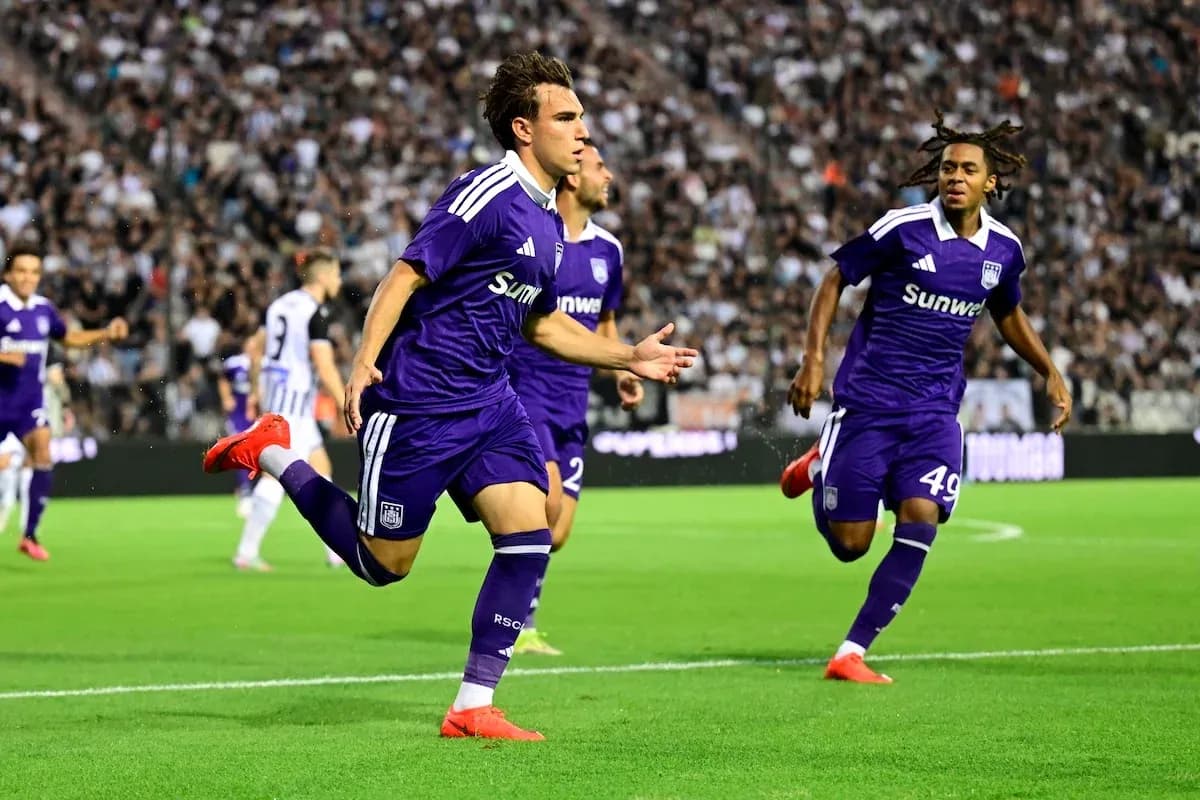
The only recent meeting in the data is the first leg on 6 August 2026 at Toumba Stadium in Thessaloniki, where PAOK hosted Anderlecht in the same 3rd Qualifying Round. Anderlecht won 1–0 away, leading 1–0 at half-time and holding that advantage through full time. Tactically, that result underlines Anderlecht’s capacity to manage an away European game with defensive discipline, while PAOK showed they can be contained at home but still created enough threat to avoid a heavier defeat.
Global Season Picture
- League Phase Performance: There is no standings data provided for either Anderlecht or PAOK in this Europa League qualifying phase, so goals for, goals against, and points within a formal group or league table cannot be quantified here. The seasonal context is therefore driven by knockout progression rather than position.
- Season Metrics: In the Europa League qualifying campaign, Anderlecht have played 3 matches, winning 2 and drawing 1, scoring 5 goals and conceding 2. PAOK have also played 3 matches, winning 2 and losing 1, with 5 goals scored and 3 conceded. Both sides have identical scoring output, but Anderlecht have been slightly tighter defensively across these qualifiers. Card data shows Anderlecht accumulating yellow cards fairly evenly from minute 16 onwards and even a red card late in games, indicating an aggressive, high-intensity approach that can spill into disciplinary risk. PAOK’s yellow cards are concentrated around the end of each half, suggesting increased physicality as periods close.
- Form Trajectory: Anderlecht’s form string of DWW points to an upward curve: an initial draw followed by back-to-back wins, including the away victory in Thessaloniki. PAOK’s WWL shows a strong start with two wins before the home defeat to Anderlecht, indicating a slight downturn at precisely the moment the tie reached its highest stakes.
Tactical Efficiency
Across these Europa League qualifiers, Anderlecht have combined a solid defensive record (2 goals conceded in 3 matches) with consistent scoring, suggesting a balanced tactical setup that can protect leads, as seen in the 1–0 away win. PAOK’s profile is more open: 5 goals scored and 3 conceded across 3 matches points to a side willing to commit numbers forward, which may be necessary in this second leg as they chase the tie.
Without explicit numerical attack and defense indices from a comparison block, the qualitative picture is that Anderlecht’s efficiency lies in game management and defensive structure, while PAOK’s lies in their ability to generate chances and score in both home and away settings. Anderlecht have not failed to score yet in these qualifiers and have kept one clean sheet; PAOK have one clean sheet but have already experienced a shutout in the first leg. That asymmetry in reliability in front of goal and at the back marginally favours Anderlecht in terms of tactical efficiency going into this decisive match.
The Verdict: Seasonal Impact
This second leg is season-defining for both clubs’ European trajectories. For Anderlecht, protecting or extending their 1–0 aggregate advantage would secure progression and guarantee a continued European schedule, boosting club finances, squad visibility, and competitive rhythm heading into domestic commitments. A collapse at home would turn a promising, unbeaten qualifying run into a major missed opportunity.
For PAOK, overturning the deficit away from home is essential to avoid an early European exit that would shift the entire seasonal focus back onto domestic competitions. Success here would restore momentum after the first-leg defeat and reaffirm their capacity to win high-pressure ties on the road. Failure would mean no European group-stage platform, limiting both competitive growth and revenue potential in 2026.
In summary, this match functions less as a routine qualifier and more as a binary gate for the season: victory and progression open a full European campaign; elimination forces an immediate strategic reset around domestic objectives alone.