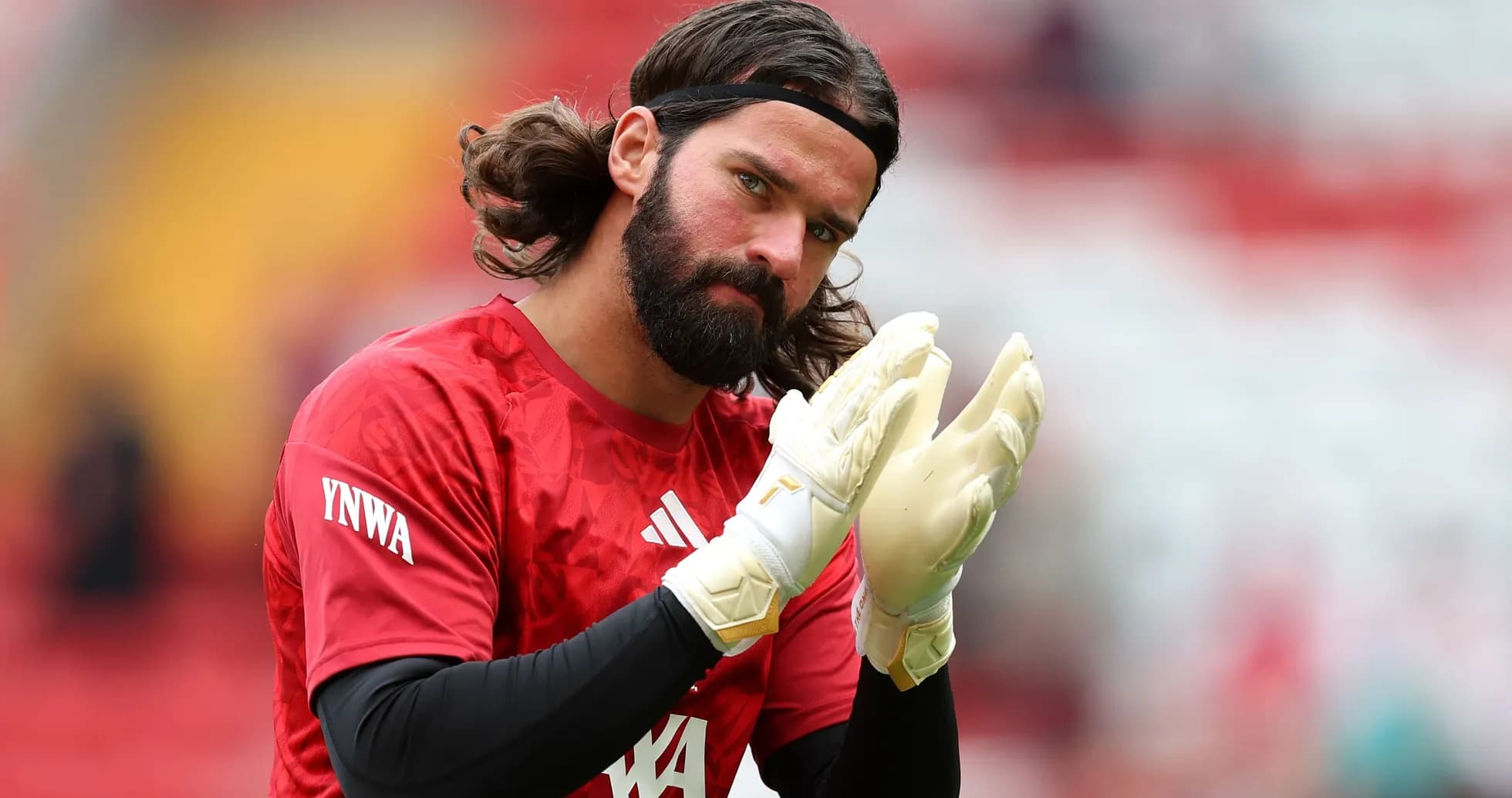
Alisson's Contract Situation: Liverpool's Goalkeeping Dilemma
Liverpool are back in uncomfortable territory. One of their pillars is edging towards the exit door, and nobody at Anfield seems in a hurry to bolt it shut.
Alisson, the goalkeeper who has underpinned an era, is now into the final year of his contract. He turns 34 in October. He earns a reported £250,000 a week. He is still one of the best in the world at what he does. And yet, for now, Liverpool are content to let the clock tick.
On The Athletic’s Walk On podcast, James Pearce cut through the guesswork. There have been no talks. No negotiations. No real movement at all.
“Is he going to still be around next season? We don’t know that at the moment,” Pearce said. “From what I’ve been told, it’s just too soon on all sides. There’s not been those talks yet.”
The mood inside the club might be relaxed, but the calendar is not. If nothing changes, Alisson will be free to agree a pre-contract with clubs outside England from January. That is a hard deadline, whether Liverpool want to treat it as one or not.
Juventus were linked earlier this year. Nothing serious came of it, but the idea lingers: elite clubs in need of a world-class goalkeeper do not often find one potentially available for nothing more than a signing-on fee and a huge wage packet. If Liverpool leave the door ajar, someone will walk through it.
Supporters know this story too well. Contract stand-offs have become a recurring subplot at Anfield, often dragging into the final months of a season and swallowing the narrative whole. This time, the anxiety is sharpened by the fact that Alisson keeps reminding everyone exactly what they stand to lose.
At Bournemouth in the 1-0 win, he did it again. One moment, Evanilson was sure he had scored. The next, Alisson exploded across his goal, an outrageous reflex stop turning a near-certain equaliser into another clean sheet. It was the kind of save that wins games, the kind that shapes seasons, the kind that has defined his Liverpool career.
Yet Liverpool have already started planning for life after him.
Giorgi Mamardashvili arrived from Valencia last year, a long-term project wrapped in a ready-made frame. The Georgian is widely viewed inside the club as Alisson’s natural heir, the next man to own the shirt. For now, though, he waits. And waits.
Pearce underlined the tension brewing in that dynamic. Handing Alisson a new deal would not be a simple case of extending a legend. It would send shockwaves through the rest of the goalkeeping department. Mamardashvili, he suggested, is unlikely to accept a third straight season as a spectator while the Brazilian continues as the undisputed number one.
That raises an awkward question: can Liverpool keep both happy? Or do they have to pick a future and live with the fallout?
There is another layer to all this. Alisson himself might be tempted by a different path. By the end of the 2026-27 campaign, he will have spent nine years on Merseyside. In that time he has won every major trophy on offer, anchored one of the great modern Liverpool sides and carved his name into club folklore.
After that kind of cycle, some players crave a new challenge. A different league. A different culture. One last big move before the twilight of a career.
For now, Liverpool are choosing patience. “Too soon,” in Pearce’s words. No rush. No panic.
But football doesn’t wait. Once January comes, the conversation will no longer be just between Alisson and Liverpool. Agents will listen. Clubs will call. Presentations will be made. The narrative the club wants to avoid could gather pace in a matter of weeks.
If “too soon” drifts into “too late”, Liverpool will discover just how expensive indecision can be when it involves the man who has been their last line of defence – and so often, their first line of success.