Wouter Vrancken Takes Charge at Hearts: A New Era Begins
Six weeks ago Hearts were a kick away from the title. Since then they’ve lost their captain, waved off a string of mainstays, signed seven new faces and changed the man in the dugout.
Tynecastle hasn’t so much turned a page as torn up the chapter.
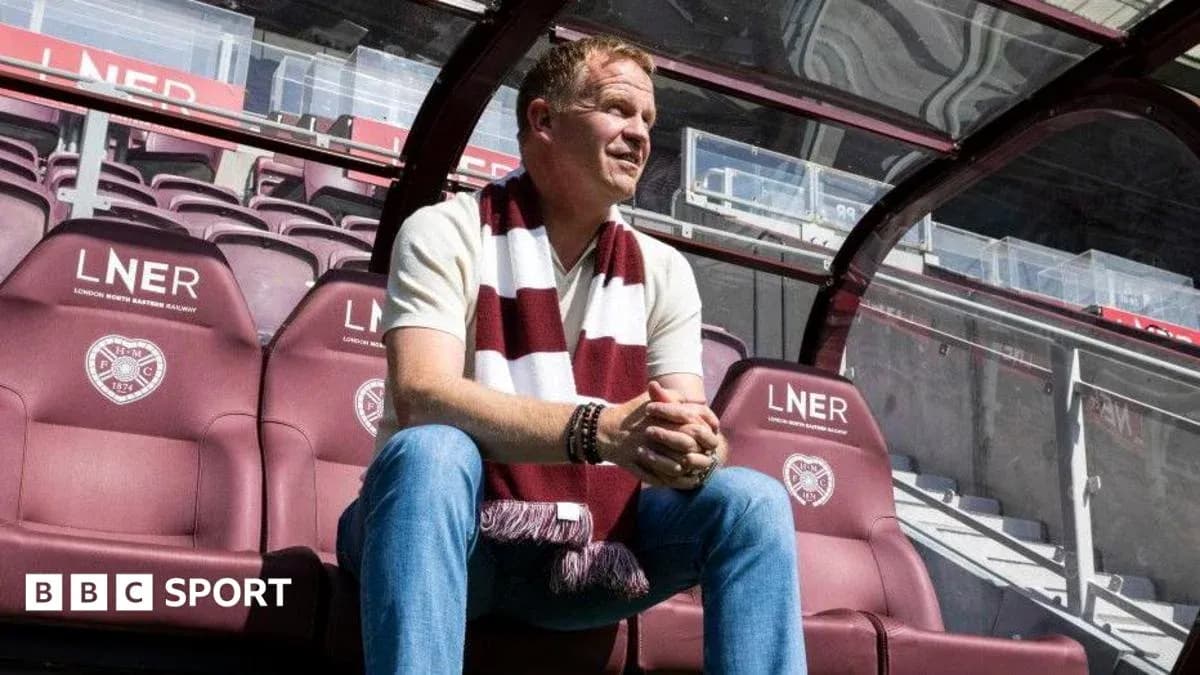
On Friday, a 47-year-old Belgian walked into the room and tried to bring some order to the chaos. Wouter Vrancken, calm behind the microphone, spoke like a man who understands he’s stepping into a club moving at speed and with a very clear idea of where it wants to go.
Data, Bloom and a new kind of Hearts
Tony Bloom’s fingerprints have been on Hearts for more than a year now. His analytics operation has quietly reshaped recruitment, the squad, even the way the club talks about itself. With Derek McInnes gone and Vrancken in, that influence now reaches the technical area.
Sporting director Graeme Jones did not hide how the process worked. The former Sint-Truiden and Genk coach, he said, was “a standout” in the data as Hearts combed the market for a new head coach. The numbers liked him. So did the model.
The story behind those numbers matters. In Belgium, Vrancken built a reputation for dragging clubs beyond their supposed ceiling, getting them to punch above their financial weight while playing front-foot football. That kind of overperformance is exactly what a data-led club chases.
Hearts also wanted someone comfortable in a modern structure. McInnes arrived as an old‑school manager; Vrancken arrives as a pure head coach. He has always worked inside collaborative recruitment systems. For a club where seven players walked through the door before the new coach even unpacked a laptop, that alignment is non‑negotiable.
“I always wanted to look behind the curtain,” Vrancken said, speaking of the analytics-heavy set-up he already knew from Belgium. He talked of trust in the recruitment model, of having been “confronted with it” before, and of now wanting to be part of it from the inside.
He is not coming in blind either. He is close to Chris O’Loughlin, the sporting director at Union Saint-Gilloise, another Bloom-backed club and one of his rivals in the Belgian league. He has seen this kind of project up close, and from the other side of the touchline.
Four weeks to find an identity
The theory sounds neat. The reality is brutal. Vrancken has four weeks to shape a team before his first competitive match – a Champions League qualifier against Sturm Graz.
That is not a gentle landing. It is a sprint start.
Hearts have hired him for his football as much as his flexibility. In Belgium his sides became known for aggressive, attacking play – high pressure, high energy, high risk. He made it clear that is coming to Tynecastle, and quickly.
“I like to have the ball,” he said. Positive, constructive, with joy in the game. That word – joy – cropped up more than once. He wants players to enjoy themselves, because he believes that is how they reach their ceiling.
So the plan is clear: an offensive Hearts, pressing high, playing with intensity and energy. The kind of style that, he believes, fits Scottish football and the Tynecastle crowd.
The clock is already ticking.
A squad in pieces, and in progress
The football might be bold, but the backdrop is ruthless. The churn that began when Bloom arrived has not slowed.
Captain and talisman Lawrence Shankland has gone. Midfield anchor Beni Baningime has gone. Cammy Devlin, a heartbeat of last season’s midfield, has yet to commit to a new deal. At the back, Michael Steinwender and Frankie Kent are out the door, while Craig Halkett will miss the start of the season through injury.
Reports suggest Claudio Braga and winger Alexandros Kyziridis could be next to move on. This is not gentle evolution. It is a rebuild conducted at speed.
Vrancken, though, did not flinch. He called it a good, big squad. He praised what they achieved last year and spoke with respect about McInnes’ work. He does not see the need to rip it up, only to tweak the profile of certain positions to fit his own game model.
Two coaches, he pointed out, are never the same. They work on different things, demand different details. He has already seen qualities in last season’s group that he believes he can bend to his style.
The message was clear: this is not a vanity project. He will use what is there, add what is missing and move quickly.
Learning to live with heartbreak
For all the talk of data and structure, the rawest part of Hearts’ story is emotional. They lost the title in the dying minutes of a wild campaign. The scar tissue from that kind of collapse does not disappear with a new signing or a fresh PowerPoint.
Vrancken understands that better than most. In 2023, his Gent side saw a late Royal Antwerp goal on the final day snatch the title from their grasp. He knows the hollow feeling of watching a season’s work vanish in stoppage time.
“It takes time” to get over, he admitted. But he did not linger on the wound. His focus is on the only cure he recognises: aiming at the new season, working for new goals, putting energy into what comes next rather than what has gone.
He wants Hearts on “the good side of the story” next time. That is how he framed it – not as revenge, but as a different ending.
Ambition, pressure and the next step
The remit could hardly be clearer. Hearts are not hiring Vrancken to stabilise. They are hiring him to climb again, to stay at the sharp end of the table, to turn last season’s near miss into something more tangible.
He welcomes that. “The best clubs to work in are those that have ambitions,” he said, calling Hearts’ target a good point of focus, a good goal to have. Aim as high as possible, then see where you land.
It is a simple line, but it carries the reality of what awaits him. A club leaning hard into data. A fanbase still raw from heartbreak. A squad in flux. A Champions League qualifier looming in a month.
Hearts have chosen their direction. Now they will find out if Wouter Vrancken can turn a model and a mandate into a team that can finally finish the job.