Villarreal vs Sevilla: Tactical Clash Ends in Surprise Defeat
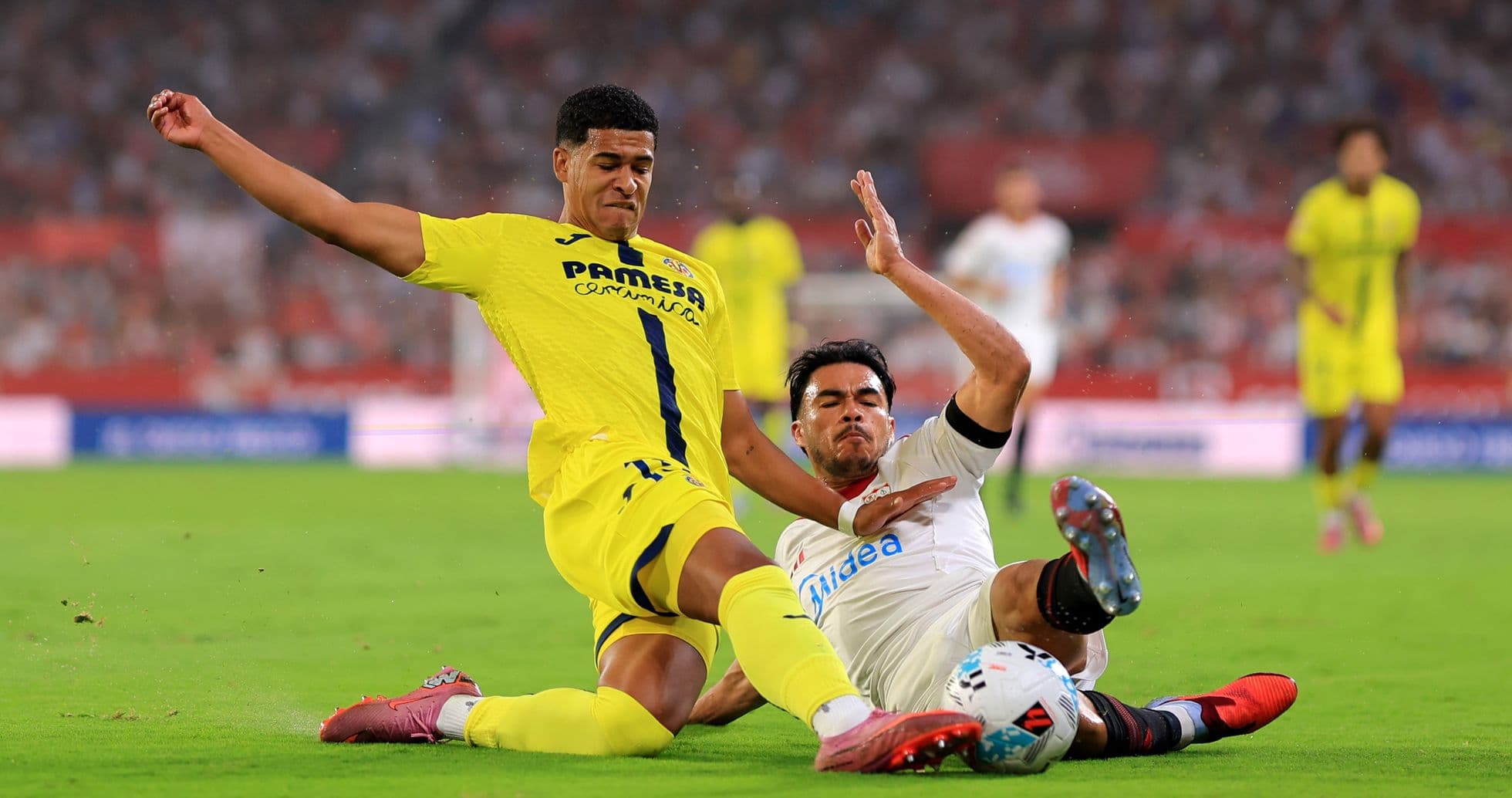
The evening at Estadio de la Ceramica closed with a twist that may yet echo into the final weeks of La Liga. Following this result, Villarreal’s 3rd-place push absorbed a painful blow, surrendering a 2-2 half-time lead to fall 3-2 to a Sevilla side that arrived as a mid-table enigma in 12th but left looking anything but passive. Over 90 minutes, this was a clash between a side built on home dominance and attacking fluency and another forged in tactical adaptability and counter-punching.
Heading into this game, Villarreal’s seasonal identity was clear: front-foot, high-scoring, and ruthless at home. Across the campaign they had scored 67 goals in total, with a striking 43 of those at home, averaging 2.4 goals at Estadio de la Ceramica and 1.9 overall. The trade-off was structural: 43 goals conceded in total, only 18 at home, suggesting that while they often overwhelmed visitors, they were not immune to being opened up when stretched.
Sevilla, in contrast, arrived as a side scarred but dangerous. In total they had conceded 58 league goals, with 34 of those on their travels at an away average of 1.9 goals against. Yet they also carried a stubborn attacking edge: 46 goals in total, 22 away, at an away scoring average of 1.2. This was a team that could be porous but rarely toothless, and their recent form line of “WWWLL” hinted at volatility more than resignation.
Tactical Overview
Tactically, the shapes told the story before a ball was kicked. Marcelino’s Villarreal lined up in their staple 4-4-2, the formation they had used in 35 league matches. A. Tenas anchored the side in goal, shielded by a back four of A. Pedraza, Renato Veiga, P. Navarro, and A. Freeman. In front, a technically gifted and aggressive midfield band of N. Pepe, D. Parejo, P. Gueye, and Alberto Moleiro supplied the ammunition for the front two: G. Moreno and G. Mikautadze.
Across from them, Luis Garcia Plaza opted for a compact 5-3-2, one of several systems Sevilla have deployed this season but here tailored to absorb and spring. O. Vlachodimos was protected by a back five of Oso, G. Suazo, K. Salas, C. Azpilicueta, and J. A. Carmona, with a midfield trio of D. Sow, L. Agoume, and R. Vargas behind a strike partnership of A. Adams and N. Maupay.
The absentees subtly reshaped the tactical landscape. Villarreal were without P. Cabanes and J. Foyth, both ruled out, stripping Marcelino of defensive depth and some of his usual right-sided balance. For Sevilla, the missing trio of M. Bueno, Marcao, and Isaac Romero removed rotation options in defence and attack; Marcao’s absence in particular meant the back line leaned heavily on K. Salas and Azpilicueta’s leadership.
Match Dynamics
From the first whistle, Villarreal leaned into their home persona. With 14 home wins from 18 and only 18 goals conceded at Estadio de la Ceramica, they trusted their structure. Parejo dictated from central pockets, often dropping alongside P. Gueye to form a double pivot that allowed N. Pepe and Moleiro to push high and narrow, almost creating a 4-2-2-2 in possession. Mikautadze, Villarreal’s 12-goal, 6-assist attacker in total this season, roamed between the lines, while Moreno pinned the Sevilla centre-backs.
Sevilla’s response was to compress the middle and weaponise transition. L. Agoume, a key enforcer with 66 tackles and 47 interceptions in total this campaign, acted as the screen in front of the back five, stepping out to meet Mikautadze and Parejo. On the ball, the first outlet was often R. Vargas, whose 6 assists in total this season underline his status as the creative conduit. From his advanced midfield role, he looked early for the runs of A. Adams, Sevilla’s 10-goal striker, and the clever movement of Maupay.
The “Hunter vs Shield” duel crystallised around Villarreal’s forwards and Sevilla’s beleaguered away defence. On their travels, Sevilla had allowed 34 goals; here, despite conceding twice before the interval, they showed why their defensive unit is not purely brittle. Azpilicueta’s positioning, K. Salas’s covering speed, and the relentless edge of J. A. Carmona — who in total this season has 63 tackles and 8 blocked shots — allowed them to survive long spells under pressure and then punish Villarreal’s increasingly stretched structure.
In the “Engine Room”, the battle between Villarreal’s creators and Sevilla’s destroyers was ferocious. Parejo and Moleiro, combining control and incision, tried to unpick the block with angled passes into Mikautadze and wide switches to N. Pepe. Pepe’s total of 55 key passes and 6 assists this season speaks to his capacity to tilt games from the flank. But Sevilla countered with Agoume’s physicality and reading of play; his 281 total duels and 54 fouls committed show a midfielder unafraid to disrupt rhythm, even at the cost of cards.
Discipline, always a sub-plot with these sides, loomed over the contest. Villarreal, whose yellow card peak comes late with 25.64% of their yellows between 76-90 minutes and a further 8.97% in 91-105, once again walked the line as the game opened up. Sevilla, meanwhile, brought with them two of La Liga’s most card-prone figures: Carmona with 13 yellows in total, and Agoume with 10. Their willingness to foul in transition was both a shield and a risk, especially as legs tired and Villarreal pushed for an equaliser.
Conclusions
Sevilla’s attacking edge in this match mirrored their broader season profile: not dominant in volume but clinical in moments. With Adams — who has scored 3 penalties in total without a miss — occupying centre-backs and Vargas threading passes, they found ways to turn limited possession into high-value chances. Villarreal, for all their 43 home goals and 2.4 home scoring average, discovered the flip side of their identity: when the block is broken and the midfield line stretched, the back four can be exposed in the channels, particularly without the injured Foyth’s defensive nous.
From a statistical prognosis perspective, this result nudges the narrative in an intriguing direction. Villarreal still carry a strong overall goal difference of 24, built on 67 goals for and 43 against, and their attacking metrics suggest they will continue to generate high xG at home. But the concession of three goals to a Sevilla side that had scored only 22 away in total before this underlines a vulnerability that better opponents will target in the run-in.
For Sevilla, this is the kind of away performance that hints at an xG profile finally aligning with results. An away attack averaging 1.2 goals and a defence conceding 1.9 will not usually yield comfort, but a flexible tactical plan, a disciplined five-man back line, and the cutting edge of Adams and Vargas offer a blueprint: suffer, then strike.
In narrative terms, Villarreal leave their own stadium frustrated, victims of their ambition and a Sevilla side that refused to conform to mid-table complacency. Following this result, the table still favours Villarreal’s Champions League ambitions, but the margins are thinner, the defensive questions louder, and the sense stronger that in this La Liga season, even a fortress like Estadio de la Ceramica can be breached by a well-drilled, opportunistic visitor.