Vancouver Whitecaps II vs Tacoma Defiance: Match Analysis and Insights
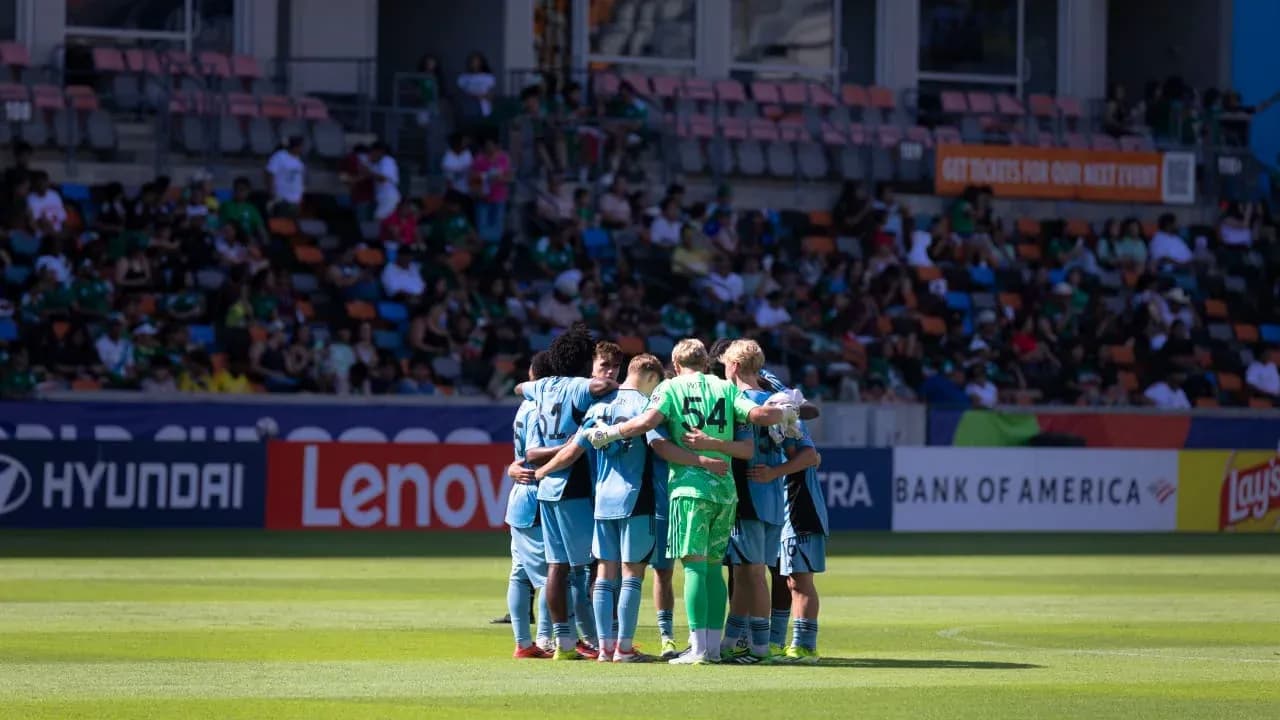
Under the lights at Swangard Stadium, this MLS Next Pro group-stage meeting finished with a stark verdict: Vancouver Whitecaps II 0–2 Tacoma Defiance. Following this result, it felt less like a one-off and more like a crystallisation of each side’s seasonal DNA: Vancouver, volatile and leaky, against a Tacoma outfit slowly learning how to suffer and strike on their travels.
I. The Big Picture – contrasting trajectories
Both teams came into this fixture deep into their campaigns, each having played 11 matches. Vancouver sat 7th in the Pacific Division and 13th in the broader Eastern Conference snapshot with 9 points and a goal difference of -11, built from 15 goals scored and 26 conceded overall. Their season has been streaky and unforgiving: 3 wins, 0 draws, 8 defeats, with an “all or nothing” profile that has left no room for incremental progress.
At home, though, there was genuine hope. Heading into this game they had won 3 of 5 at Swangard, scoring 7 and conceding 8, and their broader season numbers underline that comfort: 8 home goals in total at an average of 1.6 per match, matched by 8 conceded at 1.6. Away from Vancouver, they had been a completely different side—0 wins from 6, 8 goals for and 18 against, an away concession average of 3.2 that has dragged their overall goals against up to 27 (2.5 per game in total).
Tacoma Defiance arrived with 11 points and a goal difference of -6, their 12 goals for and 18 against overall painting a picture of a team that must work hard for every margin. They had 4 wins and 7 defeats, with no draws, but crucially they were beginning to find resilience on their travels: 2 away wins from 5, scoring 5 and conceding 11. On their travels they averaged 1.2 goals for and 2.2 against, more fragile than at home but trending upwards in form with a season-best winning streak of 2 earlier in the campaign.
The 2–0 away win at Swangard therefore reads as a statement: Tacoma exporting their more balanced home profile onto hostile turf, while Vancouver’s structural fragility finally bled into their supposed safe haven.
II. Tactical Voids and Discipline – where the cracks appear
There were no listed injuries or suspensions, so both coaches essentially had full decks to play with. For Vancouver, coach Rich Fagan leaned into a young, high-ceiling group. S. Rogers anchored things from the back, with T. Wright and P. Amponsah among those tasked with turning raw athleticism into defensive structure. In midfield, the technical axis of Y. Tsuji and C. Rassak was meant to connect to the energy of S. Deo and the creativity of Y. Zuluaga and M. Popovic.
Yet the season-long defensive story loomed over them. Vancouver had not kept a single clean sheet in total, either at home or away. The numbers are brutal: 8 goals conceded at home and 19 on their travels, 27 overall. Even when they score, they are almost guaranteed to give something back.
Their disciplinary profile hints at a side that often chases games late. Across the season, 18.18% of their yellow cards have come in the 76–90' window, with another 18.18% between 91–105'. That late-game surge of cautions suggests tactical fouls and tired legs as they scramble to hold on or recover deficits—exactly the kind of pattern that a more composed opponent like Tacoma can exploit.
Tacoma’s card distribution is very different. Their yellow-card peak sits at 31–45', where 30.77% of their cautions are picked up, and then again at 46–60' and 76–90' with 23.08% each. This is a team that plays aggressively through the middle phases of each half but manages to avoid total chaos. Crucially, like Vancouver, they have no red cards listed, so their aggression has remained just inside the lines.
III. Key Matchups – Hunter vs Shield, Engine Room vs Enforcer
In a league where margins are slim, this fixture was always going to be decided in the duels between Vancouver’s hopeful creators and Tacoma’s compact spine.
The “Hunter vs Shield” dynamic was, unusually, more collective than individual. Vancouver’s attack is distributed rather than star-led; even their only listed statistical standout, Trevor Wright, appears in the league’s top charts more as a presence than a prolific scorer, with 0 goals and 0 assists but the trust to start as a defender here. The “hunter” was the unit: Zuluaga drifting between lines, Popovic looking to pull centre-backs wide, and Deo pushing into half-spaces.
Their task was to break down a Tacoma defence that, despite a negative overall goal difference, has a more coherent shape. At home Tacoma concede 1.3 per match; away that rises to 2.2, but the trend line is improving, with two clean sheets overall (one home, one away). The visitors’ back unit—C. Baker, G. Sandnes, S. Hawkins, and C. Phoenix—had to translate that home solidity to Swangard, screening M. Anchor and keeping Vancouver’s front line from finding rhythm.
In midfield, the “Engine Room” battle set the tone. X. Gnaulati and M. O'Neill offered Tacoma control and verticality, supported by the work rate of C. Gaffney and S. Kitafuji in the channels. Against them, Rassak and Tsuji needed to dictate tempo and protect a back line that has suffered all season. Instead, Tacoma’s engine room imposed itself, allowing the visitors to compress space centrally and force Vancouver wide, where crosses became easier to defend.
Up front, S. Gomez and Y. Tsukanome embodied Tacoma’s away identity: not a barrage of chances, but clinical moments. With Tacoma averaging 1.2 goals away and Vancouver conceding 1.6 at home (and 2.5 overall), the numbers suggested that if the visitors could reach their typical attacking output, the hosts would struggle to keep pace. The 2–0 scoreline fits neatly within that statistical corridor.
IV. Statistical Prognosis – why 2–0 felt inevitable
Even without explicit xG figures, the season data offers a clear expected pattern. Heading into this game:
- Vancouver were averaging 1.5 goals for and 2.5 against in total, with 1.6 scored and 1.6 conceded at home.
- Tacoma were averaging 1.3 goals for and 1.7 against in total, with 1.2 scored and 2.2 conceded on their travels.
Blend those profiles and the pre-match expectation was of a relatively open game, likely leaning toward both teams scoring. Yet the key statistical red flag for Vancouver was their complete absence of clean sheets and their habit of late yellow cards. Once Tacoma established control in midfield and found the opener, the probabilities swung heavily in their favour: Vancouver are not built to chase games without overexposing their back line.
Tacoma, by contrast, have already shown they can win both 4–1 at home and 0–2 away. That 0–2 template—clinical, controlled, and defensively disciplined—was exactly what unfolded at Swangard. Their penalty record (1 taken, 1 scored) and Vancouver’s perfect 3-from-3 from the spot never came into play, but they underline a final point: both sides are technically sound from dead balls; it is in open play structure where the gulf emerged.
Following this result, the story of the night is clear. Vancouver’s young core still offers promise, but their defensive system and game management remain brittle. Tacoma Defiance, meanwhile, are evolving into a side that can export their best traits onto the road: a compact shield in front of Anchor, an industrious engine room, and forwards who do not need many chances to decide a match.