Valencia and Rayo Vallecano End in Tactical Stalemate
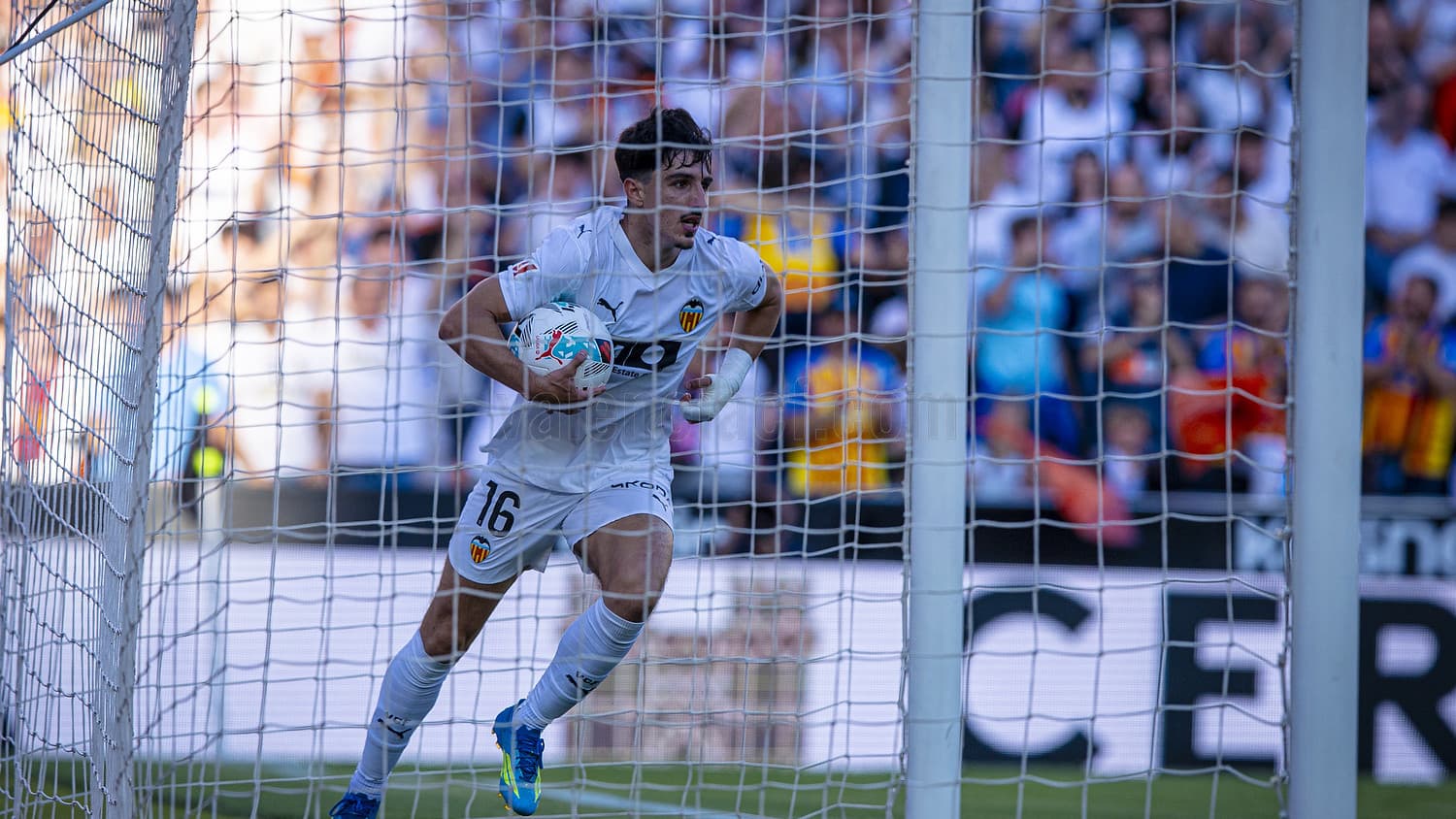
On a warm evening at Estadio de Mestalla, Valencia and Rayo Vallecano played out a 1–1 draw that felt less like a dead‑rubber in Round 36 and more like a meticulous tactical sparring session between two sides separated by a single point in La Liga’s mid-table pack. Following this result, Rayo sit on 44 points in 10th, Valencia on 43 in 11th, both safely clear of danger yet still fighting for stature and momentum heading into the final stretch.
I. The Big Picture – Two Identities, One Stalemate
Valencia leaned into their season’s primary identity: a 4‑4‑2 that Carlos Corberan has used in 22 league matches. The structure was clear on the teamsheet: S. Dimitrievski in goal behind a back four of Renzo Saravia, C. Tarrega, E. Comert and José Gayà; a flat midfield line of D. Lopez, Pepelu, G. Rodriguez and Luis Rioja; and a front pairing of H. Duro and Javi Guerra.
The system mirrors Valencia’s statistical profile. At home this season they average 1.3 goals for and 1.2 against, a narrow margin that echoes their overall goal difference of -12 (39 scored, 51 conceded). Mestalla has been more sanctuary than fortress – 7 home wins, 6 draws, 5 defeats – and this match fit that pattern: competitive, balanced, but rarely ruthless.
Rayo Vallecano arrived with a very different blueprint. Inigo Perez set his side up in a 4‑2‑3‑1, the shape they have used in 22 league games. A. Batalla anchored the defence, with I. Balliu, F. Lejeune, Nobel Mendy and P. Chavarria across the back. The double pivot of O. Valentin and G. Gumbau sat beneath an attacking band of F. Perez, P. Diaz and Pacha, all servicing lone forward R. Nteka.
Rayo’s season has been defined by resilience rather than explosiveness: in total they have scored 37 and conceded 43, a goal difference of -6, with 14 draws from 36 matches. On their travels they mirror Valencia’s away record almost exactly – 4 wins, 4 draws, 10 defeats, 15 scored and 28 conceded – which made this clash feel like two sides looking at slightly different versions of themselves.
II. Tactical Voids – The Missing Pieces
Both squads were subtly reshaped by absences, and the voids influenced the rhythm of the game more than any one moment.
Valencia were without L. Beltran (knee injury), J. Copete (ankle injury), M. Diakhaby (muscle injury) and D. Foulquier (knee injury). The most telling absence was in defensive depth: without Diakhaby and Foulquier, Corberan had little margin for error in his back line. It increased the load on Tarrega and Comert to defend space aggressively, and on Gayà to balance his usual attacking thrust with responsibility behind the ball.
Rayo’s missing players reshaped their attacking and defensive ceiling. I. Akhomach (muscle injury), A. Garcia, Luiz Felipe and D. Mendez (all injuries) were joined on the sidelines by Isi Palazón, suspended after a red card. Isi’s absence was particularly significant: he has 3 goals and 3 assists this season, but also 10 yellow cards and 1 red, a walking embodiment of Rayo’s edge. He has already missed one penalty, so Rayo’s 100.00% conversion from the spot in total this campaign (3 scored from 3) was protected by his absence, but they lost their most combustible wide threat.
The disciplinary backdrop of both teams also framed the contest. Valencia’s yellow cards peak late, with 22.86% of their bookings coming between 76–90 minutes – a late‑game surge that often coincides with fatigue and desperation in duels. Rayo’s card distribution is more evenly spread but spikes in the 46–75 window, where 38.38% of their yellows arrive, and their red‑card profile is alarming: 11.11% between 46–60, 22.22% between 61–75, 22.22% between 76–90 and a remarkable 33.33% between 91–105. This is a side that walks the disciplinary tightrope as games open up.
III. Key Matchups – Hunter vs Shield, Engine Room vs Enforcer
The standout attacking figure on the pitch in terms of season output was Rayo’s Jorge de Frutos, even though he began among the substitutes. With 10 league goals and 1 assist, plus 47 shots (26 on target), he is the visitors’ most reliable finisher. His eventual introduction tilted the “Hunter vs Shield” duel toward a late‑game narrative: could Rayo’s sharpest weapon pierce a Valencia defence that concedes 1.2 goals at home on average?
Against that, Valencia’s “shield” was more collective than individual. Gayà, who has blocked 7 shots this season and combines 69 tackles with 23 interceptions, again carried dual responsibility: lock down his flank and provide the outlet that launches counters. His presence, alongside Tarrega and Comert, helped ensure Rayo’s possession seldom translated into clear, central chances.
In the “Engine Room” battle, Valencia had the more defined playmaking axis. Pepelu and G. Rodriguez provided structure, but the creative fulcrum was higher up. Luis Rioja, with 6 assists and 37 key passes, plus 61 dribble attempts (35 successful), and Javi Guerra, also on 6 assists with 29 key passes and 6 blocked shots, formed a dual‑creator threat. Guerra’s nominal role as a forward in this 4‑4‑2 belied his natural tendency to drop and link, turning the front line into a fluid triangle with Duro.
Rayo’s answer lay in their double pivot and their enforcers. Gumbau and Valentin were tasked with choking the central lanes where Guerra likes to receive. Behind them, Nobel Mendy – who has blocked 21 shots this season and added 27 tackles and 21 interceptions – personified the “enforcer” role. He stepped out aggressively to meet Valencia’s second‑line runners, using his anticipation and physicality to compress space between the lines.
IV. Statistical Prognosis – A Draw Written in the Numbers
Following this result, the numbers still paint these sides as near‑mirrors. Valencia’s all‑matches record of 11 wins, 10 draws and 15 losses, with 39 scored and 51 conceded, screams inconsistency. Rayo’s 10 wins, 14 draws and 12 defeats, with 37 scored and 43 conceded, suggests a marginally sturdier defence but similar attacking output.
If we overlay typical Expected Goals profiles on their season data, a 1–1 feels almost inevitable. Valencia’s home average of 1.3 goals for against Rayo’s away average of 1.6 conceded points to a narrow home edge, but Rayo’s in‑total defensive average of 1.2 goals against offsets that. Conversely, Rayo’s 1.0 goals for in total this campaign, up against Valencia’s 1.2 goals against at Mestalla, sits right on the line of a single away goal.
Defensive solidity and discipline were always going to define the margins. Valencia’s late‑card surge hinted at potential chaos in the final quarter‑hour, while Rayo’s red‑card history threatened to tilt the balance if tempers flared. That neither side imploded under that weight and both kept the score locked at 1–1 is, in many ways, a reflection of their season: flawed, combative, but ultimately balanced.
The draw preserves Rayo’s slight advantage in the table and leaves Valencia still chasing them, but it also underlines a deeper truth: these are two teams built on structure and grind rather than brilliance. On a night when the tactical plans largely cancelled each other out, the scoreboard simply followed the script the numbers had been writing all season.