Thomas Tuchel's England Selection: Bellingham or Rogers?
Thomas Tuchel has not tiptoed into the England job. He has kicked the door open and told everyone inside that no seat is reserved, no name is inked on the teamsheet. Not even Jude Bellingham’s.
While Bellingham has slipped in and out of camps, nursing injuries and recovering from surgery, Morgan Rogers has quietly – then not so quietly – walked into the space his absence created. The Aston Villa playmaker has dragged his club form onto the international stage, offering a clean, classical No.10 profile just as Tuchel started to tinker with his attacking structure through qualifying.
The goals have not flowed for Rogers in torrents, but that is not really the point. He plays as a pure creator, a link between midfield and Harry Kane, where Bellingham often roams as a force of nature rather than a traditional playmaker. Tuchel has not hidden the fact that this is a straight fight.
“Rather than finding the best players a position to just have them on the field, it's maybe better to put everyone in their best position and have a competition. At the moment, the competition is between the two of them,” he said back in November, when the debate first sharpened into focus: Bellingham or Rogers behind Kane?
On form alone, Rogers has a compelling argument. His year for Villa has been electric, his cameos and starts for England tidy, inventive, unflustered. He has done exactly what every manager asks of a newcomer: take the chance, then demand another. If Tuchel picked him in Dallas, few inside the England camp could claim surprise.
For Bellingham, the challenge is different. He does not just have to be good. He has to be better. Better than the player who has filled the void while he was away. Better than the noise that now follows him into every England camp.
Because the questions around him are no longer just about output. They are about edge, about temperament, about how much fire is too much.
Bellingham has always played with a swagger that borders on confrontation. It is part of what makes him so compelling, and part of what drags him into trouble. The flashpoint that still lingers came in the 3-1 defeat to Senegal last June, when his furious reaction to a VAR call burned across the broadcast, a close-up of anger that fed into a wider narrative.
Tuchel was quizzed about it on TalkSport after that friendly at the City Ground. He did not flinch from the subject.
“I think he brings an edge, which we welcome and which is needed if we want to achieve big things,” he said. “It needs to be channelled. The edge needs to be channelled toward the opponent, towards our goal and not to intimidate team-mates, or to be over aggressive to team-mates or referees.”
Then came the line that has stalked his tenure ever since, a clumsy attempt at honesty that turned into a lightning rod. Tuchel relayed his own mother’s view of England’s brightest star.
“I see that it can create mixed emotions. I see this with my parents, with my mum that she sometimes cannot see the nice and well-educated and well-behaved guy that I see… If he smiles, he wins everyone, but sometimes you see the rage, the hunger and the fire, and it comes out in a way that can be a bit repulsive. For example, for my mother, when she sits in front of the TV, I see that, but in general we are very happy to have him, he's a special boy."
The intention was to humanise Bellingham. Instead, it poured petrol on an already hot debate about his persona and how he is perceived.
By the time Bellingham finally returned to the England squad in November, still working his way back after surgery, his relationship with Tuchel was under the microscope before he had even laced his boots. Every selection, every gesture, every glance between the two was suddenly a story.
Tuchel left him on the bench for the first game of that window against Serbia. A statement, some argued. Three days later, Bellingham was back in the XI against Albania, only to leave the pitch six minutes from time with what looked like another flash of irritation, gesturing as he came off in England’s final qualifier.
“That's the decision, and he has to accept the decision,” Tuchel said afterwards. “His friend is waiting on the sideline, so you need to accept it, respect it, and keep on going."
Outside the camp, the scrutiny took on a sharper edge. Former England striker Ian Wright stepped in, not just to defend Bellingham as a player, but to challenge the lens through which some people view him.
“I don't think they're ready for a black superstar who can move like Jude is moving. They can't touch him," Wright said of certain corners of the English media and fanbase. "He goes out there, he performs, he does what he does. It's too uppity for these people.
“They all love N'Golo Kante. He's a humble Black man, gets on with what he's doing. Someone like Jude frightens these people because of his capability and the inspiration he can give. Because if you are outspoken, Black, and playing to that level and not caring, that frightens certain people. It's a tiring exercise to speak about."
The discussion around Bellingham has become layered, complicated, heavy. Personality, race, attitude, expectation – all stacked on top of the simple, footballing truth: when he is at his peak, England are a different animal.
The problem for Tuchel is that those peak performances have thinned out in recent months. The explosive surges, the match-defining interventions, have been replaced by shorter bursts, flashes rather than full storms.
So now, on the eve of England’s opener in Dallas, the head coach stands at a fork in the road.
Does he trust one of the most gifted midfielders on the planet, accepting that the same emotion that drives him can sometimes spill over? Or does he reward Rogers, the form player, the calmer presence, who has never felt the weight of a major tournament but has done everything asked of him?
Tuchel has tried to spark Bellingham into life, to use competition as a prod rather than a punishment. Yet the noise around his comments – especially the ones about his mother – has drowned out almost every sober assessment of what Bellingham has actually done on the pitch for England in the last year.
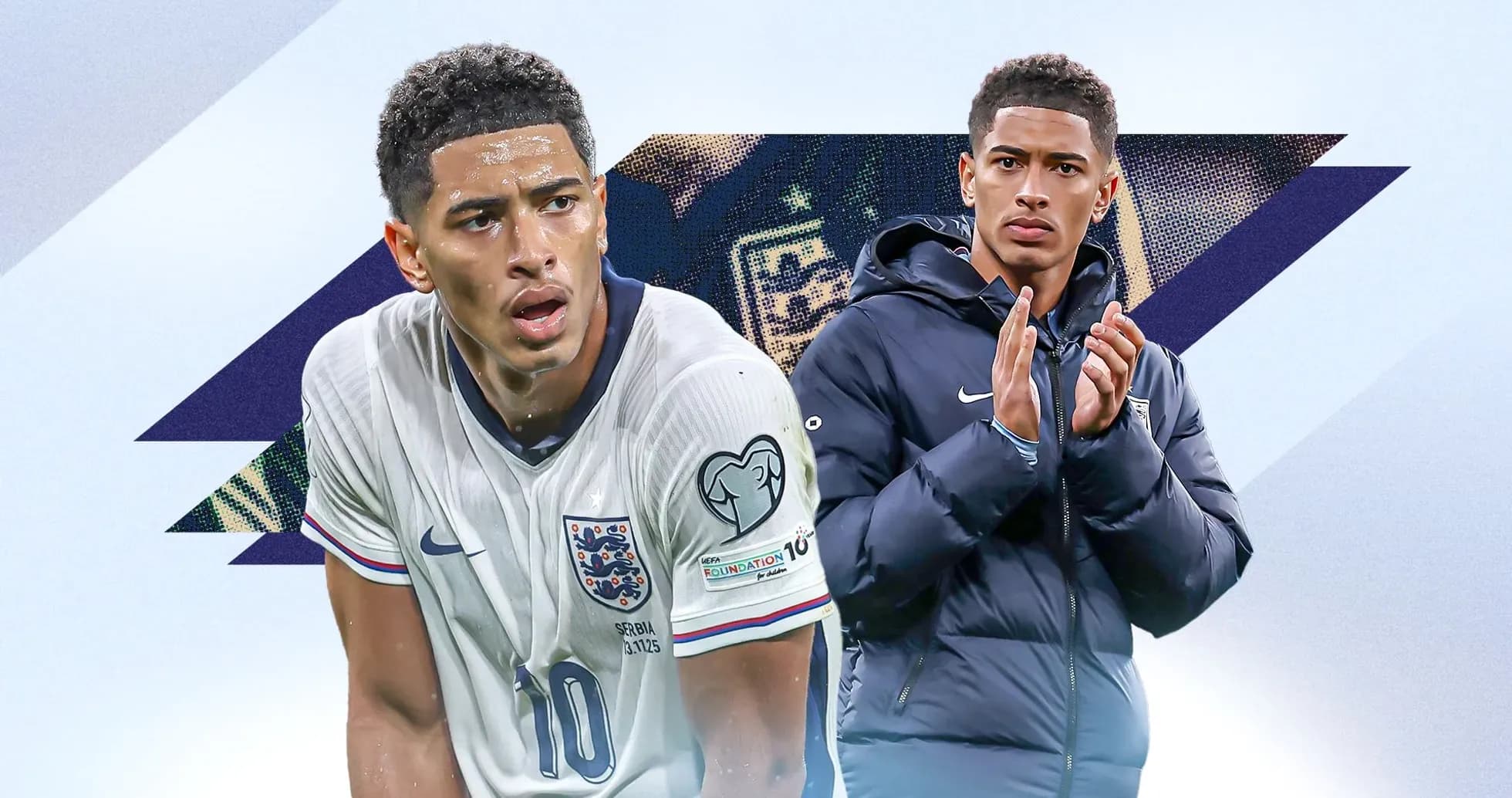
The No.10 shirt on his back this summer will carry its own symbolism. It has long been the jersey of England’s leading artist, the player entrusted to shape the story of a tournament. But this time, the number guarantees nothing. Against Croatia, Bellingham might be the conductor. He might be the understudy.
What feels certain is this: he will not drift through this World Cup unnoticed. If he starts and catches fire, he can tilt games, even entire weeks, in England’s favour. If the frustration wins out – in his body language, in his reactions, in his duels with referees and opponents – he will dominate the headlines for all the wrong reasons.
That coin is in the air now, spinning above Tuchel’s first major tournament as England manager. Which way it lands may decide far more than just who plays as the No.10. It may decide how far England dare to dream.