From European Ambitions to Survival: Tottenham's Season Under Venkatesham
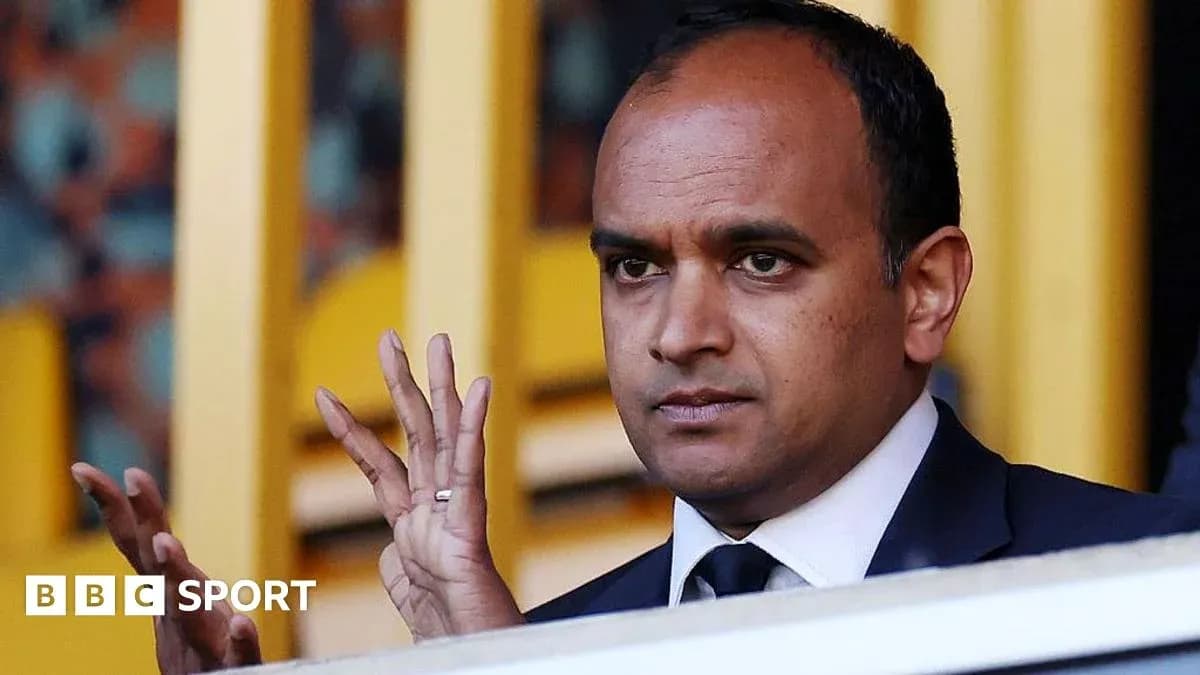
Vinai Venkatesham walked into Tottenham Hotspur last June talking about Europe. He ended his first season clinging to the Premier League cliff edge, celebrating survival as if it were silverware – and knowing that, by Tottenham standards, it was nothing of the sort.
The mood has flipped. So has the club’s sense of itself.
From European talk to a relegation scrap
On day one, Venkatesham thought the target was obvious.
Compete for European places. Build on a Europa League triumph under Ange Postecoglou. Push on with a squad packed with internationals that had, despite a 17th-place finish, finally ended a trophy drought stretching back to 2008.
A year later, he was watching the final minutes against Everton like everyone else inside the stadium: tight-chested, waiting for the trapdoor to slam shut.
The win kept Spurs up. Just.
“I think it was just a huge outpouring of relief,” he admitted, while stressing that no staff redundancies would have followed even if relegation had come. Relief, though, is not what a club of Tottenham’s size is supposed to be feeling in May.
“Feeling relief at the end of the season is nowhere near the standard of the football club,” he said. He knows it. The supporters know it. And they have not been shy in telling him.
“Not a turnaround – a reset”
It did not take long for the new chief executive to realise he had misread the scale of the task.
“If you'd have asked me a few months after I joined, when I was no longer an outsider, I would have told you the club was in a significantly worse state in some places than I thought,” he said.
This, he stressed, was not a dig at his predecessors. It was simply the reality he walked into.
This was not a tweak. Not even a rebuild.
“It was very clear that this wasn't some form of turnaround that was required of the club in quite a few areas. It was really a complete reset.”
Off the pitch, Tottenham look like a modern super-club. Stadium operations, commercial strength, global profile – all rated by Venkatesham as genuinely elite.
On the football side, over the last five years, the Premier League has raced away.
“I'm not saying that Tottenham didn't improve in that period,” he said. “But when you look at where Tottenham were in many of those areas, compared to where I believe other Premier League clubs are, there was a significant gap. In some areas really quite worryingly so.
“I don't think that there was what I would call a relentless obsession with football success.”
The training ground is a symbol of the problem. Gleaming, immaculate, admired across Europe – and, in his eyes, too comfortable.
“Our training centre is amazing, one of the best, if not the best in the world. But when you look around, it looks more like a five-star hotel than it does a performance environment. That will change over the summer.
“I think there are many areas where the club hasn't got the right level of expertise.”
The reset, then, is not just about players and coaches. It is about mentality, structure, and edge.
The Thomas Frank dilemma
On the pitch, the season lurched early.
Thomas Frank’s reign, on paper, started reasonably. One defeat in the first 10 games across all competitions suggested stability. Under the surface, the slide had already begun.
By February, when Spurs finally sacked him, the only surprise among the fanbase was that he had lasted that long. Venkatesham and sporting director Johan Lange were hammered for perceived indecision.
“There's been plenty of coverage that the club was passive during this period. And that's absolutely not true,” Venkatesham insisted.
Inside the club, Frank’s future was being dissected constantly. Results, the likelihood of a turnaround, the risk of unsettling the January transfer window, the congested fixture list, the thin and often chaotic interim market – all weighed in the balance.
They hesitated. The season deteriorated. And when they finally moved, the next call proved even more contentious.
Missing De Zerbi, gambling on Tudor
After Frank’s dismissal, Tottenham tried to go big.
Venkatesham confirmed the club moved for Roberto de Zerbi, then leaving Marseille, with the intention of appointing him as permanent head coach. The Italian, though, did not want to walk into a relegation fight mid-season.
That refusal sent Spurs into the interim market. It was narrow. It was risky. And it led them to Igor Tudor.
“We were very disappointed when it became clear that we wouldn't be appointing Roberto on a permanent basis [in February],” Venkatesham said.
Tudor’s CV ticked some boxes. High-pressure jobs. A reputation for making an immediate impact. Experience at big clubs. A personality very different to Frank – and, in the boardroom’s view, a jolt the dressing room needed.
But there was a glaring red flag: no Premier League experience.
“Was it a risk in appointing him? Absolutely.”
Seven games later, Tudor was gone by mutual consent. The experiment had failed.
Asked if it was a mistake, Venkatesham did not dance around it.
“It didn't work out. I think it's very clear it didn't work out. And I don't think that is in question. I don't think anybody would argue anything else.”
In a season already spiralling, it was another blow to his credibility with supporters.
From Levy’s lightning rod to Venkatesham’s storm
For a quarter of a century, Daniel Levy absorbed most of the anger when things went wrong. With the former executive chairman stepping down in September, that fury needed a new target.
It found one quickly.
Two consecutive 17th-place finishes, a chaotic managerial carousel, and the sense of drift on the football side have all sharpened the focus on the new chief executive.
“I understand the frustration around supporters. I think Tottenham supporters have been frustrated for some time. This is two 17th-place finishes in a row,” he said.
“It's clearly not good enough. I think that is rational, normal, sensible, and is what we would expect from supporters.”
The football problems, he argued, are deep-rooted.
“The club had some serious challenges that it needs to address on the football side. We know what those are. We are addressing them. We are fixing them. Those challenges have not disappeared overnight.
“They built up over many years. I wish I could wave my magic wand and fix them overnight, but that is not possible. It takes some time to fix those issues.
“So I have complete confidence in what we're doing, how we're doing it. But supporters are rightly impatient. So I have to weather that storm.”
The storm has turned personal at times. Abuse has gone beyond criticism of decisions and into attacks on him as an individual.
“It's not easy. You have to develop a thick skin,” said Venkatesham, who spent 15 years in football before arriving at Spurs, including a long spell at Arsenal.
“I'm helped by the fact that I've been in football for a while, for the last 15 years, so it's not new to me.
“It's a game of opinions, and I have absolutely no problem with being criticised. I've got no problem with anyone in the game being criticised, it's just part of the job.
“The challenge in football is that that criticism frequently goes way past the line for players, referees, executives.”
He is not walking away. Not yet. Not when the man he originally wanted in February is now in the dugout.
De Zerbi’s shock therapy
Inside the club, they talk about Roberto de Zerbi’s impact with something close to awe.
The Italian finally arrived late in the season, took charge of a fractured dressing room, and squeezed 11 points from seven matches to drag Tottenham over the line. Survival was secured, but that was only part of his effect.
“I think he has made an extraordinary impact so far,” said Venkatesham.
“We have to recognize that it's early days, and we also need to recognize that he's come into a very specific situation.
“It is hard to underestimate the scale of the challenge he walked into. And it's hard to describe what a significant impact he has had in the dressing room with all the players.
“I think he's an excellent coach, and we think that he plays the style of football that our supporters and the broader football public want to see.”
Players talk about clarity. Intensity. Demands that match the rhetoric about turning the training centre from a luxury resort into a high-performance bunker.
De Zerbi will not simply coach what he is given. He will help choose it.
Raising the ceiling, reshaping the squad
This summer is not being dressed up as just another window. Inside Tottenham, they know it cannot be.
De Zerbi is expected to be heavily involved in recruitment. Talks have taken place with former Borussia Dortmund sporting director Sebastian Kehl, part of a wider attempt to sharpen the club’s football expertise.
Money, too, is being repositioned.
Venkatesham confirmed that Spurs have raised their wage ceiling in an effort to attract higher-calibre players, a significant shift for a club long known for strict internal structures.
“The squad needs work and the squad hasn't got the right balance,” he said.
“We need experience and leadership and also that kind of physical robustness to play in the most demanding league that exists.
“We need to strengthen the club over multiple transfer windows but this transfer window, in particular, is going to be critical.”
Tottenham have spent the past two seasons flirting with disaster. Now they have a coach whose football demands ambition and a chief executive talking about a reset, not a rescue.
The question is no longer whether they can avoid going down.
It is whether this summer finally marks the moment Spurs start acting – and building – like a club that never should have been down there in the first place.