Tottenham's Internal Review After a Chaotic Season
Tottenham are pulling their club apart to see what went wrong. Not in the boardroom, not in the stands. In the dressing room, on the training pitches, under the south stand of their own stadium.
Survival on the final day has forced a reckoning.
Two points. That was the thin strip of daylight between Spurs and the Championship after a Premier League season that lurched from chaos to outright crisis before Roberto De Zerbi dragged them over the line with 11 points from the final six games. It felt less like a run-in and more like a rescue mission.
Now the inquest has begun.
Lange under pressure as De Zerbi steadies the ship
The club have launched an internal review of almost every aspect of their football operation. Nothing is off limits. Not the people, not the processes, not even the grass.
Sporting director Johan Lange is at the heart of it. His position is under serious threat after a disastrous 12 months that saw four different head coaches come and go. The Dane may yet be eased into a supporting or handover role, with Spurs intent on recruiting what they describe as a world-class sporting director to front the rebuild.
De Zerbi, by contrast, has quickly become the fixed point in the storm. The Italian arrived into a fractured, fearful dressing room and a club riddled with doubt, then imposed clarity. Results gave him authority; his methods are now shaping the review.
Injuries under the microscope
The numbers are damning. Tottenham suffered more injuries than any other Premier League club this season, many of them serious. Their squad was shredded at key moments.
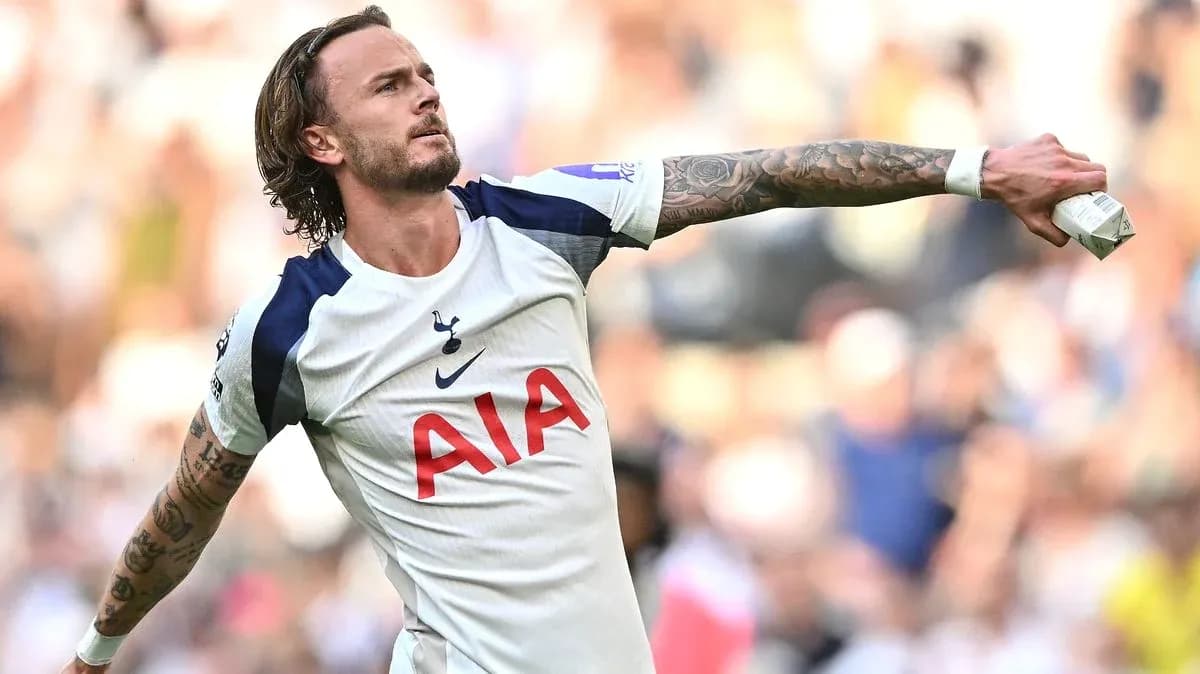
James Maddison, only recently back after his partially torn anterior cruciate ligament fully ruptured last summer, did not bother to hide his frustration after the win over Everton.
"Our situation with the injuries has been worse than any other club," he told reporters. "People try and say 'Oh, but we've got this and that', but ours is astronomical, and we need to look at why that is."
That question now drives the club’s internal investigation.
The man tasked with answering it is Dan Lewindon, the new performance director, who arrived from City Football Group in February. He walked into Hotspur Way the day before Thomas Frank departed and immediately found a medical and performance structure in flux.
Geoff Scott, who had provided two decades of continuity as head of medicine and sports science, left in 2024 and is now at Nottingham Forest. His departure was followed by a rapid churn: director of performance services Adam Brett and head of sports science Nick Davies both lasted only a year. Nick Stubbings came in last summer as men’s medical lead after 11 years at Brentford, following the well-trodden path from west to north London.
Into that revolving door stepped Lewindon, with a mandate to stop the bleeding — literally and figuratively.
A new power figure in the background
Lewindon brings a background that stretches across elite football, tennis and rugby. Spurs believe his blend of performance, science and medical expertise can finally break the cycle that has left them with double figures of players unavailable for long stretches in each of the last three seasons.
He has already become a key ally for De Zerbi. The pair are understood to speak regularly about how to drag Tottenham’s performance and medical departments up to the level of the game’s superclubs, both in structure and in standards.
Non-executive chairman Peter Charrington put it bluntly on Monday, confirming that moves are underway to “modernise our football operation, with a significant focus on raising standards across medical and performance”.
That modernisation is not theoretical. It is visible in how De Zerbi works day to day.
De Zerbi’s hard line on risk
Inside the club, staff in the medical department have been struck by the Italian’s consistency under pressure. Results were non-negotiable in that fraught run-in, yet he refused to gamble recklessly with players’ bodies.
He has insisted on clear communication, constant feedback and shared decisions on when to bring players back. Those who have sat in meetings with him talk about a head coach who pushes for information, not shortcuts. He has made it clear that he sees himself as part-psychologist, part-tactician, and his frequent one-to-one meetings with players backed that up.
In the final weeks of the season, he used video clips of players at their best — for Spurs and at former clubs — to restore belief and remind them who they were before the injuries, the defeats and the noise.
The message: you are more than this table says you are.
Is the pitch part of the problem?
Yet some problems are structural, not emotional. One of the most striking elements of Lewindon’s review is the decision to investigate the Tottenham Hotspur Stadium’s retractable pitch.
The surface slides under the south stand to allow NFL games and concerts to take place. It is an engineering marvel, a commercial asset — and now a suspect.
Spurs have suffered five ACL injuries in recent years. Inside the club there is an acceptance that this is too many. Real Madrid, who also use a retractable surface, have endured a similarly worrying injury spike since installing theirs.
To rule out a hidden flaw, early independent tests have been carried out on matchdays, comparing the bounce and spring of the stadium pitch with the turf at Hotspur Way. So far, those checks have shown no difference. The club will not leave it there. More detailed, long-term analysis is planned to dig deeper into how the surface behaves under different loads and conditions.
Not every injury can be traced back to grass, boots or scheduling. Some are just brutal luck. The club point to the ACL injuries suffered by Xavi Simons and Wilson Odobert as examples. The handling of Xavi’s injury at Molineux has already been reviewed internally and backed. The player wanted to continue but could not; the view inside Spurs is that the physios took the right precautionary steps and did not worsen the damage.
Even so, coincidence is no longer an acceptable explanation.
Tackling the ‘Spursy’ tag head-on
The review is not confined to muscles and ligaments. It is also aimed at the club’s psyche.
For years, “Spursy” has been the lazy label slapped on Tottenham’s collapses, a shorthand for fragility and self-destruction. Inside the club, they know the word stings because it has often felt accurate.
Lewindon has pushed hard for a new lead psychologist to be appointed, someone embedded full-time with players and staff. Not a consultant parachuted in for a workshop, but a permanent presence to help them cope with the pressure and scrutiny that come with the Premier League and with playing for a club that still expects to compete at the top.
De Zerbi has embraced that drive. He already treats the mental side as a core part of his job, not an add-on. The aim now is to give that approach proper professional backing.
Pods, not production lines
Another major shift under consideration is how Spurs manage injuries and recovery on a daily basis.
Lewindon is looking to move towards a pod-based model: small groups of four to six players surrounded by a dedicated physio and sports scientist. Instead of staff being spread thinly across the entire squad, each pod would receive tailored attention, with specialists who understand not just the players’ bodies but their positions, playing styles and personalities.
Think of it as moving from a factory line to small tutorial groups. Fewer “students” per “teacher”, more understanding, better decisions.
That idea fits neatly with De Zerbi’s insistence that Tottenham must do more for players as individuals — understanding their family lives, their mental state, their tactical roles — if they want to sustain a high-intensity style over a full season.
Rebuilding trust in the treatment room
Trust is another fault line the club wants to repair.
At times, some players have leaned more heavily on medical staff from former clubs or on their national-team medics than on Tottenham’s own department. That is not unusual in the modern game, where elite players often employ personal performance teams and bounce between club and international camps.
Spurs do not want to fight that reality; they want to harness it. The goal is to strengthen the links between all parties and create a single, agreed treatment and preparation plan for each player — one that club, country and personal staff all sign off.
If everyone pulls in the same direction, they believe, recovery times shorten and recurrence rates drop.
Changes in personnel are likely once Lewindon’s review is complete. Fresh ideas, new voices, tighter integration between departments. Even recruitment could be reshaped, with more emphasis on bringing in robust players capable of coping with De Zerbi’s demanding, high-energy football.
The cost of constant change
One uncomfortable truth has already been acknowledged inside Tottenham: the club have helped create their own problems.
The revolving door in the dugout has carried a physical price. Each new head coach has brought different training loads, different drills, different demands. Some have pushed hard to make their mark. Players, desperate to impress the new boss, have pushed themselves even harder.
The result? Overload, fatigue, and a rising injury count.
Spurs know they cannot repeat that cycle. Stability on the touchline, and a coherent plan behind it, is no longer a luxury. It is a medical necessity.
A club at a crossroads
Tottenham have stared over the edge this season. Relegation was not a theoretical risk; it was a live possibility until the final day. De Zerbi’s late surge bought them time, not comfort.
They understand that.
The club do not expect instant miracles from Lewindon’s overhaul. The benefits of new structures, new staff and new thinking will take time to show on the team sheet. But they are betting that, season by season, the number of absentees will fall, the panic will ease and the word “Spursy” will start to sound like a relic.
The question now is simple: with a psychologist in the building, a scientist in charge of performance and a head coach who refuses to blink, can Tottenham finally build a team that stays on the pitch long enough to match its ambition?