2026 FIFA World Cup: A Month-Long Celebration in North America
The biggest World Cup ever has finally landed in North America, and the continent is bracing for a month-long roar.
From Mexico City’s vast bowl of concrete and memory to the glass-and-steel skylines of New York and Toronto, 48 national teams are about to stretch the tournament into uncharted territory. The old 32-team format, in place since 1998, already felt enormous. This one is something else: more games, more cities, more people, and for the first time, three host nations sharing one of sport’s grandest stages.
Three hosts, three opening acts
The World Cup usually opens with a single ceremony, a single city crowned as the global capital of football for a day. Not this time.
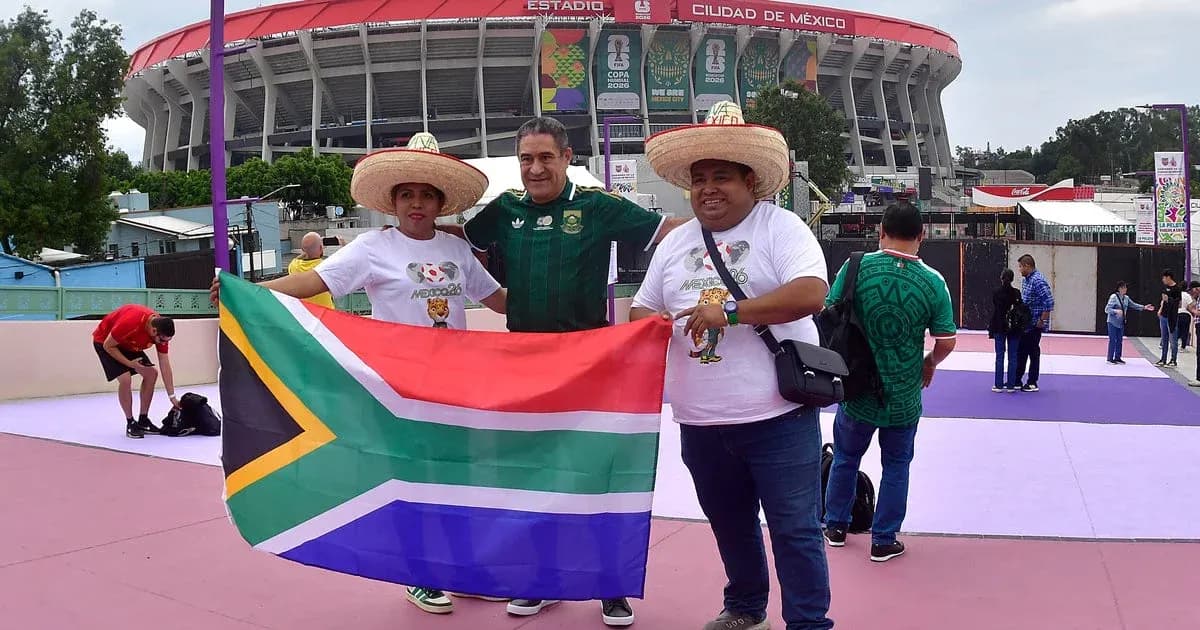
In Mexico City on Thursday, the Estadio Azteca will step back into the spotlight it knows so well. Before Mexico kick off Group A against South Africa, the stadium will stage the first of three opening ceremonies, with Shakira and Burna Boy performing “Dai Dai,” the official song of the 2026 FIFA World Cup. The show starts at 11:30 a.m. local time (1:30 p.m. ET), with a full cast drawn from FIFA’s first-ever World Cup album: Alejandro Fernández, Belinda, Danny Ocean, J Balvin, Lila Downs, Los Ángeles Azules, Maná and Tyla among those set to turn the Azteca into a concert hall.
The football follows at 2 p.m. local time (3 p.m. ET), and the fixture carries a ghost from the past. Mexico vs. South Africa, June 11. The same pairing, on the same date, opened the 2010 World Cup in Johannesburg. That day ended 1-1. This time, Mexico walk out in their own capital, in a stadium steeped in their history, with 80,000 urging them to start with something more.
The second Group A game drops later on Thursday, at Akron Stadium in Zapopan near Guadalajara, where South Korea meet Czechia at 9 p.m. local time (11 p.m. ET). Different venue, same sense of a continent waking up to a tournament that will not let up for 39 days.
On Friday, Toronto gets its moment. BMO Field, expanded from 28,000 to 45,000 seats for this tournament, will host Canada’s first-ever World Cup match on home soil when they face Bosnia and Herzegovina in the opening Group B fixture at 3 p.m. ET. Ninety minutes earlier, at 1:30 p.m. ET, the “Great White North” will put its own stamp on the occasion with a ceremony featuring Alanis Morissette, Alessia Cara, Jessie Reyez, Michael Bublé and others. A stadium better known for club football has been reimagined as a national stage.
The United States joins the party on Friday night in Los Angeles. At SoFi Stadium, the U.S. Men’s National Team return to a World Cup on home turf for the first time since that July 4, 1994 defeat to Brazil in the Round of 16. This time the opponents are Paraguay, with kick-off at 6 p.m. local time (9 p.m. ET). The Americans will wear new Nike kits that nod to the past, including striping reminiscent of those 1994 shirts.
Before the ball rolls, LA gets its own blockbuster show. Katy Perry, Future, Anitta, LISA, Rema and Tyla will headline the U.S. opening ceremony at 4:30 p.m. local time (7:30 p.m. ET). FIFA President Gianni Infantino has cast the lineup as a reflection of American cultural diversity and the reach of its diasporas, a curated snapshot of a country that exports music, entertainment and pop culture as readily as it imports footballing dreams.
A giant tournament under tight guard
A World Cup of this scale does not just test stadium infrastructure and transport systems. It tests security.
The FBI has already moved tactical teams into the American host cities: Atlanta, Boston, Dallas, Houston, Kansas City, Los Angeles, Miami, New York, New Jersey, Philadelphia, the San Francisco Bay Area and Seattle. FBI Director Kash Patel described them as crisis response experts deployed to support the “massive security work” required to protect players, fans and visitors.
For supporters heading to places like Gillette Stadium in Foxborough, Massachusetts, that means a new matchday routine. Local reports warn that fans may need to arrive more than an hour early to clear security checks.
Marlo Graham, special agent in charge of the FBI’s Atlanta field office, framed the operation as familiar in principle, if not in duration. The World Cup, he noted, resembles other large-scale events in its demands, with one key difference: it stretches over 39 days. Tactical units from multiple agencies have been training together for months.
Immigration and Customs Enforcement officers will also have a role, though the White House’s border czar Tom Homan has stressed that ICE’s “primary focus” during the tournament will be national security rather than immigration enforcement.
The heightened scrutiny comes against the backdrop of a more-than-yearlong push by the Trump administration to tighten entry into the U.S., and the impact is already visible. Somali referee Omar Abdulkadir Artan, selected to officiate at this World Cup, was denied entry over the weekend. Customs and Border Protection cited “vetting concerns,” and FIFA confirmed he was turned away, without disclosing further detail.
What fans can – and cannot – bring
Inside the stadiums, the rules will be as tightly controlled as the perimeter.
FIFA’s stadium code of conduct bans nontransparent bags and a long list of “hazardous” items: weapons, body protection gear, helmets, umbrellas, strollers and chairs among them. Initially, the organization also moved to prohibit “bottles, cups, jars, cans or any other form of closed or capped receptacle that may be thrown or cause injury,” as well as branded water bottles.
That last point hit a nerve. With the tournament taking place in the height of summer across North America, supporters quickly raised alarms about heat and health. The fan group Free Lions, representing English supporters, voiced what many feared when they asked on X: “What next? Suncream banned and fans forced to buy it in stadiums? Naturally, the immediate thought from supporters is this is just the latest money-grab.”
The backlash forced a tweak. FIFA World Cup 2026 Chief Operating Officer Heimo Schirgi later clarified on social media that each spectator in U.S. and Canadian stadiums will be allowed to bring in one soft, plastic, disposable, factory-sealed water bottle of up to 20 ounces. Hard reusable bottles remain off-limits.
Inside, the drinks market will be tightly controlled. Water, sodas and juices sold at World Cup venues will be supplied exclusively by long-time FIFA sponsor Coca-Cola, in line with a partnership that has become part of the tournament’s commercial fabric.
A festival with a brutal price tag
For all the talk of access and expansion, one barrier has loomed larger than most: price.
With 16 stadiums in play across three countries, more fans than ever have the chance to see a World Cup game in person. Many are discovering that the cost of entry is eye-watering. Group-stage tickets for certain matches have surged into the hundreds and even thousands of dollars.
Phil Labas, captain of the Chicago chapter of the American Outlaws – a 30,000-strong supporters’ group for the U.S. national teams – did not sugarcoat it. He called the prices “absolutely egregious” and “an absolutely punishing number” just to get through the turnstiles.
Labas has followed U.S. Soccer almost everywhere over the past four years. This time, the Outlaws have been pushed to the margins of their own home World Cup. “We’re in the 300 section. We are upper deck in a corner ... It’s an absolute travesty,” he said.
The distance will not quiet them. The group insists it will bring its usual wall of sound, even from the nosebleeds. “You’ll hear us, you’ll see us if they pan up, but we will absolutely be there,” Labas vowed.
Who might own this World Cup?
On the pitch, the expanded format and North American backdrop have already turned 2026 into a bookmaker’s dream. The tournament is expected to become one of the biggest gambling events in history, and bettors are combing through the draw for value.
German economist Joachim Klement, who has correctly forecast the last three World Cup winners, has stepped away from the usual giants. He told CBS News’ Ramy Inocencio that his pick for 2026 is the Netherlands, a country that has reached three World Cup finals – in 1974, 1978 and 2010 – but has never lifted the trophy.
Klement’s reasoning cuts against the star-obsessed grain. He points out that this Dutch team does not revolve around a Messi-like figure. Instead, he sees a side with a remarkably even performance level across the squad, with no obvious weak link. The other pillar of his argument is at the back. “They have a really good defense,” he said, invoking the old adage: offense wins matches, defense wins tournaments.
The usual favorites – France, Spain, England, Brazil – still sit near the top of the sportsbooks’ boards. Yet Klement’s model places the Netherlands in front of them, filing them under “constant outperformers,” a team that habitually punches above its weight.
For the United States, his outlook splits in two.
The draw has been kind. Placed in Group D with Paraguay, Australia and Turkey, the USMNT find themselves in a pool where, on paper, they can trade blows with anyone. Klement believes that balance gives the Americans a realistic path out of the group and a plausible route to at least the quarterfinals.
The larger problem, he argues, lies beyond tactics and talent. “The U.S. has so many sports that compete for the talent pool that it isn’t really the dominating, most important sport in the U.S.,” he said. In Europe and Latin America, football sits alone at the top of the sporting pyramid. In the United States, it still jostles for attention.
Over the next 39 days, that hierarchy will face its sternest test yet. The world is coming, the stadiums are ready, the tickets are sold, and the cameras are in place. Now the question hangs over Mexico City, Toronto, Los Angeles and every stop in between: when the biggest World Cup in history is over, which nation will say it truly made this tournament its own?