Tampa Bay Rowdies Dominate Brooklyn in 2-0 Victory
Under the Brooklyn lights at Maimonides Park, the league leaders arrived and played like it. Tampa Bay Rowdies, top of USL 1 heading into this game with 31 points and a goal difference of +15 (23 scored, 8 conceded overall), imposed a 2–0 full-time verdict on a Brooklyn side still trying to define its identity in this 2026 campaign.
For Brooklyn, rooted in 12th with 9 points and a goal difference of -11 (13 scored, 24 conceded overall), this felt less like a one-off defeat and more like a crystallisation of the season’s trends. At home they had shown flickers – 2 wins from 7, 6 goals for and 7 against – but their margin for error against a side as balanced and ruthless as Tampa Bay was always going to be thin.
I. The Big Picture: contrasting blueprints
Brooklyn’s seasonal DNA is one of struggle in both boxes. At home they average 0.9 goals for and 1.0 against per match, a profile of narrow margins and low-scoring encounters. The clean-sheet count at Maimonides Park (2) hints at a defensive structure that can be compact in phases, but 3 home matches without scoring underlines a chronic lack of cutting edge.
Tampa Bay’s profile could not be more different. Overall they average 1.6 goals for and just 0.6 against, and on their travels they are even more efficient: 1.3 goals scored away per match, conceding only 0.3. Five away clean sheets from 7 fixtures is a staggering base for a promotion contender, and they arrived in Brooklyn unbeaten away (5 wins, 2 draws, 0 losses on their travels, 9 scored and only 2 conceded).
The 0–2 half-time and full-time scoreline fits those patterns almost too neatly: Brooklyn’s inability to chase games once behind, Tampa Bay’s comfort in controlling tempo with a lead.
II. Tactical Voids and discipline: what was missing
The lineups tell a quiet but revealing story. Brooklyn entered without an explicitly named coach in the data, a small but symbolic void for a side whose form line – “WLLLLWDLLLDDL” – reads like a team searching for a coherent plan. The spine was entrusted to L. Burns in goal, with a back line anchored by T. Vancaeyezeele, C. Frogson, V. Latinovich and Gabriel Alves. Ahead of them, the double pivot of M. Pinto and T. McNamara was asked to knit defence and attack, feeding an advanced unit of S. Stojanovic, J. Servania, C. Olney JR and lone forward J. Obregon.
On the other side, Tampa Bay Rowdies were clearly shaped by the hand of Dominic Casciato. J. Waite started in goal, shielded by a back unit featuring D. Acoff, L. Archer, N. Dossantos and C. Ostrem. The midfield band of S. Cruz, M. Schneider, L. Perez and Mattheus gave them both legs and control, while R. Cicerone and M. Myers provided the thrust in attack.
In terms of absences, there is no registered list of missing or questionable players, which suggests both squads were close to full availability. That only heightens the sense that the gulf on the night was structural rather than circumstantial.
Disciplinary trends over the season also framed the contest. Brooklyn’s yellow-card distribution shows a notable spike between 46–60 minutes (21.43%) and again deep into added time (91–105 minutes at 21.43%), often the periods where they are chasing or hanging on. Tampa Bay, by contrast, show more evenly spread aggression, but with clear hot spots between 31–45 minutes and 76–90 minutes (both 23.08%), phases where they press the game and take tactical risks.
III. Key Matchups: Hunter vs Shield, and the engine room
Without explicit top-scorer data, the “Hunter vs Shield” duel is best read through the lens of units rather than individuals. Brooklyn’s attack, which has managed 6 goals at home in 7 matches, ran straight into the league’s most miserly away defence. Tampa Bay’s back line, fronted by Waite and marshalled by Archer and Dossantos, has conceded just 2 away goals all season heading into this game – an away average of 0.3 goals against. Brooklyn’s forwards were therefore up against a defensive block that is used to surviving long spells under pressure and then suffocating counters before they start.
On the flip side, Tampa Bay’s away attack – 9 goals on their travels, 1.3 per away match – faced a Brooklyn home defence that concedes 1.0 goal per match at Maimonides Park. That numerical edge, modest as it looks, was amplified by Tampa’s ability to score early. With a 2–0 half-time lead, the Rowdies could drop their block, invite pressure and then break through the running of Myers and the movement of Cicerone, supported by the late-arriving Mattheus.
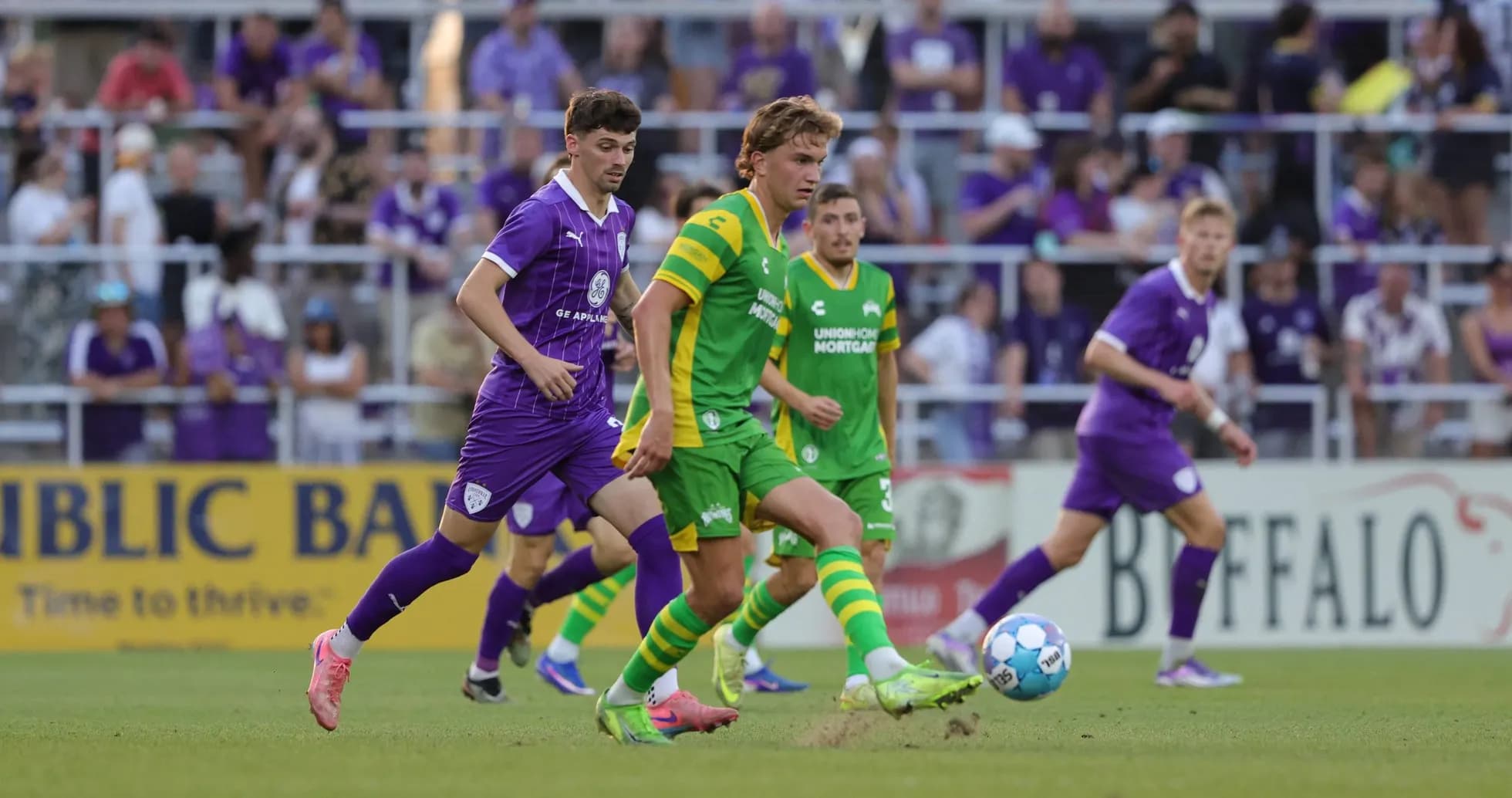
The “engine room” duel was embodied by the contrasting midfields. For Brooklyn, Pinto and McNamara were tasked with both shielding Burns and providing first-phase progression. Against a Tampa Bay side whose season-long form line (“WWWWDDWDWWWDLW”) is built on controlling central spaces, that was a heavy load. S. Cruz and M. Schneider, flanked by L. Perez and Mattheus, formed a rotating square that repeatedly outnumbered Brooklyn’s central pair, forcing Servania and Stojanovic to drop deeper than ideal and leaving Obregon isolated.
Casciato’s bench options – including L. Hilton, M. Micaletto and E. Conway – gave Tampa Bay the ability to refresh that midfield energy and maintain their press without sacrificing structure. Brooklyn’s substitutes – S. Hundal, A. Kante, J. Klein and P. Mangione among others – offered theoretical attacking variety, but the match context meant they were entering against a settled, low-risk block.
IV. Statistical prognosis: what this result says about both sides
Following this result, the statistical logic of both seasons feels reinforced rather than challenged. Tampa Bay’s away metrics – five clean sheets in seven, unbeaten on their travels, 9 goals for and 2 against – are entirely in tune with a 2–0 win where they built an early lead and then defended it with quiet authority. Their overall defensive average of 0.6 goals conceded per match, and 0.3 away, underpins a promotion-chasing side that rarely needs more than one or two goals to win.
Brooklyn, meanwhile, remain a team whose margins are razor-thin and rarely in their favour. Overall they average 1.0 goal for and 1.8 against per match; at home, 0.9 for and 1.0 against. That profile can support survival if the attack finds a higher gear, but the failure to score here – adding to a total of 5 matches overall where they have failed to find the net – is a warning sign.
From an xG and defensive-solidity standpoint, even without explicit xG numbers, the patterns are clear. Tampa Bay’s structure, clean-sheet volume (8 overall), and minimal goals conceded suggest they consistently outperform opponents in chance quality and management. Brooklyn’s negative goal difference of -11 and their tendency to concede in key pressure windows imply that even when they create, they are often chasing higher-quality chances at the other end.
The tactical preview, then, for the next chapter is stark. Brooklyn must find a way to support Obregon more consistently, perhaps by pushing Servania and Olney JR closer to him and giving McNamara more progressive outlets, while tightening the discipline spikes that see them pick up cards in high-leverage minutes. Tampa Bay, by contrast, will see this as a template win: Waite secure, the Archer–Dossantos axis uncompromising, Cruz and Schneider dictating tempo, and Cicerone–Myers turning limited possession into decisive moments.
At Maimonides Park, the league leaders arrived with a clear identity and left with three points. Brooklyn, still searching for theirs, were left with the task of turning painful clarity into the beginnings of a plan.