Spain's World Cup Challenge: Coach De la Fuente's Optimism Amid Injuries
Spain coach Luis de la Fuente insists he is sleeping soundly. On paper, he has little reason to.
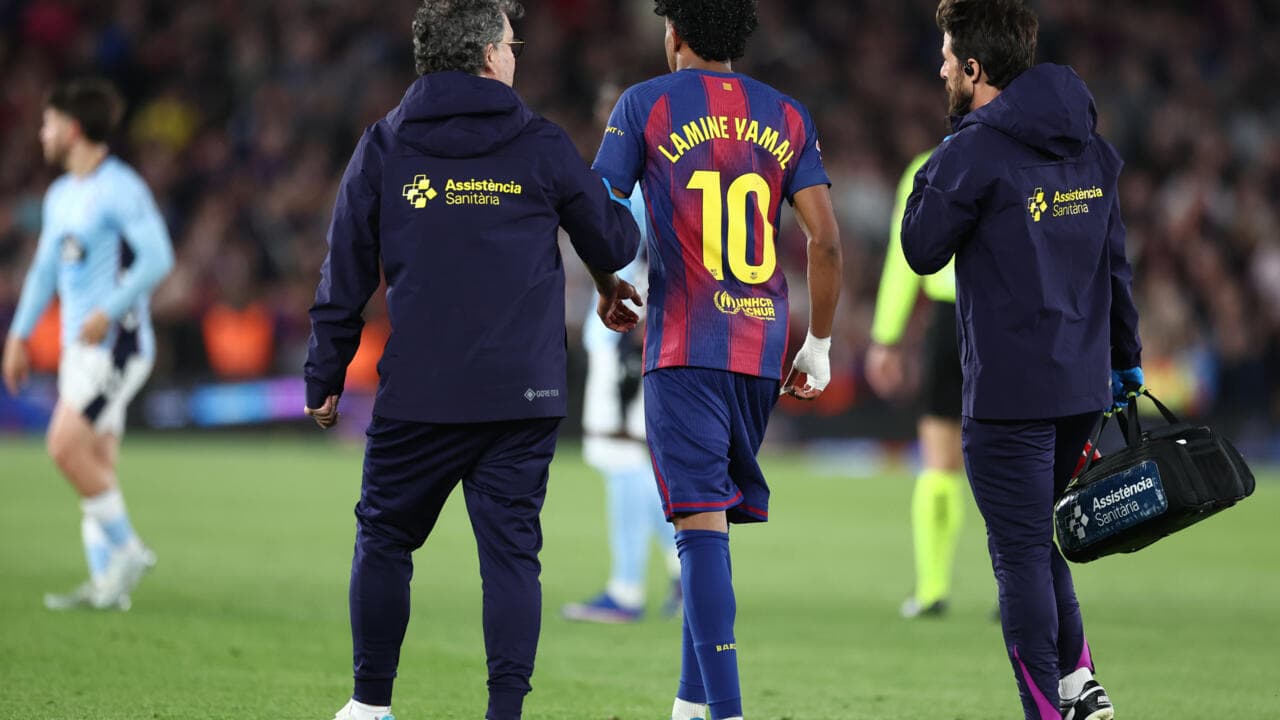
Lamine Yamal, the Barcelona prodigy who has lit up La Liga at 18, has not kicked a ball since a hamstring injury in late April. Nico Williams, the explosive winger driving Athletic Bilbao’s season, hobbled off with a muscle problem on Sunday. Mikel Merino, the Arsenal midfielder whose intelligence stitches Spain’s play together, is still recovering from a broken right foot suffered three months ago.
These are not fringe pieces. They are central to Spain’s World Cup puzzle. Yet De la Fuente refuses to flinch.
“I think that all the players who have been mentioned will be fit and available for the start of the World Cup and I believe for the first match,” he told journalists, drawing a firm line under the rising concern around his treatment room.
If that sounds optimistic, he has already plotted the contingency.
“But if it's not for the first match, it would be for the second or third, and it doesn't cause any major setbacks,” he added, framing their recoveries as a matter of timing, not fate.
A season of strain
Spain’s coach did not pretend this was normal. He called it what it is: a brutal campaign.
It has been “a very tough year in terms of injuries,” he admitted, before widening the lens from his own squad to the sport as a whole. The calendar has squeezed players to breaking point, and Spain are hardly alone in arriving at a World Cup with key names patched up and racing the clock.
“The world of injuries, which is the tragedy of sport, is what truly keeps us under a lot of pressure, especially in this critical phase,” De la Fuente said. The phrase hung in the air. For all the tactical debates and selection arguments, nothing shapes a tournament quite like who can actually run.
From this point on, he knows every sprint carries a risk.
“Injuries that occur from now on, any minor muscular injury, are really difficult to recover from,” he warned. One wrong movement in late May, and a player’s June is gone.
So while the medical bulletins on Yamal, Williams and Merino lean positive — Barcelona expect Yamal to be fit in time for the summer showpiece in the United States, Canada and Mexico — the margin for error is razor-thin.
Building a World Cup group under pressure
De la Fuente has at least one lever he can pull: numbers.
He confirmed that Spain will take the full allowance of 26 players to the World Cup. Depth, not just talent, will define how they survive the opening weeks, especially if one or more of his recovering stars is eased in rather than unleashed from the first whistle.
There is another wrinkle. Some additional players will join the group for a warm-up friendly against Iraq on June 4. They will not all make the final cut, but they will train, travel and audition in real time, a shadow bench ready in case a hamstring pings or an ankle turns at the last moment.
That Iraq game now carries extra weight. It is no longer just a tune-up; it is an insurance policy.
A tricky path from Atlanta
Spain’s route begins in Atlanta on June 15, where they open their World Cup campaign against Cape Verde. On paper, it is a fixture they are expected to control. In reality, it may also be the night when De la Fuente tests how far he can push his returning players.
Does Yamal start after weeks out? Does Williams explode off the bench instead of from the first minute? Is Merino ready to anchor midfield rhythm, or does he wait in the shadows for Uruguay and Saudi Arabia, the other two teams in a group that offers no room for complacency?
The answers will shape Spain’s early momentum. The coach, for now, projects calm. The medical staff project optimism. The calendar, as ever, offers no mercy.
Spain know their opening date, their opponents, their cities. What they do not yet know is this: when the team sheet goes up in Atlanta, how many of their brightest talents will be fully ready to run?