Spain v Belgium: A Quarter-Final Showdown
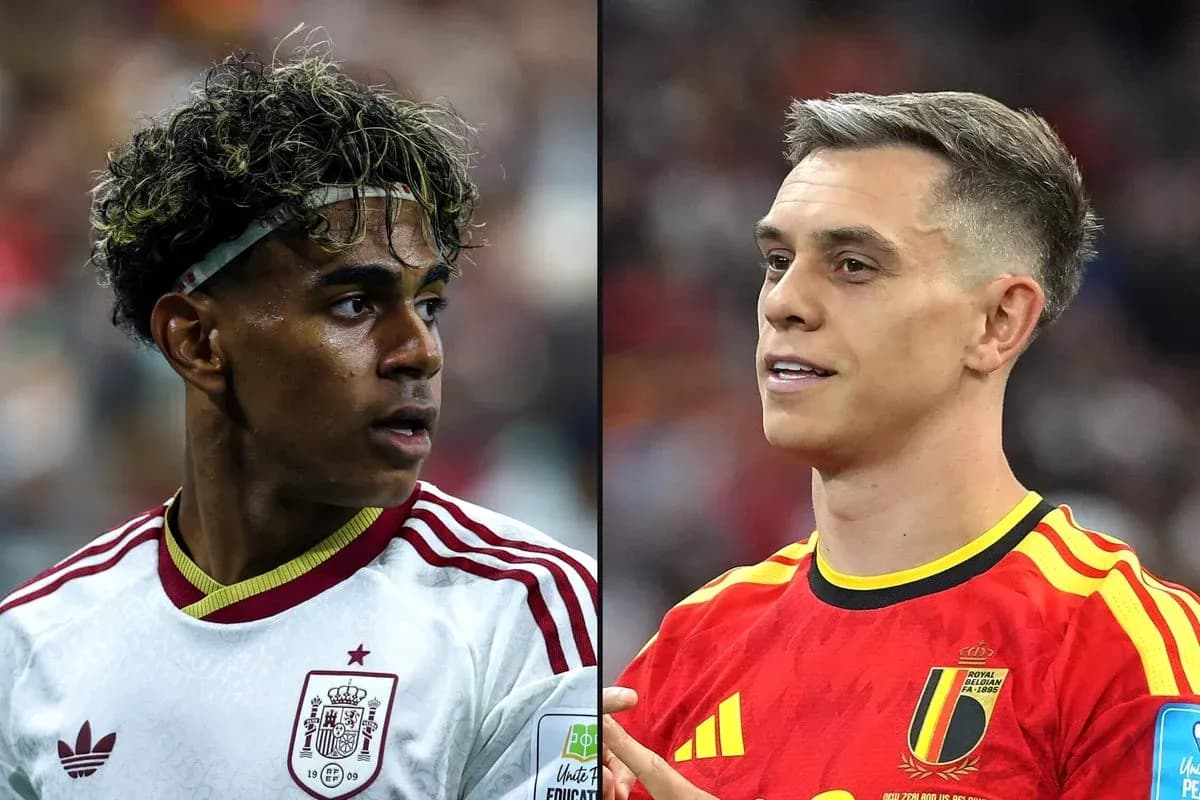
At SoFi Stadium in Inglewood, one of the World Cup’s most polished machines meets a side that has rediscovered itself by tearing up its own script. Spain, European champions and the only team yet to concede a goal at this tournament, face a Belgium that dumped out the co-hosts and sent a jolt through the bracket.
The prize is brutal and simple: beat Belgium and you get France in Arlington on Tuesday.
Spain: flawless at the back, searching up front
Spain have moved through this World Cup with the calm of a team that knows there is more in the tank. They topped Group H with seven points, barely shifting out of third gear: a goalless opening against Cape Verde, a 4-0 dismantling of Saudi Arabia, then a controlled 1-0 win over Uruguay.
The knockout phase has only reinforced the impression of a side built on control and resistance. Austria were swept aside 3-0 in the round of 32. Portugal pushed them to the edge in the last 16, yet Luis de la Fuente’s team still found a way, Mikel Merino arriving in stoppage time to head the winner and keep the clean-sheet streak alive.
That defensive record is extraordinary. Unai Simon has not been beaten in five games, helping Spain set an all-time World Cup mark of 609 minutes without conceding, a run that stretches back to 2022. Aymeric Laporte and Pau Cubarsi have anchored a back line that rarely looks stretched because the team in front of them almost never loses its grip on the ball.
Spain suffocate opponents with possession, then smother them again the moment they lose it. The high press is collective, aggressive and rehearsed. Eighteen offsides drawn — more than any other team — and 36 possessions won in the final third tell the story of a side that defends by squeezing the pitch until rivals run out of air.
The question sits higher up the field. Spain’s attacking has flickered rather than burned. Mikel Oyarzabal has produced when asked, with doubles against Saudi Arabia and Austria, yet the performances against Uruguay and Portugal exposed a lack of ruthlessness in the final third.
The intrigue lies with the talent that could change all that. Lamine Yamal, still only 18 and turning 19 on Monday, has not yet detonated this World Cup the way his talent suggests he might. He was kept quiet by Nuno Mendes and then Nelson Semedo against Portugal, flashes of class without the final explosion. Rodri, the metronome at the base of midfield, is playing his way back to full sharpness and remains the pillar around which everything else turns.
De la Fuente’s main dilemma sits in the No 10 role. Dani Olmo has had a solid tournament and was one of the few attacking starters to impress against Portugal. Yet Merino’s late winner has put pressure on that pecking order, and there is also the option of dropping Pedri, who has not hit his usual level, for Fabian Ruiz. On the left, Alex Baena has done enough to keep his place, dovetailing neatly with Marc Cucurella to overload flanks and create runs in behind.
Spain are not dazzling yet. They might not need to be. But a quarter-final against a vulnerable Belgium back line feels like the kind of night when someone — perhaps Yamal — finally rips the wrapping off.
Belgium: identity found in sacrifice
Belgium’s route here has been far more chaotic. They topped Group G with five points, but those early games against Egypt (1-1) and Iran (0-0) suggested a side unsure of itself, weighed down by big names and a lack of cohesion. A 5-1 thrashing of New Zealand at the end of the group phase hinted at something better, but the real turning point came against Senegal.
Trailing 2-0 with five minutes of normal time left in the round of 32, Belgium were heading out. Rudi Garcia responded with a decision that would have been unthinkable before the tournament: he sacrificed Kevin De Bruyne and Jeremy Doku, the two brightest attacking stars, and reconfigured the team around industry and balance.
On came Dodi Lukebakio and Nicolas Raskin. On paper, it did not scream comeback — Raskin is a ball-winner, not a playmaker. On the pitch, it transformed them. Belgium pressed as a unit, recovered loose balls, and suddenly had structure. Romelu Lukaku pulled one back, Youri Tielemans forced extra time, then buried a late penalty to complete a 3-2 turnaround.
From that moment, Belgium have looked like a different side. They carried that shape into their last-16 meeting with the United States and produced a ruthless 4-1 win, all under the cloud of controversy after FIFA suspended Folarin Balogun’s red-card ban. Garcia’s team handled the noise, then dismantled the co-hosts.
There was a cost. Amadou Onana, starting for the first time in the tournament, suffered an anterior cruciate ligament injury after 21 minutes and is out. Even so, when Hans Vanaken replaced him, Belgium did not lose their grip. Raskin, Tielemans and Vanaken gave them a platform, with Lukebakio offering width and running, and the heavy artillery of Lukaku and Doku kept in reserve for when the game opened up.
That is likely the template again. Against a Spain side that will dominate the ball, Garcia seems ready to leave De Bruyne and Doku on the bench from the start, just as he did against the U.S. De Bruyne did not even get on the pitch in that game. Belgium now have a sturdier base and can sprinkle stardust later, if the situation demands it.
Leandro Trossard has become a quiet star of this version of Belgium, leading all players at the tournament with 17 chances created. Tielemans has been just as important, his calm on the ball and late runs into the box driving this late surge.
The numbers show both the threat and the problem. Belgium have had 32 shots blocked — more than any other team — and only 14 of their 107 efforts have been “clear shots” with zero or one defender in the way. They have scored 13 of those 14, a conversion rate better than France, England and Spain. When they do get a clean look, they are deadly. The issue is getting those looks in the first place.
Where this quarter-final tilts
This game feels like it will be decided in the wide areas and in those frantic seconds after possession changes hands.
Spain’s flanks are loaded with danger. On the right, Yamal and Pedro Porro have shown signs of a partnership that can unpick even well-drilled defences, with the winger’s one-on-one threat and the full-back’s overlaps stretching back lines. On the left, Cucurella and Baena constantly double up, creating overloads and space for runs in behind, as Austria discovered.
Belgium use their full-backs aggressively too, asking them to run beyond wingers and fire low balls into the box. Their 5-1 win over New Zealand was full of those patterns. Both teams sit joint-top for chances created from low crosses, alongside the Netherlands and Switzerland, and Belgium lead the tournament for first-time shots with 58. Spain are not far behind on 46.
Then there is the work without the ball. Spain counter-press with ferocity the moment they lose it, often turning transitions into traps. Belgium, by contrast, have looked vulnerable when opponents play through their midfield. They have already made six errors leading to shots, a tally bettered only by the United States and Brazil, and have allowed 53 shots in total — nearly double Spain’s 29.
Spain’s offside line is another weapon. No team has caught opponents offside more often, and that high line, married to their press, compresses the game into a narrow band of the pitch. It is brave. It is also unforgiving. One mistimed step and Lukaku, Doku or Trossard could be in behind with space to attack.
History, context and the weight of the moment
These two know each other well. Their rivalry stretches back to the 1920 Olympics in Antwerp, where Belgium beat Spain 3-1 on home soil. The most famous clash came at the 1986 World Cup in Mexico, another quarter-final. Jan Ceulemans put Belgium ahead with a diving header, Juan Señor replied with a 30-yard rocket, and the Belgians went through on penalties thanks to Jean-Marie Pfaff’s save from Eloy Olaya. It was the start of Spain’s long, fraught relationship with World Cup shootouts.
Spain struck back at Italia ’90 with a 2-1 group-stage win that sent them through as group winners, Belgium in second. Since the turn of the century, though, the fixture has been one-way traffic: five Spanish wins from five, including a 5-0 qualifying demolition in La Coruna on the road to their 2010 triumph. The last meeting, a 2-0 friendly win for Spain in Brussels in 2016, featured Thibaut Courtois, Lukaku, Thomas Meunier and De Bruyne.
The stakes now are higher. This is not a warm-up or a qualifier. This is a World Cup quarter-final in California, under the roof and the glare of SoFi, with Michael Oliver refereeing his seventh game at this tournament — more than any other Englishman.
Predictions and the Yamal question
The experts see this going one way. Across the board, the calls lean heavily towards Spain. Stuart James, Dermot Corrigan, Pol Ballús, Anantaajith Raghuraman and Phil Hay all go for 2-0 to De la Fuente’s side, leaning on that watertight defence and the sense that Belgium’s big performance might already be behind them. Tomás Hill López-Menchero expects more chaos, tipping a 3-1 Spain win with Belgium striking first before Spain find their rhythm and Yamal finally getting back on the scoresheet.
There is a pattern to the thinking: Spain’s superiority in structure and talent, Belgium’s fragility without the ball, and the feeling that Yamal’s quiet tournament cannot last forever.
So it comes to this. Spain, sliding through the rounds without fuss, against a Belgium that had to rip up its own hierarchy to survive. One team has not conceded. The other has learned to live on the edge.
If this is the night Lamine Yamal truly arrives on the World Cup stage, can Belgium’s new-found solidity hold, or will SoFi Stadium witness the moment Spain’s slow burn finally turns into a blaze?