Socceroos Advance: Bos Shines Amid No.9 Concerns
The Socceroos are through. The performance, though, has left a knot in the stomach of those who know this stage best.
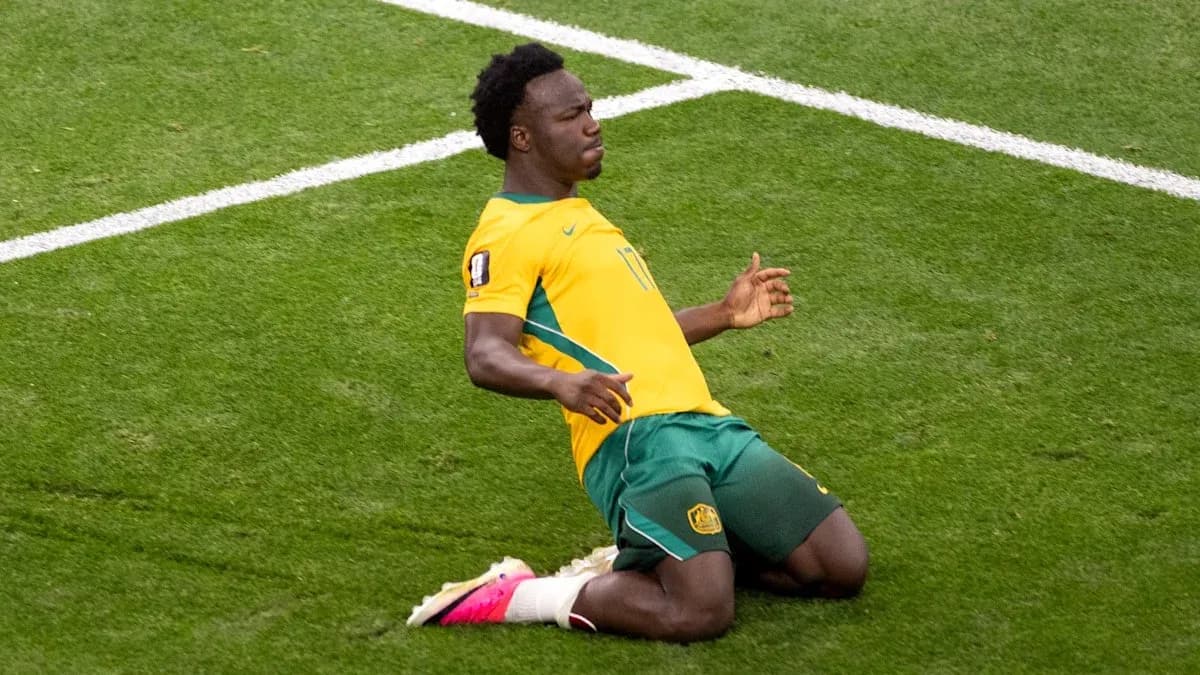
Australia’s 0-0 draw with Paraguay was enough to lock in a place in the round of 32 at the FIFA World Cup, a professional, disciplined job against rugged South American opposition. The unexpected twist? The most dangerous Australian in the final third was a 21-year-old full-back playing on the “wrong” side of the pitch.
Jordan Bos, thrust into the starting XI after Jacob Italiano’s late injury withdrawal, became the unlikely spark that lit up an otherwise blunt attack. Tony Popovic shuffled his pack, pushing Melbourne City left-back Aziz Behich to the left vacancy and giving Bos the nod on the right. It was the selection call many had been waiting to see, and it paid off in energy, aggression and intent.
But it also set off alarm bells.
Bos shines, but questions bite
When a defender is your most threatening outlet, former Socceroos start to frown.
“Up front is a bit of a worry when we’re looking at Jordy Bos as one of the most threatening (for Australia),” Robbie Slater said on Stan Sport’s Added Time. The praise for Bos was clear. So was the concern.
Scott McDonald, sitting alongside him, saw the same problem from a striker’s point of view. On a night when the focus should have fallen on Mo Toure or Nestory Irankunda, it was the young full-back stealing the attacking spotlight.
Toure stayed on the bench. Irankunda, usually a winger, was asked to lead the line as Australia’s No.9. For McDonald, that experiment has a hard ceiling.
“There is a problem in terms of the No.9. Not bringing (Mo) Toure on instead of Tete Yengi tells me today that there’s no trust there,” he said. It was a blunt assessment, the kind a former centre-forward reserves for a situation he recognises all too well.
“Does he go and start him (Toure) out of the blue in the next game? You just can’t tell with Tony. But as a striker, being Toure, I don’t like that. That doesn’t fill me with confidence that my coach trusts me.”
The message was stark: qualification secured, but the shirt with the No.9 on the back still feels heavier than it should.
A thankless role for Irankunda
On the pitch, Irankunda’s night summed it up. He ran, he battled, he chased. He lived off scraps.
“No matter who we put up there, it’s a thankless task up there,” McDonald said. “Look at Nestory (on Friday), he had very little and was living off scraps.”
The tactical trade-off was obvious to him. With Irankunda central, Australia lost a classic “box outlet” – that physical, aerial focal point who pins centre-backs and gives midfielders a target. Bos, ironically, became that release valve from the right, driving high and wide, offering the outlet the No.9 usually provides.
Bos was brilliant in that role, aggressive on the overlap, stretching Paraguay’s back three. But the more he impressed, the more it underlined the imbalance ahead of him.
McDonald always felt Irankunda’s shift to No.9 or even No.10 would come with problems. The demands are different. The spaces are tighter. The contact is heavier. Against a fierce, physical Paraguayan back line, those realities hit hard.
“Look, he’s gotta hold it up a little bit better,” McDonald continued. “I think at times he struggled because it’s not his natural game.”
He pointed to the gaps in support. When players don’t get close enough, a converted winger suddenly looks isolated, forced to fight three centre-backs with little help. Irankunda wanted to drift wide, find grass, face defenders up. Paraguay’s back three squeezed that oxygen out of the game.
“There was no space,” McDonald said. “They were aware of his threat also, with three taking care of him.”
Learning the dark arts of the No.9
So where does that leave a 20-year-old still learning his craft?
McDonald’s answer went back to the art of being a striker at the highest level – the patience, the positioning, the willingness to let others suffer so you can finish the move.
He referenced the modern benchmark. “As we see the best strikers in the world – like Erling Haaland – they’re not interested any more. They just get into the right areas and allow others and trust others to do the dirty work then get on the end of things.”
That, in his eyes, is where Irankunda must evolve. Less hunger to be the creator, more obsession with being the finisher.
“That’s not naturally probably where (Irankunda) thinks. He wants to be the guy creating that and doing things, getting on the edge of the box and having shots. So if you’re gonna play that role, you just need to play it a little bit more smarter and be a bit more patient.”
Coming from a man who made his living in the penalty area, the critique carried weight. McDonald admitted he never loved the lone, undersized striker role either.
“I didn’t like it either. I mean, for the majority of my career it was always you played off the big man or whatever.”
Then came the line that cuts to the heart of Australia’s long-running centre-forward debate.
“I’ve always said it, if you can head it, you’ve got a better chance of being a No.9 for the Socceroos. It’s as simple as that.”
Through, but far from settled
So the Socceroos march on, their place in the knockouts secure, their defensive structure solid, their young full-back a revelation. Yet the questions that have dogged Australian football for years still loom over the next team sheet.
Bos has given Popovic a thrilling new weapon on the flank. The No.9 role, though, remains a puzzle no one has solved. As the stakes rise and the opposition stiffens, how long can a World Cup campaign lean on a full-back to be its most dangerous attacking force?