San Diego Wave's Tactical Reminder in Defeat to Bay FC
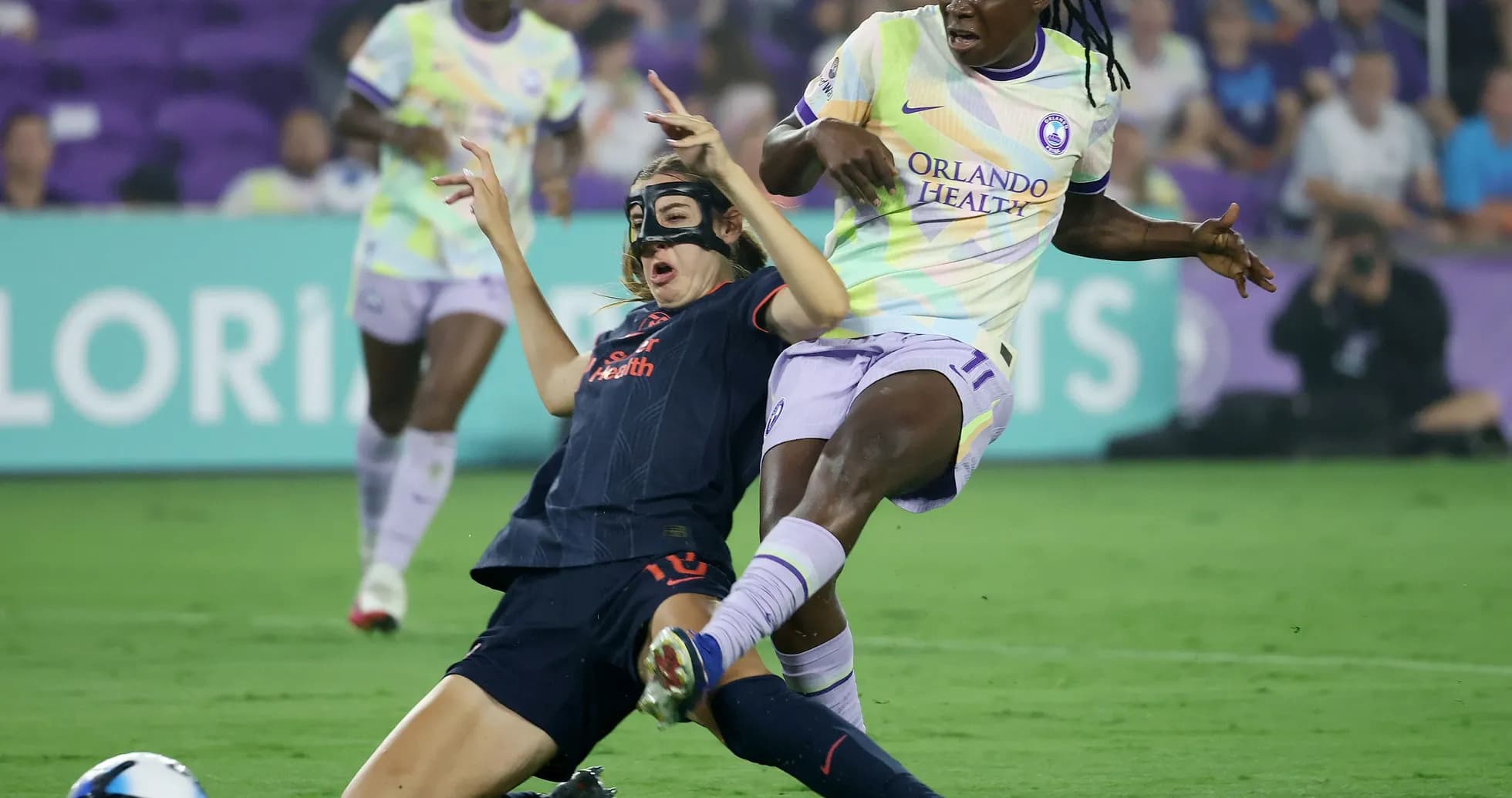
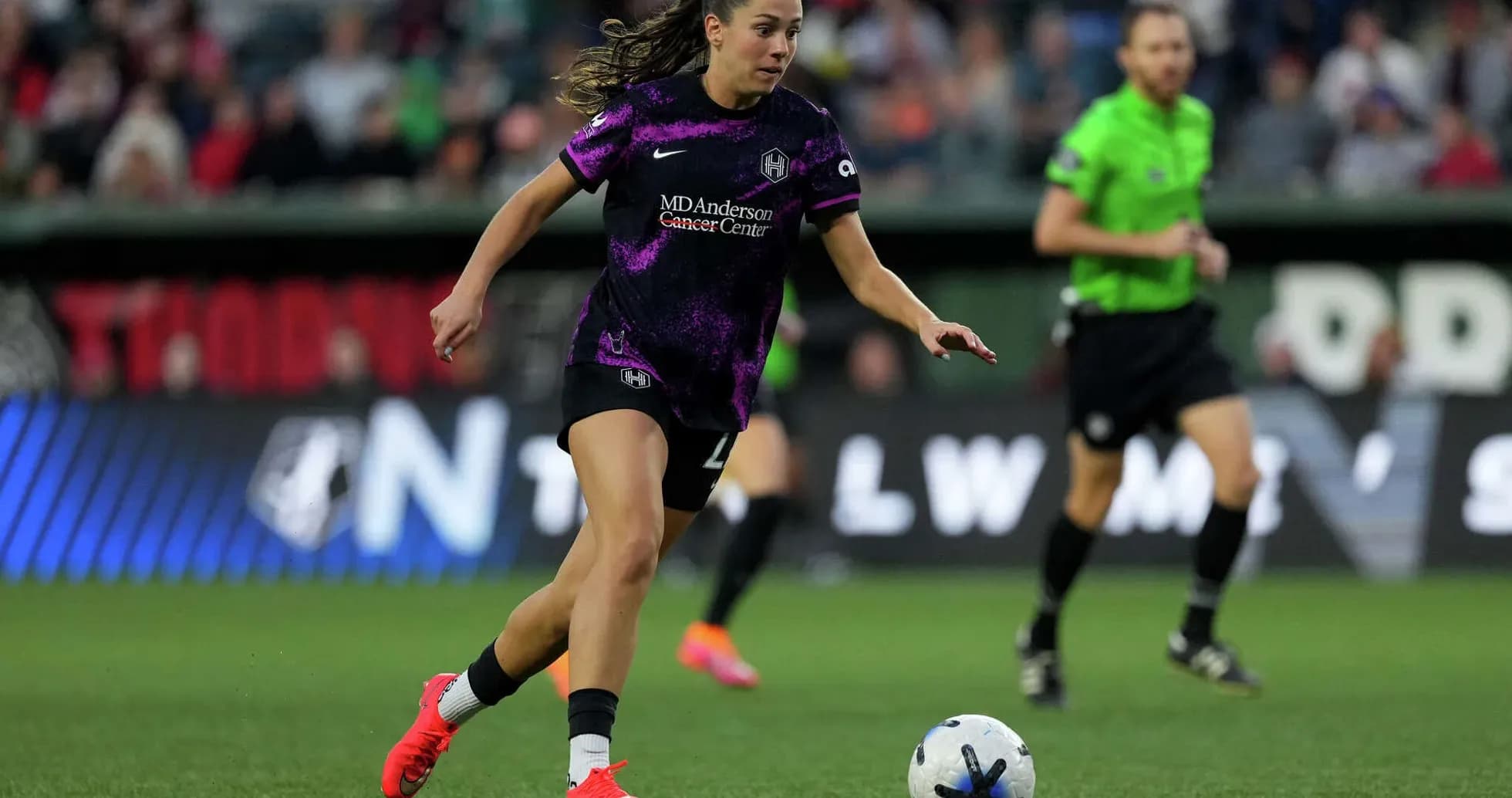
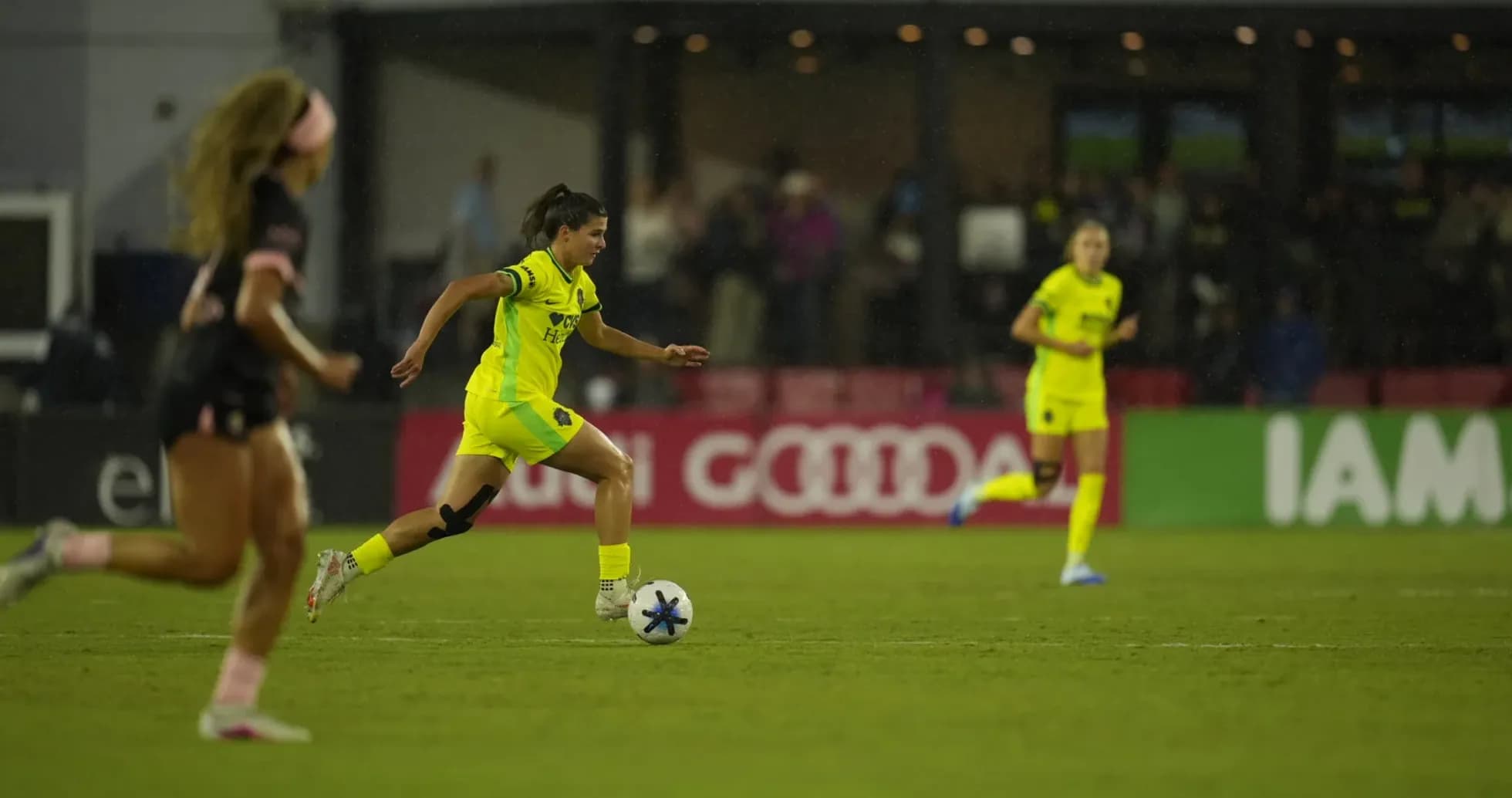
Under the lights at Snapdragon Stadium, San Diego Wave W’s 0–1 defeat to Bay FC felt less like a one-off slip and more like a sharp tactical reminder in an NWSL Women group-stage campaign that had largely gone their way. Following this result, the contrast between San Diego’s lofty position and Bay’s mid-table reality narrowed for 90 tense minutes, as Emma Coates’ visitors executed a disciplined away performance to disrupt one of the league’s early standard-bearers.
I. The Big Picture – Clash of Identities
San Diego entered the night as a side shaped by control and vertical punch. Overall this campaign they have 11 goals for and 8 against across 8 matches, with a goal difference of 3 built on a proactive approach: 5 wins, no draws, and 3 defeats, the kind of binary record that speaks to a team that plays on the front foot and accepts risk. At home they had been solid if not invincible, with 5 goals for and 3 against in 4 fixtures, averaging 1.3 goals scored and 0.8 conceded at Snapdragon.
Bay FC arrived as the volatile newcomer: 3 wins and 3 defeats from 6 matches overall, 7 goals for and 10 against, their goal difference of -3 underlining a side that can hurt you but is just as capable of being opened up. On their travels, though, they had been more efficient: 4 goals scored and 4 conceded in 3 away games, averaging 1.3 for and 1.3 against, a profile of a team that tightens up once it leaves home.
The formations on the night mirrored those identities. Jonas Eidevall’s 4-3-3 for San Diego was built to dominate central spaces and unleash wide forwards, while Coates’ 4-2-3-1 for Bay FC was a classic away blueprint: double pivot protection, a narrow attacking band, and a lone forward to stretch and counter.
II. Tactical Voids and Disciplinary Undercurrents
San Diego’s XI was heavy on technical security but, in this match, light on true penalty-box presence. With Ludmila flanked by Gabi Portilho and Dudinha, the front three offered dynamism and depth, yet the lack of a more traditional target profile meant that, once Bay FC dropped into a compact block, the Wave’s attacks often funneled into crowded central zones.
Behind them, the midfield trio of L. E. Godfrey, K. Dali, and L. Fazer promised control and creativity. Godfrey, one of the league’s most efficient midfield scorers with 4 goals and 1 assist in 8 appearances, has been San Diego’s late-arriving threat. But Bay FC’s double pivot—H. Bebar and C. Hutton—closed the channels she normally attacks, forcing her to receive deeper and reducing her penalty-area influence.
Discipline has been a quiet subplot in San Diego’s season. Their yellow-card distribution shows a clear late-game trend: 40.00% of cautions arrive between 46–60 minutes, with further spikes of 20.00% in each of the 61–75, 76–90, and 91–105 windows. They are not reckless, but as matches stretch, the Wave increasingly defend transitions with tactical fouls. In a tight game like this, that tendency risked giving Bay set-piece platforms and breaking San Diego’s rhythm.
Bay FC, by contrast, live on the edge. Their yellow cards are scattered across the match, but there is a pronounced late surge: 21.43% of cautions come between 76–90 minutes and a striking 28.57% between 91–105, with a red card already shown this season between 91–105. This is a side that leans into physicality as fatigue sets in. On this night, though, that edge was harnessed rather than self-destructive, with the likes of Hutton and T. Huff walking the disciplinary tightrope without tipping over.
III. Key Matchups – Hunter vs Shield, Engine Room vs Enforcer
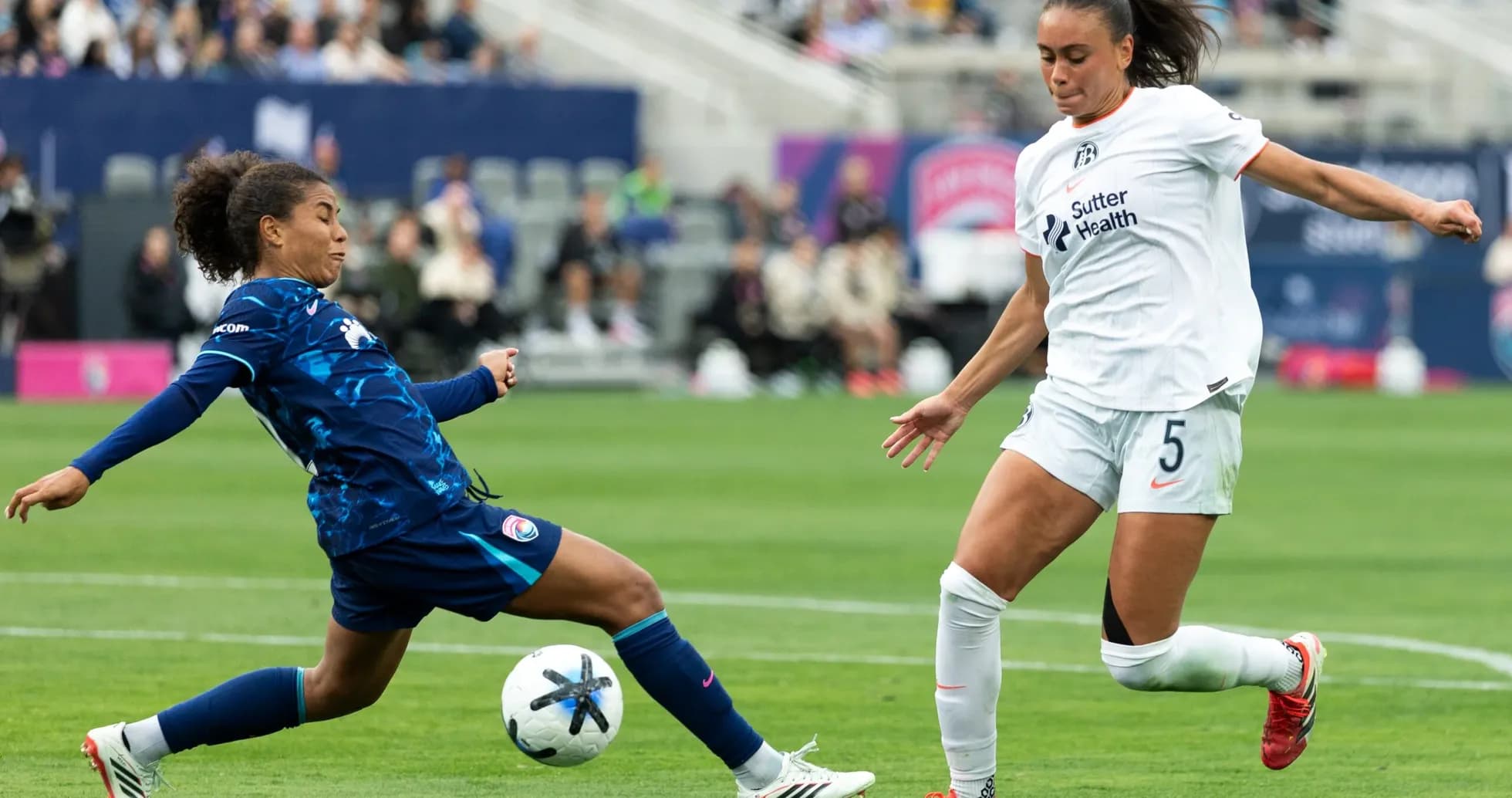
The “Hunter vs Shield” duel centered on San Diego’s attacking core against Bay’s back four. Perle Morroni, a full-back with 353 passes and 22 tackles this season, is usually a key conduit down the left. Her 3 yellow cards and high duel volume (73 duels, 38 won) paint her as an aggressive, front-foot defender who also drives progression. Against Bay’s right side of S. Collins and T. Huff, Morroni’s forward surges were met with a physically committed response, often forcing San Diego to recycle rather than penetrate.
Further forward, Dudinha was the Wave’s sharpest blade. With 2 goals, 3 assists, 14 shots (7 on target), and 12 key passes this season, she is both creator and finisher. Her duel volume—65 contested, 31 won—and 27 dribble attempts (14 successful) show a winger who thrives in one-v-one chaos. Yet Bay’s structure narrowed her angles, pushing her into traffic where Hutton and the center-backs, A. Cometti and J. Anderson, could collapse.
For Bay FC, the attacking axis was different but equally dangerous. A. Pfeiffer, though not in the XI here, looms over their season as a teenage conductor: 2 goals and 2 assists from midfield, 5 shots on target out of 5, and 5 key passes in just 273 minutes. Her profile explains Bay’s preference for a 4-2-3-1 that can flip quickly from compact to incisive once they recover the ball.
On the pitch, the “Engine Room” contest was defined by Hutton and Huff against Godfrey and Dali. Hutton’s 212 passes at 74% accuracy, 13 tackles, 2 blocked shots, and 13 interceptions mark her as Bay’s screening sentinel. Her job was to track Godfrey’s surges and cut off the vertical lanes into Ludmila’s feet. Huff, with 1 goal, 1 assist, and a history of heavy involvement in duels (49 contested, 27 won), added a disruptive edge. Together, they turned central spaces into a minefield, forcing San Diego to seek joy in wide areas where Bay were happy to defend crosses rather than through-balls.
IV. Statistical Prognosis – Why Bay’s Plan Held
Even without explicit xG numbers, the season data hints at why this finished 0–1. San Diego’s overall scoring average of 1.4 goals per match, and 1.3 at home, relies on turning territorial dominance into high-quality chances. Bay FC concede 1.7 goals per match overall, but away they tighten to 1.3, suggesting that their low block and double pivot are more effective on their travels.
Bay’s ability to survive waves of pressure and still threaten is underpinned by their clean-sheet record away (1 shutout in 3 matches) and their willingness to accept a lower margin of error. They do not control games as San Diego do, but they compress them, betting that one well-timed counter or set-piece—often funneled through runners like R. Kundananji and K. Lema—will be enough.
Following this result, the tactical story is clear: San Diego’s structure remains sound, but against compact, physically assertive visitors like Bay FC, their reliance on Godfrey’s late surges and Dudinha’s one-v-one brilliance can be blunted. Bay, meanwhile, leave Snapdragon Stadium with a template: disciplined 4-2-3-1, aggressive but contained midfield enforcers, and just enough attacking incision to tilt a finely balanced match their way.