San Diego Wave W Edges Angel City W in Tactical Showdown
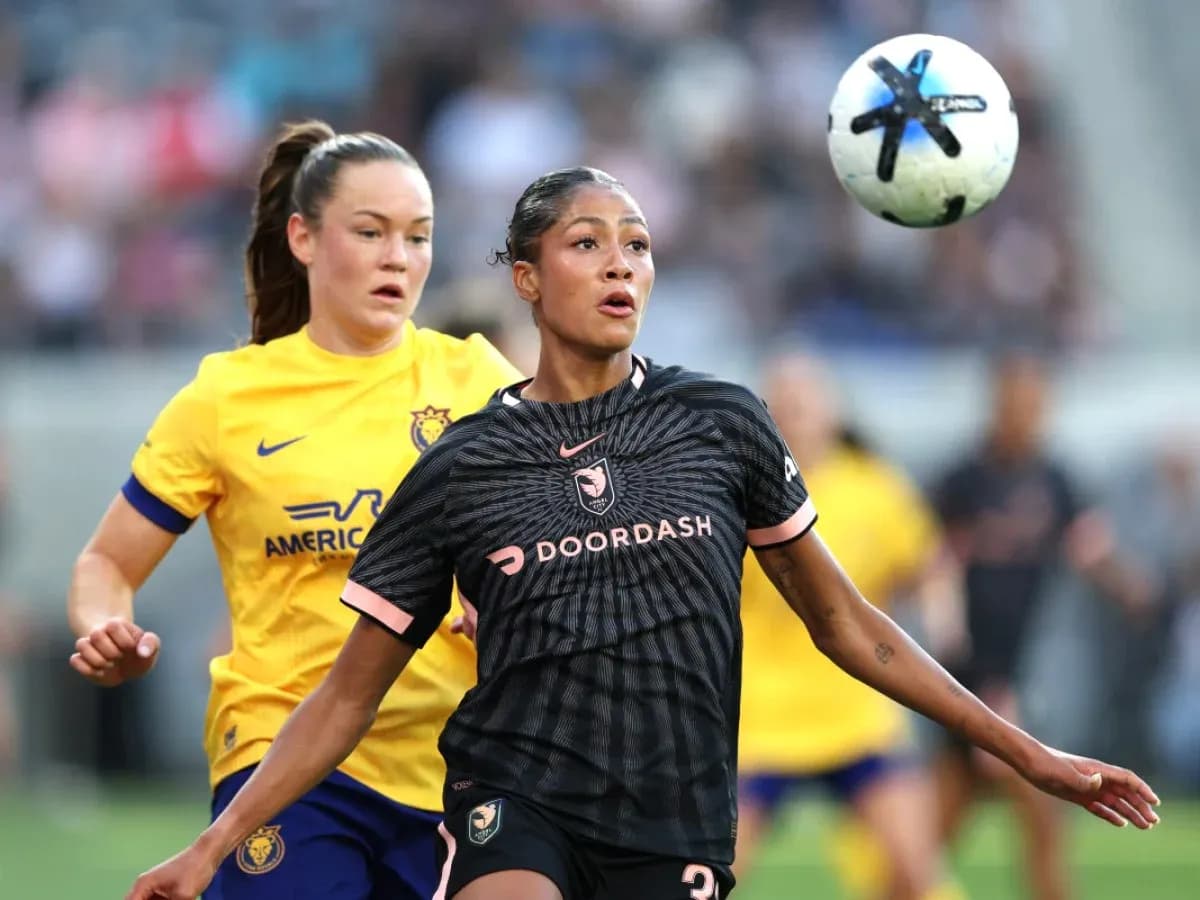
Angel City W’s 1-2 home defeat to San Diego Wave W at BMO Stadium was decided in the fine margins between structure and verticality. In an NWSL Women group-stage match where the hosts controlled territory in spells but not tempo, San Diego’s 4-3-3, built on a superior passing rhythm and cleaner pressing triggers, ultimately outmaneuvered Angel City’s 4-2-3-1. The scoreline mirrored the statistical and tactical balance: Angel City produced volume around the box, but San Diego’s extra control in midfield and sharper wide rotations translated into higher-quality moments and two decisive second-half strikes.
The match opened in a cagey, structurally disciplined fashion, reflected in a 0-0 halftime score and the absence of any first-half events in the log. Both coaches used the interval to reshape the contest. At 46', Alexander Straus adjusted Angel City’s attacking profile: Prisca Chilufya (IN) came on for Jun Endo (OUT), adding more direct running from the left. Simultaneously, Jonas Eidevall refreshed San Diego’s front line and midfield balance: Lia Godfrey (IN) replaced Gia Corley (OUT), and Trinity Paula Byars (IN) came on for Ludmila (OUT), signaling a desire for more penetration and pressing energy.
San Diego struck first. On 49', Dudinha converted a Normal Goal for the visitors, assisted by Kimmi Ascanio. The pattern underlining that goal would recur: Wave’s front three exploiting the half-spaces created by their midfield three’s circulation. Angel City responded quickly. On 54', centre-back Emily Sams equalized for the hosts, finishing a set or second-phase situation created by fellow defender Sarah Gorden’s assist. That 1-1 scoreline reflected Angel City’s ability to turn pressure and restarts into chances, even as they trailed in overall possession.
The next wave of substitutions further tilted the tactical picture. At 63', Melanie Barcenas (IN) replaced Gabi Portilho (OUT) for San Diego, adding fresh legs on the flank. Straus countered at 68' with Riley Tiernan (IN) for Kennedy Fuller (OUT), looking for more direct threat between the lines, and at 76' with Casey Phair (IN) for Taylor Marie Suarez (OUT), pushing Angel City toward a more aggressive attacking posture. Eidevall’s key structural change arrived at 79': Laurina Fazer (IN) for Kimmi Ascanio (OUT), injecting control and defensive balance into midfield just before the decisive moment.
On 81', San Diego reclaimed the lead. Right-back Amelia Van Zanten scored a Normal Goal, assisted by Dudinha, illustrating how Wave’s full-backs were encouraged to step high once midfield control was reasserted. Angel City’s final adjustment came at 88', with Claire Emslie (IN) replacing Nealy Martin (OUT), effectively sacrificing a deeper midfielder for an additional attacking outlet. San Diego then managed the closing stages by withdrawing their key forward: at 90+5', Jordan Fusco (IN) came on for Dudinha (OUT), consolidating their shape to protect the 1-2 scoreline.
Angel City's Tactical Approach
Structurally, Angel City’s 4-2-3-1 was designed to compress space centrally and attack quickly through wide and half-space channels. The double pivot of Ary Borges and Nealy Martin was tasked with screening transitions and progressing play, while Kennedy Fuller operated as a connective No. 10 ahead of them. Wide, Jun Endo and Taylor Marie Suarez supported Sveindís Jónsdóttir as the lone forward, looking to attack the channels behind San Diego’s full-backs. Defensively, the back four of Gisele Thompson, Emily Sams, Sarah Gorden, and Evelyn Shores stayed relatively narrow, inviting crosses but trying to deny central combinations.
San Diego's Tactical Approach
San Diego’s 4-3-3, by contrast, prioritized controlled possession and layered rotations. The midfield trio of Kimmi Ascanio, Kenza Dali, and Gia Corley (later Godfrey and Fazer) created a triangle that constantly shifted angles, allowing Wave to exploit their 55% ball possession. Wide forwards Gabi Portilho and Ludmila, with Dudinha starting from the left, stretched Angel City’s back line, creating gaps for full-backs Perle Morroni and Amelia Van Zanten to overlap. The second goal, with Van Zanten arriving high and finishing from a Dudinha assist, was a direct product of these patterns: midfield stability allowed the full-back to advance aggressively without leaving the back line exposed.
In goal, Angelina Anderson for Angel City and DiDi Haracic for San Diego both had to manage high-pressure phases rather than sheer shot volume. Anderson made 3 saves, reflecting San Diego’s 5 shots on goal; Haracic registered 2 saves from Angel City’s 3 shots on target. The distribution numbers underline the different tactical emphases. Angel City attempted 320 passes, 231 accurate (72%), consistent with a more vertical, risk-tolerant approach from deeper zones. San Diego, with 407 total passes and 320 accurate (79%), built a more stable possession platform, using circulation to move Angel City’s block before targeting gaps.
The foul count—20 for Angel City against just 8 for San Diego—mirrors the defensive workload and the structural strain on Straus’s side. Frequently forced to break up San Diego’s rhythm with contact, Angel City’s defensive index was high in effort but often reactive. San Diego, by keeping the ball and controlling tempo, limited the number of defensive actions they needed to make, preserving energy for transitions and late-game runs, such as Van Zanten’s decisive 81' surge.
Statistically, the match was close in total shots (10 for Angel City, 11 for San Diego) and blocked efforts (4 each), but the territorial and qualitative edge leaned to the visitors. Angel City generated 8 of their 10 shots from inside the box, showing they did reach dangerous zones, yet their final-third execution and shot selection were not efficient enough to turn volume into goals. San Diego balanced 6 shots inside the box with 5 from distance, reflecting their ability to vary attacking routes.
Without explicit xG values, the best proxy comes from shot locations, possession, and passing accuracy. San Diego’s superior overall form on the ball—more possession, higher pass completion, fewer fouls—aligned with their ability to create two clear scoring actions from structured patterns rather than chaotic moments. Angel City’s defensive index, while combative, was stretched by the constant need to adjust to San Diego’s rotations. In the end, the 1-2 scoreline at BMO Stadium felt like the logical outcome of a match where San Diego Wave W’s systemic control and well-timed full-back aggression edged Angel City W’s more direct, effort-heavy game plan.