
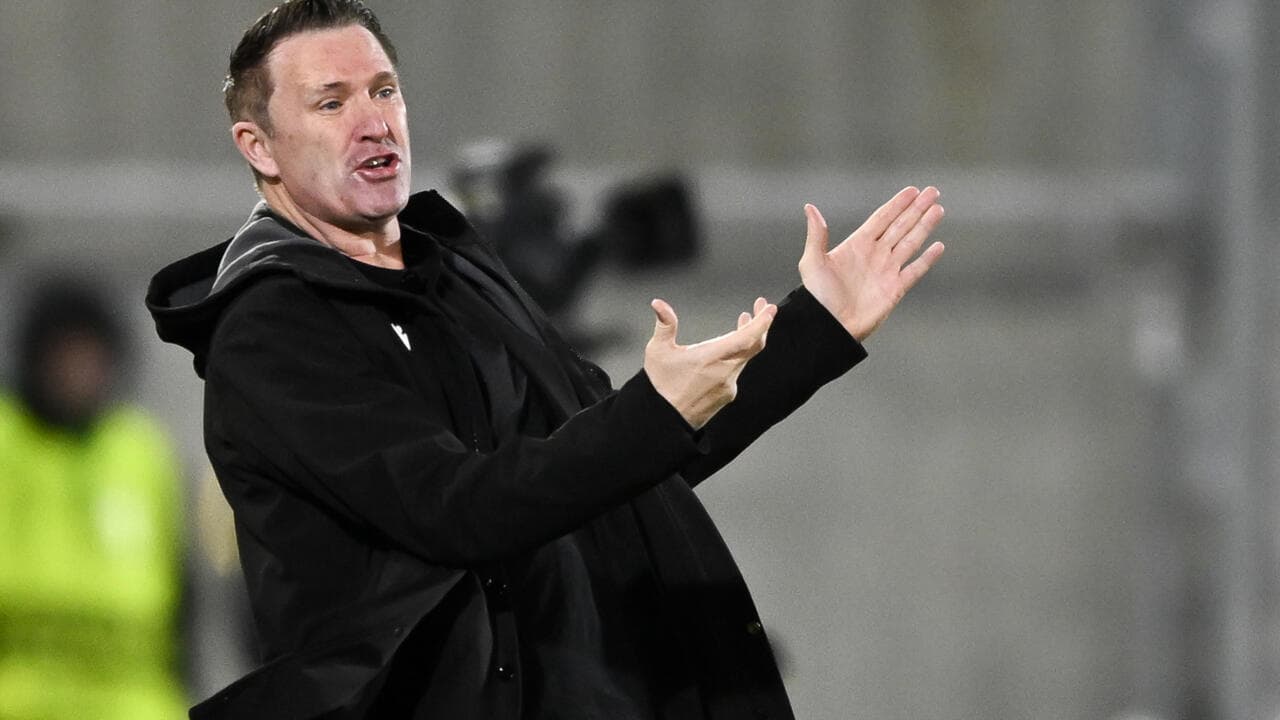
Robbie Keane's Celtic Manager Bid Faces Fan Backlash
Robbie Keane’s candidacy to become Celtic’s next manager has run straight into a political and emotional storm outside Celtic Park, as a powerful section of the support mobilises against his possible appointment.
The former Republic of Ireland captain, understood to be the leading contender for the job after entering talks with principal shareholder Dermot Desmond, should have been an easy sell. He is Ireland’s record goalscorer, a marquee name, and a man who scored freely during a short but memorable loan spell in Glasgow back in 2010.
Instead, his recent past has turned him into a lightning rod.
Graffiti, banners and a growing revolt
In recent days, graffiti and banners denouncing the prospect of Keane taking over have appeared around Celtic’s stadium. The message is blunt: this is not just about football.
Celtic supporters have prominently displayed Palestinian flags at matches throughout the war in Gaza, turning the stands into a regular canvas of political solidarity. Now that same identity is being used to challenge the board’s preferred candidate.
A group calling itself “Celtic Fans for the Liberation of Palestine” has issued a statement warning that hiring Keane “would be deeply divisive among the support”. The influential “North Curve Celtic” account on X has gone further, publishing a list of 67 groups said to have endorsed the statement, signalling organised and broad-based resistance.
“Celtic supporters have a long and proud history of solidarity with the Palestinian people,” the statement reads, before homing in on Keane’s decision to work in Israel.
“For us, Robbie Keane’s decision to manage Maccabi Tel Aviv during the genocide in Gaza is impossible to ignore.
“To choose to manage a club in Israel while, less than 40 miles away, the same country was using indiscriminate weapons of mass murder against defenceless people is unconscionable.
“Celtic was founded by a community shaped by the legacy of genocide, displacement and famine. Our club’s roots lie in solidarity with those who suffered injustice and oppression.
“We urge the Celtic board to listen to supporters’ concerns and reconsider this appointment.”
The language is stark. The pressure on the board is real.
Keane’s Israeli chapter under the microscope
At the heart of the anger is Keane’s spell in charge of Maccabi Tel Aviv. He took the job in June 2023, months before the Hamas-led attacks on 7 October and the subsequent Israeli bombardment of Gaza, but chose to remain in post throughout the conflict.
That decision drew sharp criticism in Ireland and has now spilled into Glasgow, with some Celtic fans refusing to separate his managerial record from the wider political context.
On the pitch, Keane delivered. The 45-year-old guided Maccabi to a league and cup double before resigning in 2024 and moving on to Hungarian side Ferencvaros in 2025. It was, in pure football terms, a hugely successful tenure.
Off the pitch, it has become the defining fault line in the debate over his suitability for Celtic.
Keane has previously explained why he stayed for the full season, pointing to his responsibilities to the staff he had brought with him.
“I have a duty of care,” he said. “My analyst, for example, was at Middlesbrough for 12 years. For him to come with me to Israel and then for me to just walk away, leaving him and his family.”
For some, that sounds like loyalty. For many among the protesting Celtic support, it is nowhere near enough to offset the symbolism of remaining in Israel during the war.
A club’s identity on the line
Celtic’s history and self-image sit at the core of this row. The club was founded to support impoverished Irish immigrants in Glasgow, and its support has long embraced causes it sees as aligned with anti-oppression and international solidarity.
That tradition has made Palestine a highly charged issue around Celtic Park. It now threatens to shape one of the most important football decisions the club will make in the coming years.
The board must weigh Keane’s profile, achievements and connection to the club against the risk of appointing a manager many organised fans have already rejected on moral grounds. The concern among those groups is not simply that Keane would be unpopular, but that his arrival would fracture the support and erode what they see as Celtic’s core values.
O’Neill’s shadow and a delicate decision
All of this plays out against the backdrop of Martin O’Neill’s latest rescue act. The 74-year-old interim boss dragged Celtic over the line on the final day to win the Scottish Premiership title and then added the Scottish Cup for good measure, reminding everyone of the standards once set in the dugout.
O’Neill’s success has bought the board a little time but also raised expectations. Celtic are champions again, trophies are back in the cabinet, and the next appointment will be judged against that immediate success as well as the club’s deeper identity.
Robbie Keane remains, on paper, a strong football candidate. But outside the stadium, the walls are already talking.





