Racing Louisville W Dominates Portland Thorns W 3–1 with Tactical Mastery
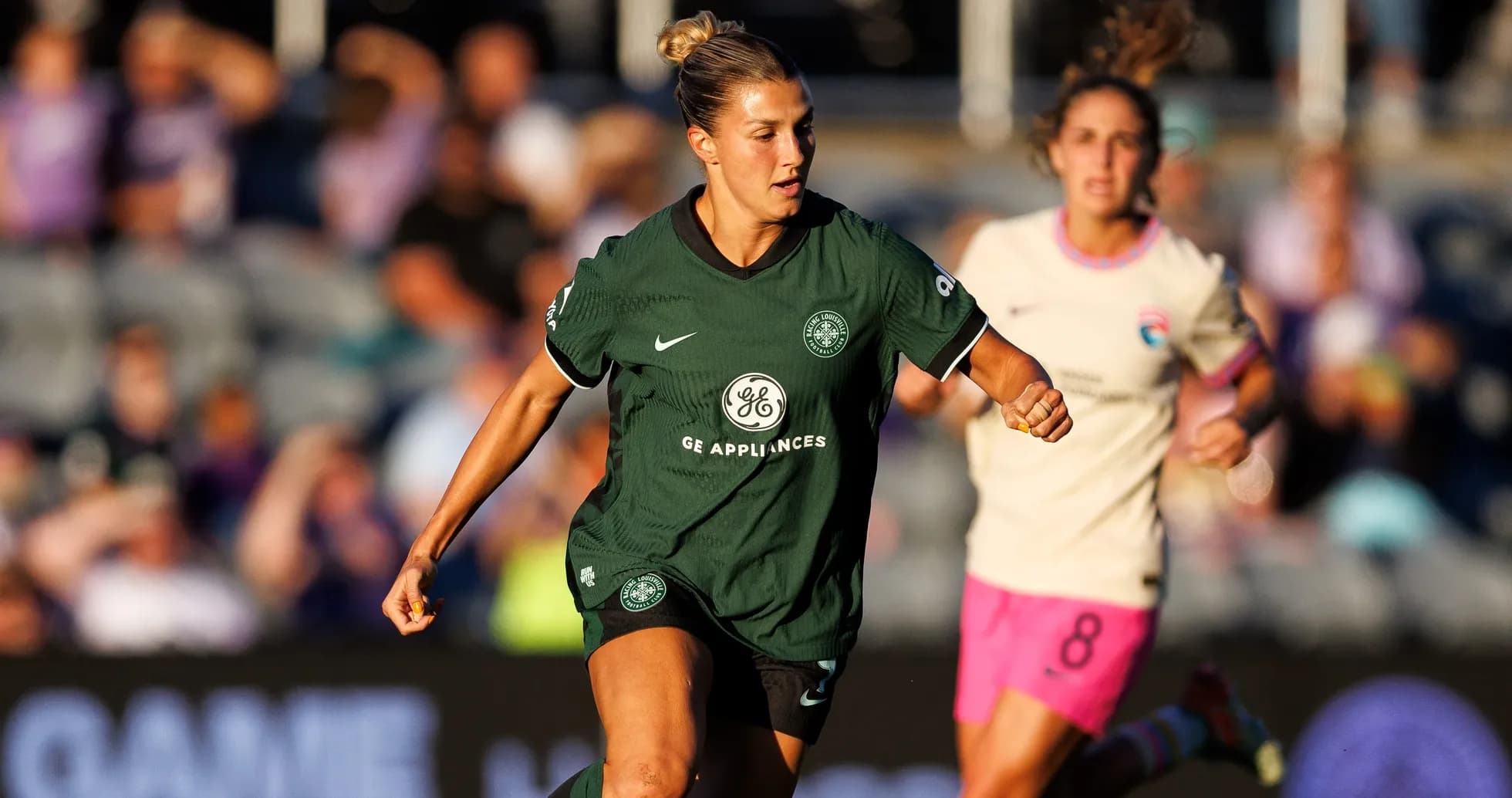
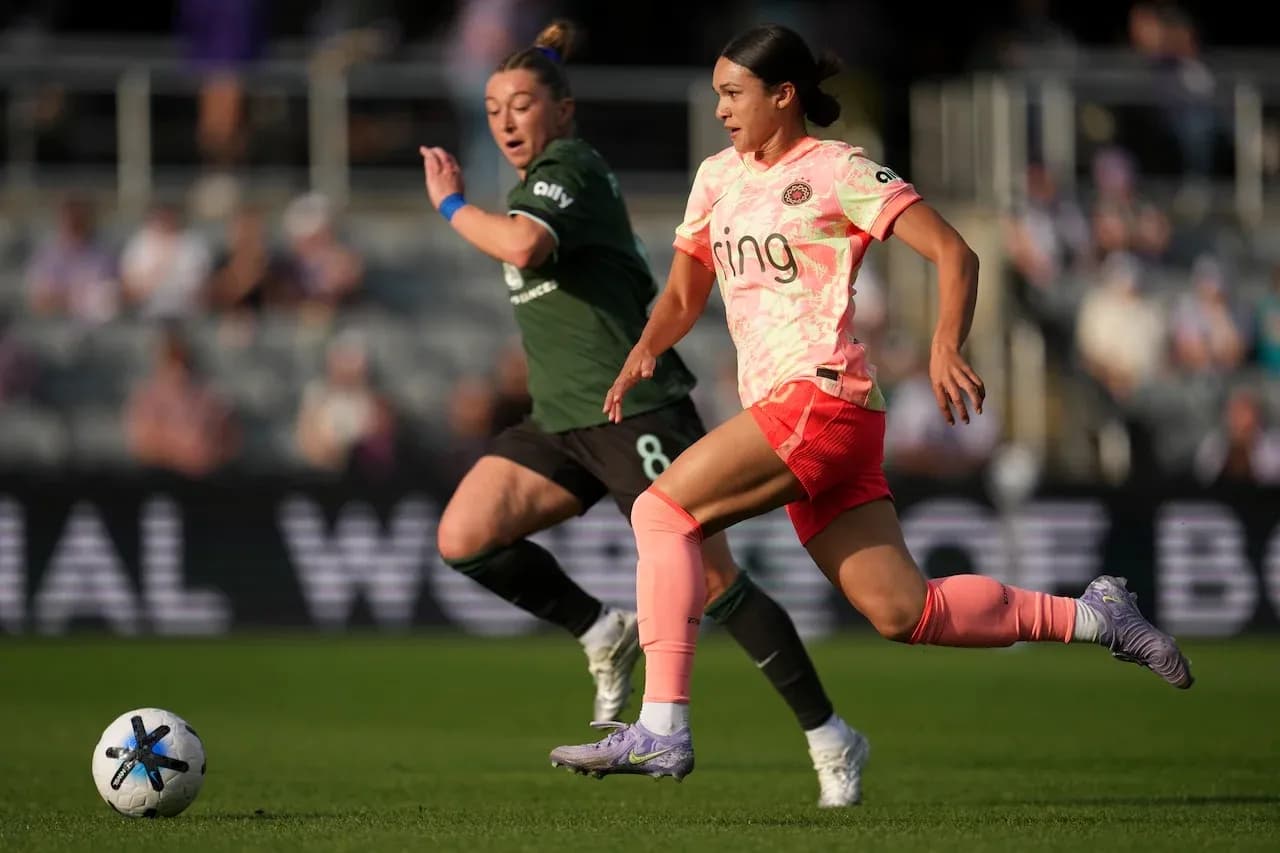
Racing Louisville W’s 3–1 win over Portland Thorns W at Lynn Family Stadium was built on structural control rather than sheer dominance of the ball. In an NWSL Women group-stage fixture refereed by M. Hassan, both sides split possession 50–50, but Beverly Yanez’s team generated far more territory, pressure and final-third volume. Sixteen shots to nine, seven blocks to one, and four corners to zero underline how Louisville repeatedly pinned Portland back, especially after halftime, while remaining compact enough to concede only two shots on target.
Executive Summary
The match began with Portland striking first, but Louisville’s response was immediate and, tactically, decisive. Once Racing leveled, they steadily tilted the field through aggressive fullback play and a narrow, industrious midfield. Portland’s passing accuracy (82% to Louisville’s 80%) suggested composure, yet Robert Vilahamn’s side struggled to progress through the thirds and translate that retention into dangerous entries. Louisville’s pressing and counter-pressing angles forced the Thorns into low-value possession and limited their box touches. The second half became increasingly one-way traffic, with Louisville’s bench and wing rotations amplifying their grip until the late goals that sealed a 3–1 full-time score.
Scoring Sequence & Disciplinary Log
The event timeline is straightforward and frames the tactical story.
At 6', Portland Thorns W went ahead:
- Sophia Wilson finished a Normal Goal, assisted by Olivia Moultrie. This early strike reflected Portland’s initial ability to exploit space before Louisville’s press fully settled, with Wilson attacking from the front line and Moultrie finding a vertical lane.
Racing Louisville W answered at 14':
- Katie O'Kane scored a Normal Goal, assisted by Lauren Milliet. This equalizer showcased Louisville’s preferred pattern: Milliet advancing from the back line to combine with the midfield, and O'Kane arriving from deeper areas to attack the space between the lines.
Disciplinary Log (all cards, in chronological order):
- 41' Kayla Fischer (Racing Louisville W) — Foul
Fischer’s yellow card at 41' was the only booking of the match. It came in a phase where Louisville were increasing their intensity off the ball; the caution did not alter their pressing strategy but did slightly temper Fischer’s individual duels for the remainder of the half.
Halftime arrived with the score 1–1, reflecting a balanced scoreboard but not the underlying shot volume, which was already leaning toward Louisville.
In the second half, substitutions began to reshape the tactical landscape:
- 46' Marie-Yasmine Alidou (IN) came on for Reilyn Turner (OUT) for Portland Thorns W. Vilahamn looked for more direct threat and fresh legs between the lines, shifting the attacking structure and asking Alidou to provide vertical running and link play.
- 52' Deyna Castellanos (IN) came on for Cassandra Bogere (OUT) for Portland Thorns W. This move injected a more creative, forward-facing profile into midfield, aiming to improve progression and shooting threat from distance.
- 61' Emma Sears (IN) came on for Makenna Morris (OUT) for Racing Louisville W. Yanez responded by adding more attacking punch, with Sears offering more direct penetration and pressing from the front compared to Morris’s balanced midfield profile.
Though the JSON event log stops here, the confirmed final scoreline (3–1 Louisville) indicates that Racing’s territorial and shot advantage ultimately translated into two additional second-half goals.
Tactical Breakdown & Personnel
Racing Louisville W
With no explicit formation given, Louisville’s structure can be inferred from roles: Jordyn Bloomer in goal; a back line of Lauren Milliet, Arin Wright, Courtney Petersen and Quincy McMahon; a midfield band built around Taylor Flint, Katie O'Kane, Makenna Morris and Kayla Fischer; with Ella Hase and Sarah Weber providing advanced width and central presence.
The key tactical levers:
- Fullback progression: Milliet and McMahon repeatedly advanced to create wide overloads. Milliet’s assist for O'Kane’s goal underlined her dual role as defender and playmaker, stepping into midfield to break Portland’s first line.
- Central running: O'Kane’s goal from midfield encapsulated Louisville’s plan to attack the half-spaces with late arrivals, rather than relying solely on static forwards.
- Horizontal compactness: Despite splitting possession evenly, Louisville allowed only nine total shots and just two on target. Their back four stayed tight, with Flint screening in front, forcing Portland wide and into lower-percentage efforts.
Jordyn Bloomer made 1 save, a low number that speaks less to her activity and more to the defensive unit’s ability to limit clear chances. The back line’s seven blocked shots are a critical data point: Louisville defended the box aggressively, stepping out to smother attempts before they reached goal.
The substitution of Emma Sears for Makenna Morris at 61' shifted Louisville toward a more front-foot posture. Sears’s presence likely pushed Weber and Hase into more flexible, interchanging roles, enabling Louisville to sustain pressure and convert their shot superiority into the two second-half goals that created separation on the scoreboard.
Portland Thorns W
Portland’s starting shape featured Mackenzie Arnold in goal; a back line of Reyna Reyes, Sam Hiatt, Carolyn Calzada and Mary Alice Vignola; with Jessie Fleming, Cassandra Bogere, Pietra Tordin and Olivia Moultrie forming the midfield core; and Reilyn Turner supporting forward Sophia Wilson.
Portland’s main tactical traits:
- Build-up preference: Their 289 total passes and 82% accuracy show a desire to construct from the back, but they struggled to turn that into territory. Zero corner kicks and only three shots from outside the box highlight limited sustained pressure.
- Early vertical exploitation: The 6' goal came from an early, well-timed vertical connection between Moultrie and Wilson, before Louisville’s defensive structure fully adjusted.
- Defensive strain: Arnold made 2 saves behind a back line that faced 16 shots and seven blocks. The low number of saves, combined with high shot volume, suggests that many attempts were either off target or blocked, but the cumulative pressure eventually told.
The double change after halftime—Alidou for Turner at 46', Castellanos for Bogere at 52'—was a clear attempt to add creativity and direct threat. However, Louisville’s compactness and improved counter-pressing limited the impact of these fresh attacking profiles. Portland’s 11 fouls and single yellow card against them (none recorded) indicate they were often reacting defensively rather than dictating.
The Statistical Verdict
The numbers strongly support the 3–1 outcome. Racing Louisville W generated 16 shots to Portland’s 9, with a decisive 7–1 edge in blocked shots, reflecting both attacking volume and commitment to protecting their own box. Corner kicks (4–0) and equal possession (50–50) underline that Louisville turned parity in the ball into superiority in territory.
Passing data—267 total passes at 80% for Louisville versus 289 at 82% for Portland—shows that the Thorns were marginally neater in circulation but less purposeful. Louisville’s 3 shots on goal from 16 attempts versus Portland’s 2 from 9 suggests that both sides could have been more clinical, yet Racing’s ability to sustain waves of attacks and compress the field defensively was the defining tactical edge.
With only one yellow card in the match—41' Kayla Fischer (Racing Louisville W) — Foul—discipline was largely a non-factor. Instead, structural choices, wing dynamics and box protection determined the contest, with Beverly Yanez’s side clearly winning that battle.