How Premier League Clubs Are Sidestepping the Ban on Front Shirt Gambling Sponsors
The Premier League has banned betting companies from sponsoring the front of matchday shirts starting this season, a move agreed by all 20 clubs. Yet, clubs like Manchester United and Tottenham Hotspur have found ways around this rule, keeping gambling adverts highly visible across English football.
A Ban with Exceptions
The decision to remove gambling sponsors from shirt fronts was made over three years ago, following consultations involving the Premier League, its clubs, and the Department for Culture, Media and Sport (DCMS). While this marked a significant moment, 18 out of 20 clubs initially opposed a complete ban.
The agreement only took effect at the start of the 2026-27 season, allowing clubs time to transition. Despite that, in the previous two seasons, 11 clubs had gambling firms as their primary shirt sponsors, with those deals valued at around £104 million for 2024-25 according to GlobalData.
History of Gambling Sponsors in English Football
Gambling sponsorship surged after the 2005 Gambling Act liberalized advertising rules. Tottenham was an early adopter, signing a deal with online casino Mansion in 2006. Others followed, including Middlesbrough with 888. At one point, 28 out of 44 clubs in the Premier League and Championship sported betting logos.
Visible Betting Ads Remain Everywhere
Although the front-of-shirt logos have vanished, gambling adverts saturate stadiums, players’ training kits, pre-match clothing, and advertising boards. Fans see these brands frequently during matches, on broadcast coverage sponsored by companies like Sky Bet, and through club social media channels.
Experts say removing front-of-shirt sponsorship alone is largely symbolic. Nick Harvey of the Coalition to End Gambling Ads (CEGA) remarked that allowing near-identical brands elsewhere undermines the ban’s intent. The government is urged to intervene more broadly to end gambling advertising in football.
Training Kits and Sleeve Sponsorship: Lucrative Workarounds
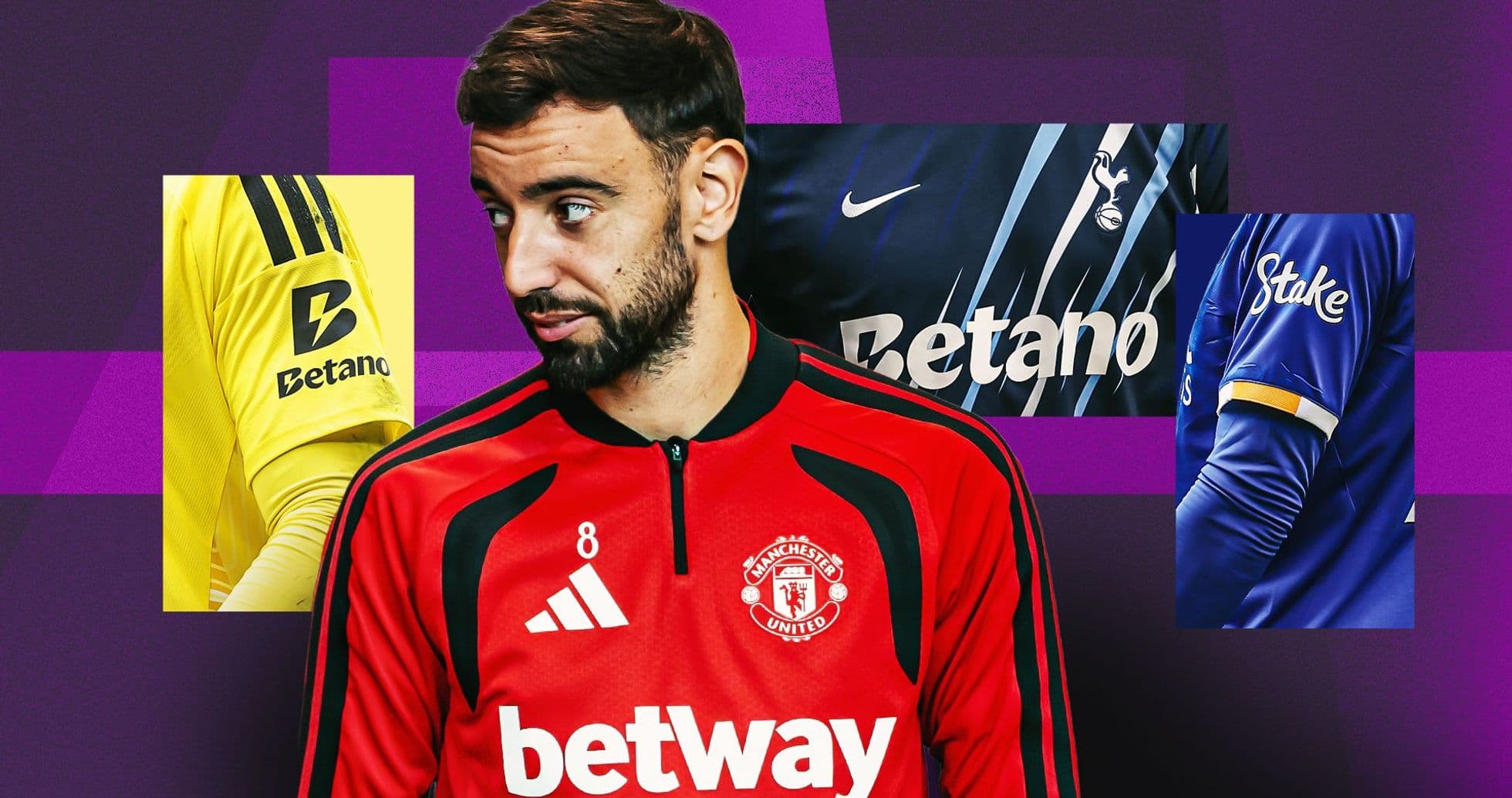
A major loophole lets clubs keep gambling brands on sleeves and training apparel. Manchester United signed a record £20 million-per-year deal with Betway for their training kits this summer. Tottenham also partnered with Betano for training and pre-match wear. Other clubs like Everton and Aston Villa shifted gambling sponsors from the front to sleeves.
These deals expose fans worldwide to gambling advertising beyond matchdays, especially via social media content that often matches or exceeds live game viewership.
Government Targets Unlicensed Gambling Sponsorship
The DCMS is focusing on unlicensed gambling operators sponsoring Premier League clubs. Roughly half of the teams have partnerships with firms not licensed in the UK, including Stake.com and SBOTOP. These companies mostly target overseas markets but still profit heavily from UK users.
Unregulated operators lack protections like vulnerability checks and spending limits and are linked to addiction and financial harm. Proposed legislation aims to ban such sponsorships from UK sports entirely.
Campaigners Push for Stronger Action
The Big Step campaign, driven by people affected by gambling harms, highlights the dangers of gambling ads in football. Founded by recovering gambler James Grimes, the group points out that nearly 11% of the UK population suffers gambling-related harm, with young people particularly vulnerable.
"The relationship between gambling and football was absolutely my route in because that relationship went from being something hidden to being on the front of lots of football shirts and TV adverts," Grimes said. "It’s so much better for society to have healthier, happier fans than to promote something known to cause harm."
Grimes criticizes clubs exploiting sponsorship loopholes, emphasizing how they prioritize profit over public health. He warns that increased exposure drives more gambling harm, especially among youth.
Contradictions Within Clubs and Players' Struggles
Several Premier League players, including Ivan Toney and Sandro Tonali, have faced bans due to betting offences linked to gambling addictions. Ironically, Tonali now wears training gear featuring Betano’s logo, a fact highlighted by The Big Step campaign as contradictory.
Grimes commented, "Clubs have players struggling with gambling addiction yet require them to promote the very thing that harmed them."
Small Steps, Bigger Challenges
The Big Step acknowledges progress from zero front-of-shirt gambling sponsors in the Premier League, down from 30 clubs previously. Still, the campaign views this as just a small step amid widespread gambling promotion elsewhere.
Football’s decision-makers seem to favor financial gain over tackling gambling harm, but there is cautious pride in forcing any change at all.