Portland Timbers II Edges Tacoma Defiance 1-0 in Tactical Duel
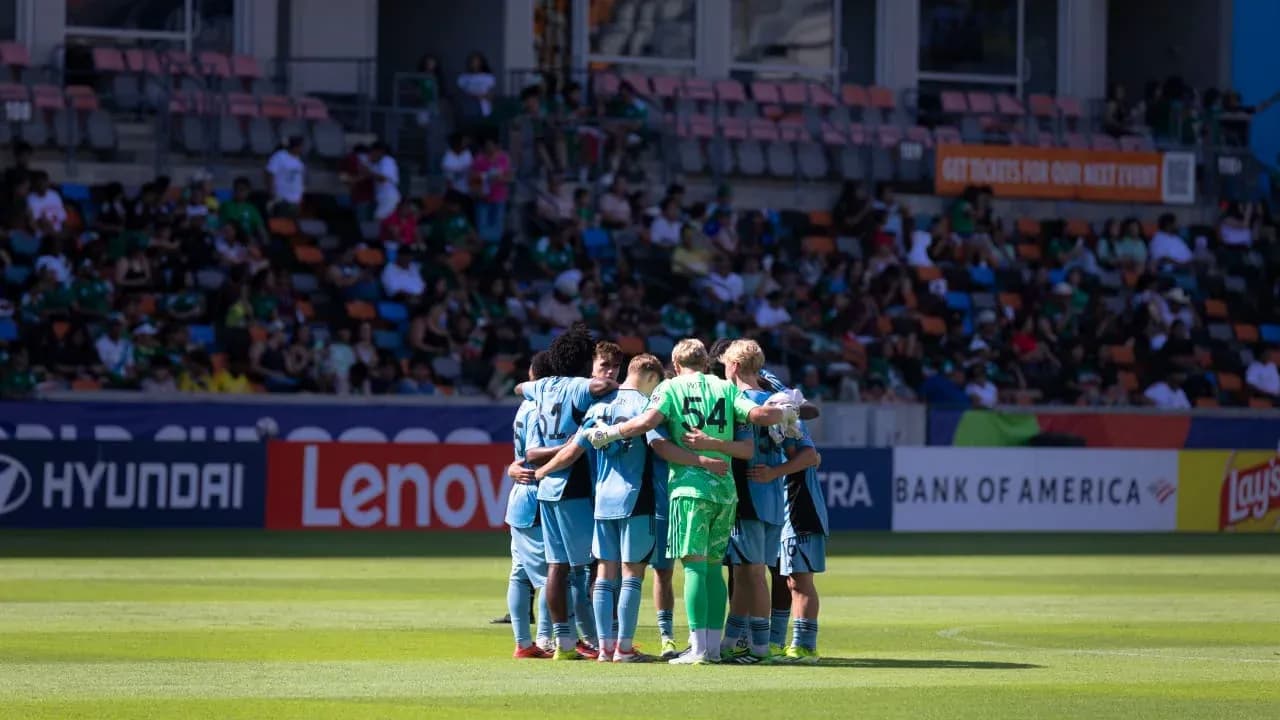
Providence Park under the lights staged a tight, tactical MLS Next Pro duel as Portland Timbers II edged Tacoma Defiance 1–0, a result that underlined the contrasting trajectories of two sides living very different versions of the same season.
I. The Big Picture
Following this result, Portland remain the standard-setters in the Pacific Division. They sit 1st in their group with 23 points from 12 matches, built on a starkly binary record: 7 wins, 0 draws, 5 defeats. Overall this campaign they have scored 16 goals and conceded 18, for a goal difference of -2, a reminder that their dominance in the standings has been achieved more through ruthlessness in tight games than overwhelming superiority.
At home, Portland have now played 8 league fixtures, winning 4 and losing 4. They have scored 11 home goals and conceded 13, an average of 1.4 goals for and 1.6 against at Providence Park. On their travels they have been more balanced, with 5 goals for and 5 against across 4 away matches, averaging 1.3 goals scored and 1.3 conceded away.
Tacoma, by contrast, leave Portland in a more precarious spot. In the Pacific Division they are 6th, with 14 points from 13 matches. Overall they have scored 15 and conceded 20, for a goal difference of -5. Their campaign has been streaky: 5 wins, 0 draws, 8 defeats, with the form line “LLWLLLLWWLWWL” capturing a side oscillating between brief surges and damaging slumps.
Tacoma’s away profile remains fragile. On their travels they have played 6 matches, winning 2 and losing 4, scoring 6 and conceding 12. That is an away average of 1.0 goals scored and 2.0 conceded, a pattern that once again surfaced in a game where they were edged by a single moment and could not find a response.
II. Tactical Voids and Discipline
Neither side’s absentee list is documented, so any tactical voids have to be read from the lineups and season profiles. Portland’s coach Jack Cassidy named a young, energetic XI: S. Joseph, A. Bamford, N. Lund, C. Ondo, H. Mueller, C. Griffith, E. Izoita, V. Enriquez, N. Santos, L. Fernandez-Kim and D. Cervantes. The bench—M. Deisenhofer, C. Cruthers, B. Barjolo, D. Nunez, B. VanVoorhis, J. Izoita and M. Kissel—offered legs and versatility rather than star power, fitting a side whose season has been defined by collective intensity.
Tacoma’s starting group of M. Shour, D. Alvarez, A. Lopez, G. Sandnes, C. Gaffney, X. Gnaulati, M. O’Neill, C. Phoenix, E. Carli, S. Gomez and M. Bronnik reflected a similar youth-driven profile, with depth on the bench from N. Newman, D. Robles, K. Brito, J. Winslow, R. Jauregui, O. Hassan, M. Emert, D. Brown and L. Lucero.
Disciplinary trends added an undercurrent of risk, especially for Tacoma. Heading into this game, Portland’s yellow-card distribution showed a pronounced late-game spike: 30.00% of their yellows arriving between 61–75 minutes, and 20.00% between 76–90. That profile hints at a team whose pressing and dueling intensity climbs as the match wears on, sometimes tipping into fouls as they protect or chase results.
Tacoma, meanwhile, concentrate their bookings earlier: 26.32% of yellows between 31–45 minutes and another 26.32% between 46–60, with 15.79% in each of the 76–90 and 91–105 ranges. That pattern suggests a side that can be rattled by game-state swings either side of half-time, precisely the periods where Portland’s emotional crowd and direct tempo can exert pressure.
Red cards have not featured for either side this season, but the yellow-card curves alone framed a contest in which momentum and composure around the hour mark were always going to be decisive.
III. Key Matchups
Hunter vs Shield
Portland’s attack is not prolific, but it is efficient. Overall they average 1.3 goals per game, with 1.4 at home. Against a Tacoma defence conceding 1.5 goals per match overall and a worrying 2.0 away, the structural imbalance tilted toward the hosts even before kick-off.
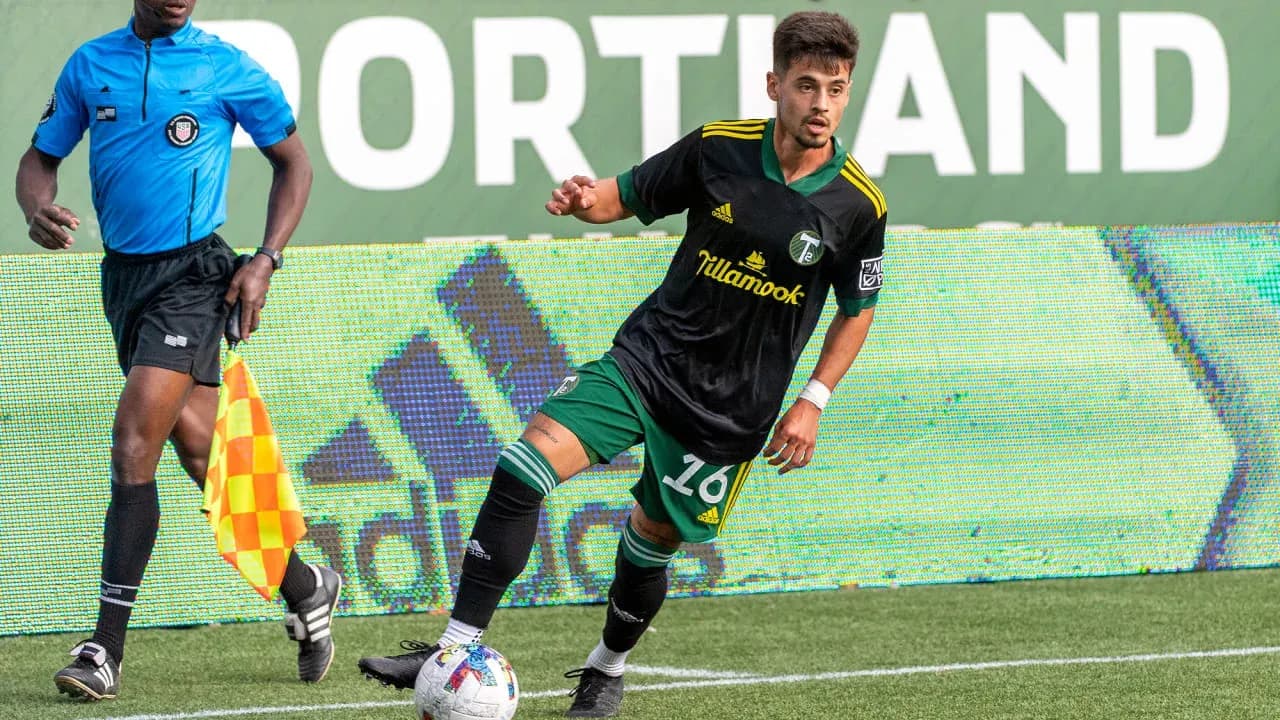
Within that, the presence of Colin Griffith is symbolically important. Listed as both top-rated scorer and top assist provider in the league’s early metrics, even without goals or assists yet in the data, he represents the spearhead of Cassidy’s forward line. His inclusion among the starters here, wearing shirt 39, gave Portland a focal point to pin Tacoma’s back line.
Tacoma’s “shield” has been stronger at home than away. On their travels they have allowed 12 goals in 6 matches, with their heaviest away defeat a 4–0 loss. Portland’s biggest home win this season is 3–0, and while they did not hit that ceiling here, the structural matchup—Portland’s measured but consistent home output against Tacoma’s porous away record—explains how a single first-half goal could hold up over 90 minutes.
Engine Room
Without explicit positional data, the midfield battle has to be inferred from profiles and season arcs. For Portland, players like E. Izoita and V. Enriquez symbolise the connective tissue between back line and attack. Portland’s overall defensive record—18 conceded in 12, an average of 1.5 per match—improves away but remains leaky at home, where they allow 1.6 per game. That places a premium on midfield protection and ball security.
Tacoma’s central figures, such as X. Gnaulati and M. O’Neill, operate in a more chaotic ecosystem. The team’s biggest away win, 0–2, shows they can control tempo and transition when the structure holds. Yet the away defensive average of 2.0 goals conceded and a heaviest away defeat of 4–0 underline how quickly their shape can unravel when pressed.
This match, with Tacoma failing to score and Portland preserving a 1–0 advantage from half-time to full-time, reads as a story of an engine room that did just enough. Portland’s midfield may not have dazzled, but it denied Tacoma the central spaces needed to overturn the deficit.
IV. Statistical Prognosis and Tactical Verdict
From a probabilistic lens, the outcome aligned with the underlying numbers. Heading into this game, Portland’s home attack (1.4 goals per match) facing Tacoma’s away defence (2.0 conceded per match) pointed toward the hosts creating the higher-quality chances. Portland’s overall defensive average of 1.5 conceded, matched exactly by Tacoma’s 1.5 goals scored overall, suggested Tacoma would likely generate some opportunities, but not necessarily enough to overwhelm.
Portland’s penalty record—2 taken, 2 scored, 100.00% conversion with no misses—added another subtle edge in tight contests. Tacoma also boasted a perfect penalty record (1 scored from 1, no misses), but in a match without spot-kicks, that particular weapon stayed sheathed.
The 1–0 scoreline ultimately encapsulates both clubs’ seasonal DNA. Portland continue to live on the knife-edge of narrow margins, but their ability to turn those margins into points keeps them atop the Pacific Division and on course for the Eastern Conference playoff picture, where they sit 4th in their broader conference table. Tacoma, 11th in the Eastern Conference standings, again showed flashes of resilience but not the sustained control needed away from home.
Tactically, Cassidy’s Portland side look built for knockout football: high variance, no draws, and a capacity to protect slim leads amid late-game disciplinary risk. Tacoma, meanwhile, must solve their away defensive structure if they are to convert their sporadic surges into a stable playoff push. At Providence Park, the numbers and the narrative converged: the league leaders did just enough, and the visitors’ familiar away frailties resurfaced at the worst possible moments.