Mauricio Pochettino's Future with US Soccer: A 2030 Decision
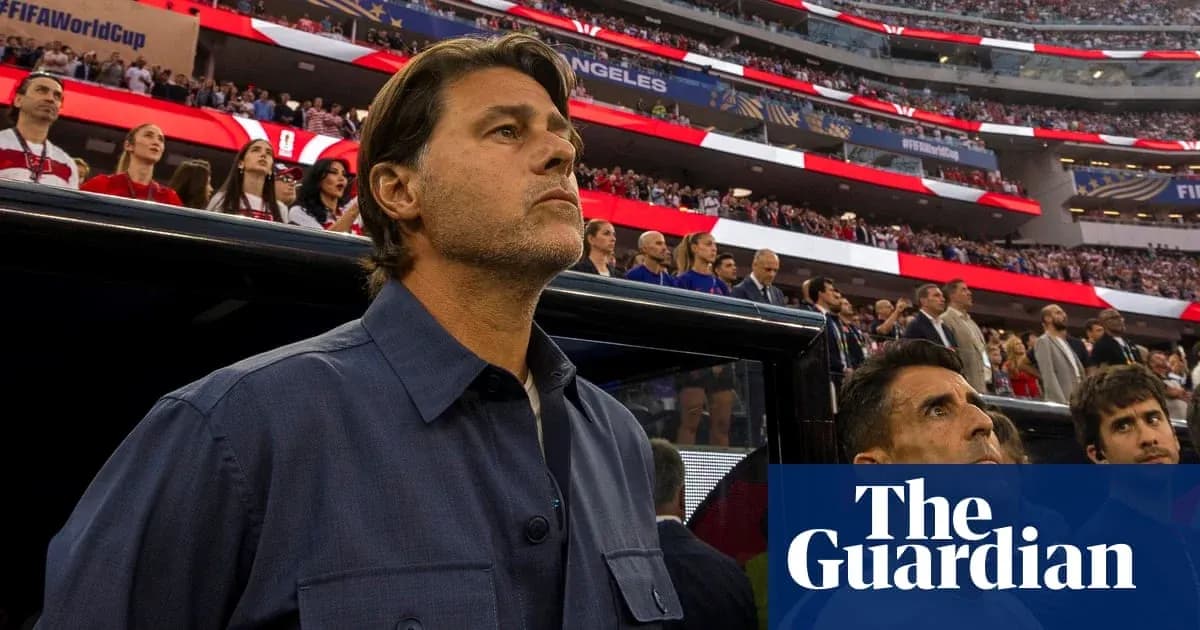
Mauricio Pochettino has been handed the keys to America’s footballing future. Now he has to decide whether he wants to drive it all the way to 2030.
Multiple sources have confirmed that US Soccer has put a contract extension on the table that would keep the Argentinian in charge of the US men’s national team through the 2030 World Cup. It is a bold offer, and a timely one, arriving just as Pochettino’s stock soars on the back of a historic group-stage performance and whispers of European interest grow louder.
The talks are not new. One source said negotiations over fresh terms have been ongoing for about three months, a steady, deliberate courtship rather than a panicked reaction to World Cup momentum. Pochettino and US Soccer CEO JT Batson have both acknowledged those discussions publicly, most recently in late May, right around the time reports surfaced that Pochettino had held talks with Milan.
Pochettino ducked and weaved when pressed on the Serie A club’s interest. Batson did not. He openly admitted that the federation has fielded “many inquiries” about their coach, underlining just how coveted the former Tottenham Hotspur manager remains on the global market.
Back in May, Batson painted a picture of a coach who chose the United States not as a last resort, but as a conviction play.
“[Pochettino], and the entire team, has been incredibly transparent [through] the entire process,” Batson said then. “He had standing offers from other places to come [when we hired him initially], and he wanted to be here. He’s a big believer in what we’re doing at US Soccer. He’s a big believer in soccer in America, and he’s a big believer in this men’s team.”
That belief is now being tested against opportunity. Pochettino has made one thing clear: he will not decide his future until after this World Cup. For now, the focus is on Bosnia and Herzegovina in the last 32, a knockout tie that arrives with the Americans riding an unfamiliar wave of group-stage authority.
The numbers behind his tenure tell a nuanced story. Over 22 months in charge, the overall body of work has been uneven, a “mixed bag” in results and performances. But the World Cup has cut through the noise. Under Pochettino, the US have produced their best-ever group-stage campaign at the tournament, brushing aside Australia and Paraguay to clinch top spot before a tight defeat to already-eliminated Turkey.
That loss did little to dent the mood. The job was already done. The Americans are through, and with a place in the last 32 secured, they now sit just two wins away from matching their best finish in the modern era.
Behind the scenes, US Soccer is moving like a federation that expects to be a permanent fixture at this level. The contract offer is one piece. The other is infrastructure: a sprawling $250m training facility in Atlanta, Georgia, a statement of intent poured in concrete and steel.
Pochettino is being paid like a central figure in that project. Publicly available figures put his salary at around $4m a year, among the highest in international football, with performance bonuses stacked on top. The Athletic first reported the existence of the new deal, which would stretch his horizon to a home World Cup cycle crescendoing in 2030.
For much of his time in charge, the assumption around Pochettino was simple: this would be a World Cup fling, not a long-term marriage. A coach steeped in club football, with no prior international experience, would come in, shake things up, then slip back into the European carousel.
That narrative has started to fray. In recent months, Pochettino has shifted his tone, speaking more openly about the possibility of staying on.
“We told the federation we are open,” he said at a media roundtable this week. “But we don’t want to distract when all the energy needs to be with my players ... If the American people start to show passion in our sport too, why not be here being part of something that can create a legacy? For me, the most important legacy is the connection between the national team and the fans.”
That word again: legacy. It is the hook US Soccer is banking on. The chance not just to win games, but to shape a footballing culture in a country that is still working out what it wants the sport to be.
For now, the equation is stark. A coach with options. A federation with ambition. A fanbase beginning to believe. Bosnia and Herzegovina stand in the way next, and then perhaps something bigger: not just a deeper run at this World Cup, but a decision that could define what US Soccer looks like when 2030 finally arrives.