Ousmane Dembele: Ligue 1 Player of the Year for Second Time
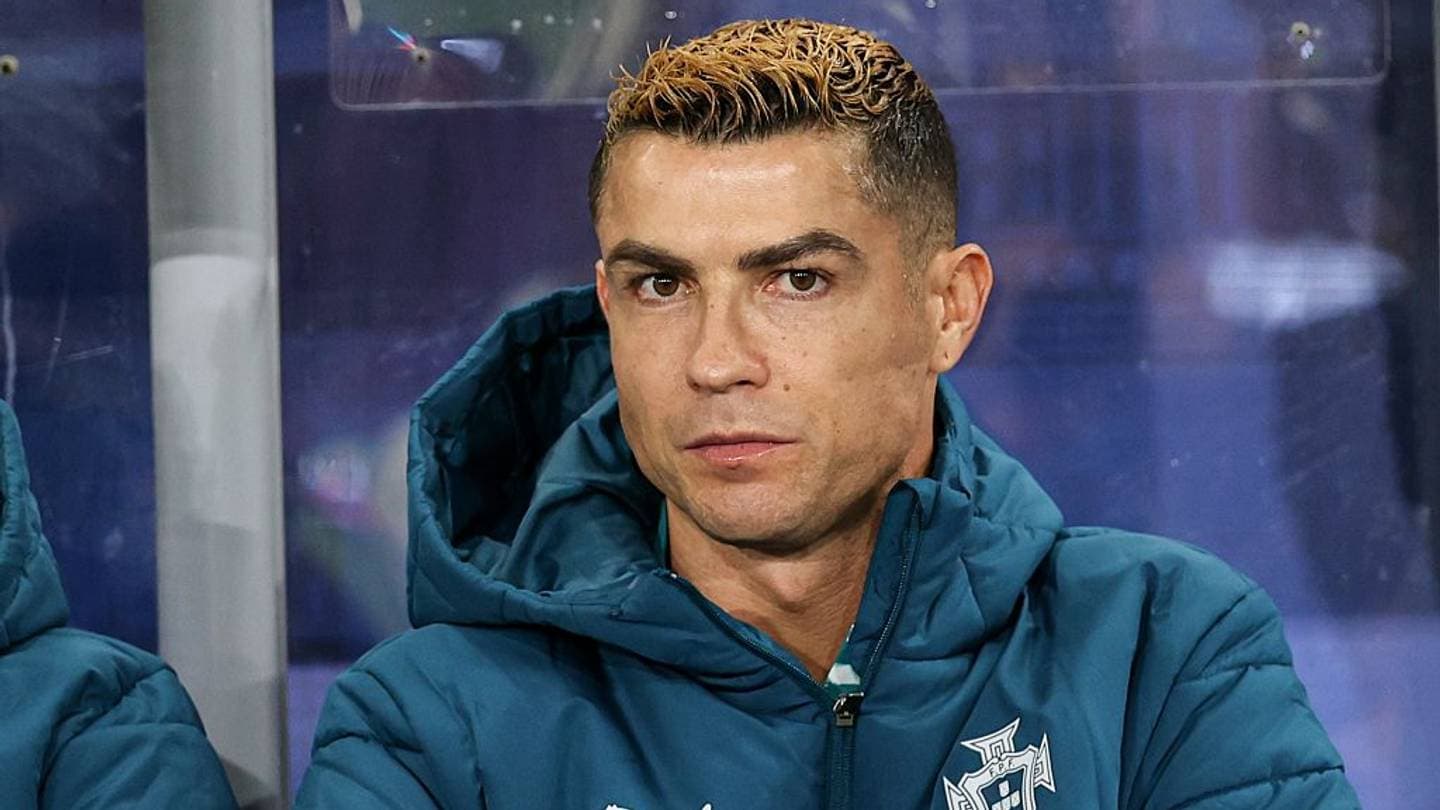
Ousmane Dembele stood where so many giants of French football have stood before him and heard his name again. Ligue 1 Player of the Year. For the second season running.
In a league that once revolved around Kylian Mbappe, the spotlight now sits firmly on the Paris Saint-Germain winger who refused to be defined by his injuries, his past, or anyone else’s script.
Out of Mbappe’s Shadow, Into His Own Light
Dembele is 28 now, no longer the raw prodigy but the finished article France once hoped he would become. This season, he has led a reshaped PSG to the edge of a 14th domestic title, the face of a team that no longer bows to the cult of the individual but still leans heavily on one man’s chaos.
Mbappe’s departure to Real Madrid left a vacuum. Dembele hasn’t just filled it; he has redrawn the outline. The timing of his latest award is no coincidence, coming as PSG gear up for a Champions League final against Arsenal that could change the club’s history.
The French champions have had stars before. They have rarely had one who has had to fight his own body as much as Dembele.
A Season Played on the Edge of Pain
This award should not exist on paper. Not with his medical file.
Persistent physical problems stalked Dembele all season. He started just nine league matches. Nine. He played 960 minutes in Ligue 1, barely over half of the 1,736 he logged the previous year. For most players, that’s a campaign written off as “what might have been.”
Dembele refused that narrative.
In those limited minutes, he produced 10 goals and six assists, numbers that would be impressive across a full season for many wingers, let alone one constantly in and out of the treatment room. His efficiency turned every appearance into an event. Every sprint, every feint, every cut inside carried weight.
The numbers only tell part of it. Opposing coaches tilted their defensive blocks towards him. Full-backs rarely ventured forward. Centre-backs shuffled a step wider. His mere presence on the right flank bent entire defensive structures out of shape and opened corridors for teammates to exploit.
PSG did not just miss him when he was out; they played differently. Slower. Safer. Less terrifying.
Joining an Elite, Relentless Club
Back-to-back UNFP Player of the Year winners are not sprinkled lightly through French football history. Dembele becomes only the fifth player ever to retain the award.
The last man to manage it before the Mbappe era was Zlatan Ibrahimovic in 2014, a forward who dominated Ligue 1 with brute force and arrogance. Mbappe then turned the trophy into his personal property, lifting it five seasons in a row before heading for Spain.
Now, Dembele’s name sits in that lineage. Ibrahimovic. Mbappe. Dembele.
It is not just his story, either. PSG’s night at the awards ceremony underlined the depth of their new project. Desire Doue, his teammate, walked away with the prize for best young player, a nod to the club’s evolving core and the balance between marquee names and emerging talent.
Dembele, for his part, kept the tone measured. No grandstanding, no self-mythologising. He pointed the spotlight back at the dressing room, the coaching staff, the structure that has finally allowed his talent to breathe. The humility felt genuine, not rehearsed: an individual trophy framed as the product of a collective machine.
Luis Enrique’s Structural Shock
That machine bears the fingerprints of Luis Enrique.
For years, PSG chased star power and paid the price in Europe and, at times, in their own league. Systems bent around egos. Lines stretched. Gaps appeared. The football often felt like a highlights reel stitched together by individuals rather than a coherent plan.
Luis Enrique tore that up.
He imposed a possession-based style that demands relentless pressing, positional discipline and constant movement off the ball. No passenger survives in this version of PSG. The structure has been strong enough to absorb long absences from key players, including Dembele, without the season spiralling.
His work has not gone unnoticed, but the best coach award slipped elsewhere, to Pierre Sage of Lens. It was a nod to the only side that truly kept PSG honest domestically, the team that refused to let the title race turn into a procession.
Even so, the Parisian grip never really loosened. A narrow 1-0 win over Brest effectively sealed the championship, stretching the gap to six points with a goal difference no challenger could realistically touch. It was a victory emblematic of the new PSG: controlled, pragmatic, ruthless when it mattered.
All Roads Lead to London
Yet in Paris, domestic dominance is no longer the ultimate currency. The club’s entire modern identity hangs on one question: can they finally conquer Europe?
This season, they have edged closer than at any time in recent memory, not with the swagger of flat-track bullies but with a hardened edge. Their 6-5 aggregate win over Bayern Munich in the Champions League semi-final was chaotic, breathless, and revealing. Old PSG might have folded under that pressure. This version held its nerve.
The reward is a final against Arsenal in London, a stage loaded with narrative and consequence. For Dembele, it is a career-defining night. For PSG, it is something bigger: a chance to step out from under a decade of European underachievement and rewrite the club’s place in the sport’s hierarchy.
Observers across the continent have noticed the shift. This PSG bends but does not break. Injuries, tactical tweaks, hostile away grounds – they have ridden all of it. The squad carries a psychological resilience that has so often deserted them when the stakes soared.
At the heart of that lies Dembele’s unpredictability. If he stays fit for the final, he offers something no tactical plan can fully contain: the ability to rip up the script in a single movement. One wrong-footed defender, one burst from the touchline into the box, one shot bent inside the far post. That is the margin at this level.
The season has already placed Dembele among an elite group in French football history. What happens in London will decide whether he remains a domestic king, or becomes the man who finally dragged PSG – and with it, the reputation of French club football – onto the summit of Europe.