Footballers Are Not Superheroes: The Hidden Toll of the World Cup
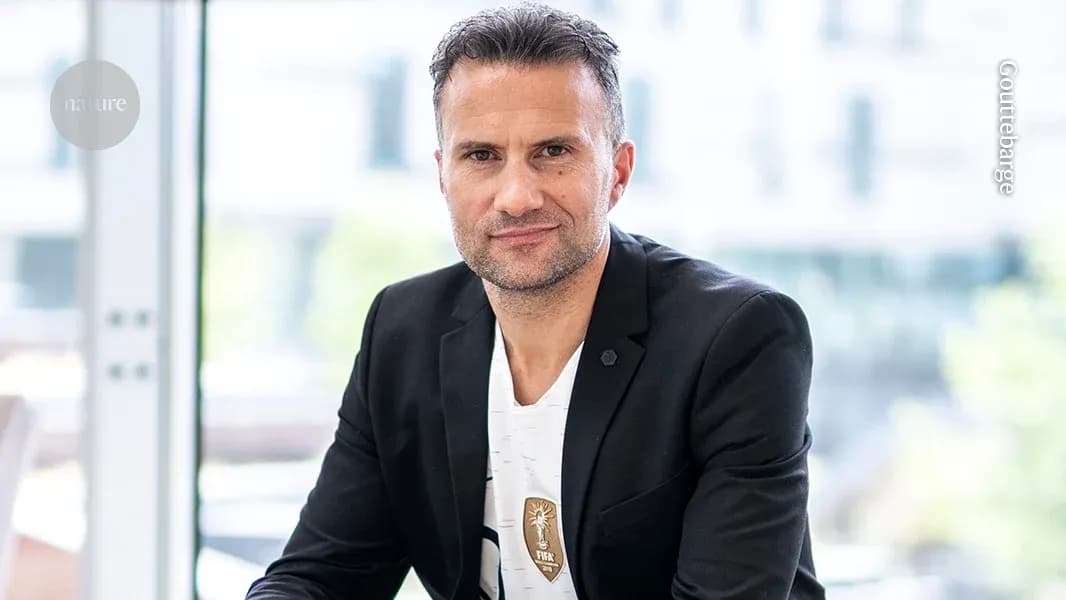
Vincent Gouttebarge has lived both lives. More than a decade in professional football across France and the Netherlands. Then, after retiring in 2007, a second career in medicine and research that has taken him to the heart of the sport’s most uncomfortable truths.
Today he sits at a powerful crossroads: medical director at FIFPRO, the global players’ union; chair of the International Olympic Committee’s Mental Health Working Group; researcher at the University of Pretoria and Amsterdam University Medical Centre. Few people are better placed to explain what the World Cup really does to the people on the pitch.
As the 2026 men’s World Cup kicks off in the United States, Canada and Mexico, the spectacle is sold as the pinnacle of a player’s career. For many, it is. But behind the flags and anthems lies a reality Gouttebarge keeps repeating in rooms full of decision-makers.
Footballers are not superheroes.
The Weight of the World Cup
Being called up by your country should be the dream. For most players, it is. The World Cup can be the defining chapter of a career.
But the emotional impact, Gouttebarge stresses, depends on the fine print: are you starting or stuck on the bench? Is your team flying or crashing out early? Are you returning home as a hero or as a scapegoat?
And the tournament itself is only half the story.
Once the World Cup ends, there is barely a pause. Players are expected back at their clubs almost immediately. If they are fortunate, they might squeeze in a week or two of rest. Many don’t even get that. One season bleeds straight into the next, with no meaningful recovery window.
What sounds like a scheduling issue is, in his view, a clear health problem.
A Calendar That Breaks Bodies and Minds
The modern match calendar is relentless. Domestic leagues, continental competitions, national-team duty, commercial tours. At the elite level, players can find themselves grinding through two or three games a week, week after week, sometimes without a genuine day off.
Gouttebarge sees the consequences in data and in faces.
He describes the calendar as a “huge burden” not only on muscles and joints, but on emotions and cognition. Fatigue is no longer just physical; it seeps into decision-making, mood, sleep, relationships.
In 2024, FIFPRO and the World Leagues publicly urged FIFA to rethink the scheduling of tournaments and to build in more recovery time between major competitions. The warning was clear: this is not just about performance dropping in the final 20 minutes. It is about long-term health.
And this is before you even touch the daily storm of social media. The scrutiny does not stop when the final whistle goes, or when the season ends. Criticism, abuse, pressure – they follow players into holidays, into their homes, onto their phones at night.
How Common Are Mental-Health Problems in Football?
Gouttebarge’s work focuses on what can realistically be measured in elite sport: symptoms. Self-reported thoughts, feelings and behaviours that signal mental-health issues.
Full clinical diagnoses for research purposes are almost impossible at this level. The process is too time-consuming, too intrusive for athletes constantly on the move. So he turns to epidemiology, and the patterns that have emerged since he began studying professional football in 2012.
The picture is stark.
Players face the same life stressors as anyone else: family problems, relationship breakdowns, financial worries, grief. Professional football does not insulate them from ordinary pain.
Those everyday pressures collide with sport-specific triggers. Injury is a major one. The evidence is now strong for a two-way relationship: poor mental health can increase the risk of musculoskeletal injury, and a serious injury – especially one that removes a player from training and competition for a long period – ranks as one of the most severe life events in an athlete’s career.
Unexpected poor performance is another powerful blow. When identity and self-worth are tightly bound to output on the pitch, a run of bad games or a high-profile mistake can cut deep.
The Stigma That Still Silences Players
For all the campaigns and slogans, stigma around mental health has not disappeared from football.
Gouttebarge describes the sport as traditionally conservative, and that culture still shows. In parts of Europe, he believes progress is real. Players are more willing to talk, clubs are more open to listening. But the work is far from finished.
In South America, Africa and large parts of Asia, where football is religion, speaking openly about depression or anxiety can still be seen as weakness.
The contrast is striking. A player will sit in a press conference and calmly discuss an ankle injury or a hamstring tear. They will detail the rehab plan, the return date, the pain. But when it comes to mental health, that level of openness remains rare.
Behind the scenes, players fear the consequences. If a coach knows they have experienced depression, will that cost them a place in the starting XI? Will they be judged as fragile, unreliable, a risk?
Gouttebarge argues that change has to come from both directions.
At ground level, players and coaches need mental-health literacy: education that explains what these challenges are, how common they are, and why they should be treated with the same seriousness as a torn ligament.
At the top, the structures themselves must evolve. National federations typically fill their medical committees with sports physicians, orthopaedic surgeons and cardiologists. Mental-health professionals are usually missing from that table. For him, that is no longer acceptable.
Education That Actually Shifted Behaviour
In 2018, FIFPRO rolled out a mental-health education programme aimed at players. It was not a gold-standard randomized controlled trial. It was not designed to tick every box in an academic protocol.
But it did something crucial: it moved the needle.
After the programme, attitudes and behaviours around mental health improved compared with before. Players showed greater understanding and more openness. For Gouttebarge, it was proof that even modest investment in mental-health literacy can pay off.
Explain clearly why mental health belongs on the same agenda as muscle tears and knee surgeries, and people start to change. Not overnight, not everywhere, but measurably.
The Cruelty of Training in Isolation
There is one practice in the professional game that particularly angers him.
A new coach arrives. The squad is too big. Some players are out of favour. The solution, used again and again, is to exile them: send them to train alone or with the youth team, away from the main group.
From a trade-union perspective, Gouttebarge calls it bad behaviour. Those players have contracts. They are employees, and they are being sidelined in a way that would raise alarms in most other industries.
From a mental-health perspective, he sees something even more damaging.
Social support is one of the strongest protective factors against mental-health problems. Strip that away – remove a player from their daily environment, their colleagues, their normal routines – and you increase their risk.
In most workplaces, deliberately isolating an employee would be unthinkable. In football, it still happens with depressing regularity. To Gouttebarge, that speaks of poor leadership at club level and a failure to grasp the human cost of such decisions.
The World Cup will roll on, the stadiums will fill, and the calendar will keep squeezing more from the same bodies and minds. Gouttebarge’s message cuts through the noise: until football truly treats mental health with the same urgency as any physical injury, the game’s greatest stage will keep exacting a price few fans ever see.