Ousmane Dembélé's Hat-Trick Dominates Norway in World Cup Match
Ousmane Dembélé walked into a night billed for giants and tore up the script.
This was supposed to be Mbappé v Haaland, a heavyweight collision to close Group I in Boston. Then the teamsheets landed. Erling Haaland on the bench. Ten changes from Ståle Solbakken. Norway rotated, France refreshed, the sense of occasion punctured.
Dembélé promptly rebuilt it on his own.
A hat-trick that ripped through history
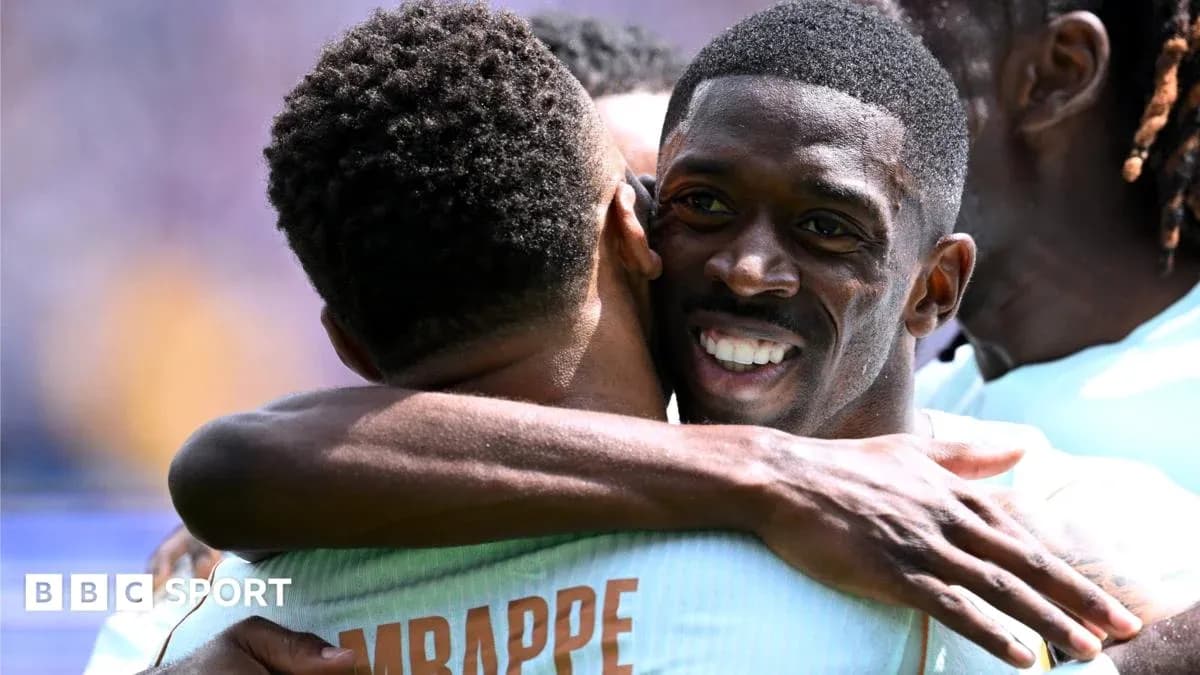
In 32 blistering minutes, the France winger produced one of the great World Cup group-stage performances, a hat-trick of rare clarity and composure that dragged the game, and the group, firmly into French hands.
Three goals. All before half-time. The first World Cup player to manage that in an opening half since Oleg Salenko in 1994. The second-fastest hat-trick from kick-off in the tournament’s history, behind Erich Probst’s 24-minute salvo for Austria in 1954. These are not the kind of names you usually hear in the same breath as Dembélé. They are now.
This is a footballer who has lived under a permanent medical bulletin, a winger whose career has often been defined by the treatment room as much as the touchline. In Boston, he was something else entirely: ruthless, decisive, untouchable.
Guy Stéphan, in charge on the night with Didier Deschamps back home following the death of his mother, did not hide what had fuelled his No. 11.
“Ousmane is a human being, just like anyone he can hear the criticism,” the assistant coach said. “He has unfortunately had injury issues but every time he comes back harder and harder. Three goals in a World Cup game is exceptional.”
Exceptional barely covers it.
France start fast, Dembélé hits harder
France suffocated Norway from the first whistle. The European runners-up pressed high, snapped into challenges, and pinned Solbakken’s experimental side inside their own half.
The breakthrough arrived after just seven minutes, and it was classic, stripped-back Dembélé. France won the ball in Norway’s half, Kylian Mbappé slid it right, and suddenly the PSG winger had grass, a backpedalling defender and a decision to make. He squared up his man, opened his body and thrashed his finish past Egil Selvik at the near post. No hesitation. No second thought. 1-0, and the tone set.
Norway never really recovered their shape. France swarmed, Mbappé roamed, Antoine Griezmann stitched attacks together from the pockets. When the second goal came in the 20th minute, it felt like the logical next step in a one-sided contest.
France broke at pace. Dembélé cut in off the right, the ball glued to that left foot that has always promised more than his body has allowed. This time it delivered in full: a vicious, curling shot bent into the far corner, beyond Selvik’s reach. Lightning counter, surgical finish. 2-0.
Norway’s flicker, France’s ruthless response
Norway’s response was immediate and, from a French perspective, infuriating. Straight from kick-off, the French defence switched off. One move, one lapse, and Thelo Aasgaard, the Rangers forward, swept his shot past a wrong-footed Mike Maignan. A 79-second reply. A lifeline, at least on the scoreboard.
But the pattern of the game did not change. France controlled the ball, the tempo and the territory. Norway, already safe and clearly keeping something in reserve for the knockouts, rarely looked convinced by their own rotation.
The pressure told again, and predictably it was Dembélé who applied it.
His third was the purest expression of his night: confidence, craft and cold-blooded finishing. Once more he drifted inside onto his left, four Norwegian defenders forming a nervous ring around him but never closing. That hesitation was fatal. Dembélé picked his spot, curled another precise effort past Selvik and completed his hat-trick.
Three shots of the highest quality. Four goals in the tournament. Suddenly, a player often cast as Mbappé’s supporting act had muscled his way into the Golden Boot conversation.
A goal built by all 11
The numbers behind that third goal tell their own story. Seventeen passes in the build-up. Every single French player touched the ball. It was the most passes ever recorded in the construction of a France World Cup goal.
It was not just individual brilliance. It was a team stretching, probing, moving Norway around until the gap appeared for their in-form winger to exploit. On a night when Mbappé was unusually quiet after rattling the underside of the bar inside 21 seconds, France found fluency and incision elsewhere.
The comparison with the 2022 quarter-final against England felt unavoidable. Back then, Gareth Southgate’s side largely contained Mbappé, only to watch Griezmann dictate the game. In Boston, Norway kept Mbappé to the fewest first-half touches of any French outfield player. Dembélé simply took the conductor’s baton instead.
By the time he left the stage on 65 minutes, his work was complete. The tempo dipped, the urgency softened, but the scoreboard and the group table already belonged to France.
Maignan’s moment and Norway’s gamble
Norway’s selection told its own story. They needed a win to finish above France, yet Solbakken’s 10 changes and Haaland’s rest signalled a coach content with second place and focused on the knockouts.
There was still a moment that could have shifted the mood. Early in the second half, Jørgen Strand Larsen stepped up to the spot, a chance to drag Norway back into the contest. Maignan read him, stood strong, and saved. It was a tame penalty, but the significance was not.
Maignan became the first French goalkeeper to save a World Cup penalty in normal time since Joël Bats in 1986. Another small piece of history on a night thick with it, another reminder why so many see this France side as favourites to claim a third world title.
For Norway, the calculation is simple. Haaland, with four goals already and level with Mbappé, will now enter the knockout stage rested, angry and expected to carry a nation. Strand Larsen’s miss only sharpens that focus.
Doué’s late flourish, France’s quiet warning
As the game drifted into added time, Desire Doué, Dembélé’s PSG team-mate, added a flourish. A looping header in the 94th minute made it 4-1, a goal that underlined the depth and variety in this French squad rather than changed the story.
The real statement had been made long before.
Three group games. Three wins. A first perfect World Cup group stage for France since 1998, when they lifted the trophy on home soil. The echoes are obvious, the temptation to draw lines between eras even more so.
Stéphan, though, refused to be swept along.
“This team is totally different to 2022,” he said. “More than half the squad had never played a World Cup. We can only see as the World Cup goes on, then up our level as we play strong teams. There is the offensive and defensive side, we need to have that balance, and for that we need to wait.”
Wait, yes. But nights like this accelerate belief.
France arrived in Boston expecting Mbappé v Haaland and left with something more intriguing: a reminder that in a squad stacked with stars, another match-winner can emerge without warning.
On this evidence, if Dembélé stays fit and this team keeps its balance, who exactly is going to stop them?