Osasuna vs Espanyol: La Liga Survival Test Analysis
Under the late-afternoon light at Estadio El Sadar, this was framed as a survival test for Osasuna and a credibility check for Espanyol. Round 37 of La Liga, with the table already sharply defined: Osasuna starting the day 16th on 42 points, Espanyol 11th with 45. The margins were thin, the narratives not.
Following this result – a 2-1 away win for Espanyol after leading 1-0 at half-time – the season’s identities felt confirmed rather than rewritten. Osasuna’s overall goal difference of -5 (44 scored, 49 conceded) has always told the story of a team living on the edge, rarely blown away but too often punished in key moments. At home, though, they had been far stronger: 9 wins from 19, scoring 31 and conceding 24, an attacking average of 1.6 goals at El Sadar.
Espanyol arrived as a side more comfortable in chaos than control. Overall, they had 42 goals for and 54 against, a goal difference of -12, with their away profile particularly volatile: 22 scored and 31 conceded across 19 trips, averaging 1.2 goals for and 1.6 against on their travels. This was a team that could both hurt you and be hurt, often in the same breath.
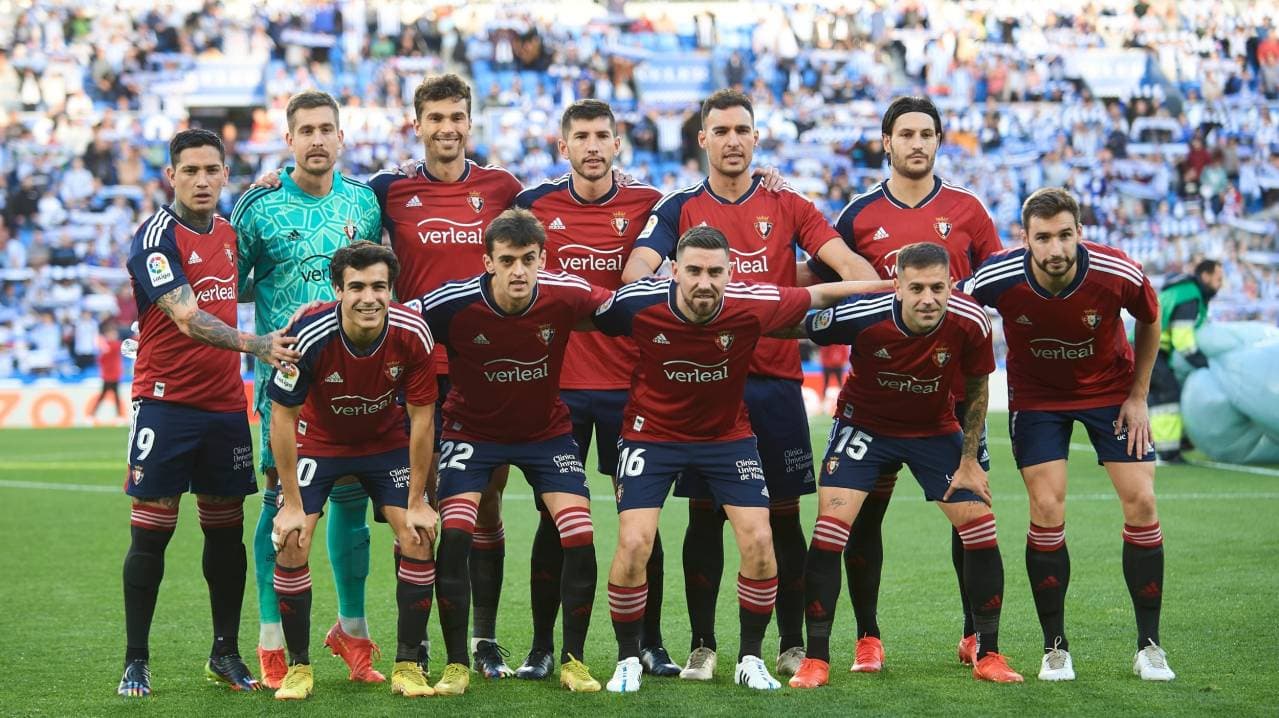
Tactically, the lineups underlined those identities. Alessio Lisci leaned again into Osasuna’s most trusted shape of the season, the 4-2-3-1 – the system they have used in 22 league matches. Sergio Herrera in goal, a back four of V. Rosier, Alejandro Catena, F. Boyomo and A. Bretones, with L. Torro and Jon Moncayola as the double pivot. Ahead of them, a fluid three of R. Garcia, A. Oroz and V. Munoz working around the campaign’s headline act: Ante Budimir, 17 league goals and the third-ranked scorer in the division, at the tip of the spear.
Espanyol responded with a 4-4-2 under Manolo Gonzalez, one of their staple shapes this season (12 league uses). M. Dmitrovic in goal, a back line of O. El Hilali, C. Riedel, L. Cabrera and C. Romero. The midfield band of T. Dolan, U. Gonzalez, Pol Lozano and Pere Milla sat behind a front two of Exposito and K. Garcia – with Edu Expósito’s creative influence nominally starting higher but always threatening to drop between the lines.
Tactical Voids and Discipline
Both sides carried scars into this fixture. Osasuna were without R. Moro, ruled out through injury, removing a potential wide option who might have stretched Espanyol’s full-backs and offered Lisci a different dribbling profile off the bench.
Espanyol’s absences were even more structurally significant: C. Ngonge and J. Puado both missing with knee injuries. For a side whose away success depends on vertical outlets and counter-punching, losing those forward options forced Gonzalez to lean heavier on K. Garcia’s movement and Milla’s late arrivals to compensate.
Across the season, discipline has been a hidden subplot for both clubs. Osasuna’s yellow-card distribution shows a clear late-game spike: 21.35% of their bookings come between 76-90', with another 14.61% between 91-105'. This is a team that grows increasingly desperate as matches tighten, pressing higher and fouling more. Red cards are not strangers either, with 28.57% of their dismissals in 31-45', another 28.57% in 76-90' and 28.57% in 91-105'.
Espanyol mirror that late-game volatility. A striking 30.00% of their yellows arrive from 76-90', while their reds cluster in the second half: 40.00% between 46-60', 40.00% from 76-90' and 20.00% in 91-105'. Players like Catena (11 yellows and 1 red), Moncayola (9 yellows), Pol Lozano (11 yellows, 1 yellow-red), Edu Expósito (9 yellows) and O. El Hilali (9 yellows) came into this game as walking storylines in the disciplinary narrative.
Key Matchups – Hunter vs Shield, Engine Room
The headline duel was always going to be Ante Budimir against Espanyol’s fragile away defence. Budimir’s 17 goals from 36 appearances, backed by 88 shots (41 on target), make him one of La Liga’s most relentless penalty-box presences. He has also been a major penalty weapon, scoring 6 but missing 2; that 100.00% conversion rate on the team sheet from the spot is shattered by his individual record, and any Osasuna penalty here would have carried that tension.
His task was to exploit an Espanyol back line that, on their travels, had already conceded 31 times. L. Cabrera and C. Riedel were charged with wrestling Budimir in the air and in the box, while O. El Hilali’s aggressive style on the right – 72 tackles, 15 blocked shots and 40 interceptions in the league – risked leaving gaps if Osasuna could switch play quickly through V. Munoz and A. Oroz.
In the engine room, the contest was no less fierce. Moncayola, with 1,369 passes and 38 key passes this season, is Osasuna’s metronome and pressure valve. His partner L. Torro adds ballast, allowing the full-backs to step higher. Against them, Pol Lozano and U. Gonzalez offered Espanyol a blend of control and bite: Lozano’s 945 passes at 87% accuracy and 23 key passes make him the primary circulator, but his 64 fouls committed and heavy yellow-card load underline how often he operates on the edge.
Just ahead of them, Edu Expósito was the creative hinge. With 6 assists, 80 key passes and 965 total passes at 76% accuracy, he is Espanyol’s main chance architect. His ability to drop into pockets between Torro and Moncayola, receive under pressure and then release K. Garcia or the wide runners turned the match into a constant test of Osasuna’s compactness between the lines.
Pere Milla added another layer of threat from the left: 7 league goals, 33 key passes, and a knack for ghosting into the box. His red card earlier in the season serves as a reminder of his combative edge, but here his movement was more important than his temper, constantly asking questions of Rosier and Boyomo on Osasuna’s right side.
Statistical Prognosis and Tactical Verdict
Following this result, the numbers feel coherent with the eye test. Osasuna’s season-long pattern of being competitive but brittle resurfaced: overall they average 1.2 goals for and 1.3 against per game, and the 2-1 scoreline sits neatly inside that profile. At home they usually outscore opponents (1.6 for, 1.3 against), but Espanyol’s away threat – 1.2 goals scored per away match – once again translated into tangible damage.
Espanyol’s defensive frailty on their travels (1.6 conceded away) was evident in the chances they allowed, but their capacity to strike and then suffer was enough. With 10 clean sheets overall but only 5 away, they are not a shutdown team; they are a side that leans into risk and trusts their forwards and creators to tip the Expected Goals balance just enough.
From a tactical lens, Osasuna’s reliance on Budimir and the 4-2-3-1 structure remains both their strength and their ceiling. Without more varied threats – especially with R. Moro sidelined – opponents can key in on the Croatian, double him in the box and dare others to beat them. Espanyol, even without Ngonge and Puado, showed greater attacking distribution: Milla, Expósito, K. Garcia and the overlapping full-backs all contributed to stretching the game.
In xG terms, this felt like a match where Espanyol’s efficiency edged Osasuna’s volume. The away side accepted a degree of defensive exposure but maximised their high-quality looks, while Osasuna, despite territory and Budimir’s presence, struggled to consistently create clear, central chances.
Following this result, the story is simple: Osasuna remain a rugged but limited side whose home strength could not fully offset their season-long fragility, while Espanyol continue to be the league’s travelling gamblers – conceding plenty, but, more often than not, walking away with just enough to win the hand.