Orlando Pride W Defeats North Carolina Courage W 1–0: Match Analysis
Under the Orlando lights at Inter&Co Stadium, Orlando Pride W edged North Carolina Courage W 1–0, a tight NWSL Women group-stage contest that crystallised where these two squads are in their 2026 journeys. Following this result, the league table snapshot still paints Orlando as a playoff-hopeful in 7th on 11 points with a goal difference of 1 (12 scored, 11 conceded), while North Carolina remain in 13th on 9 points with a goal difference of -2 (9 scored, 11 conceded). The margins between them on the night, however, were defined less by standings and more by structure, star power, and discipline.
I. The Big Picture – Shapes, Identities, and a One-Goal Margin
Seb Hines leaned into continuity, rolling out Orlando’s now-signature 4-2-3-1, the only formation they have used across 8 league fixtures. It is a system that has helped them to 3 wins in total this campaign, with 2 at home and 1 on their travels. At home, they have scored 7 and conceded 8, a profile of a side that accepts risk to unleash its front four.
Mak Lind, by contrast, arrived with a Courage team that has been tactically restless. Across the season they have already used five different shapes, but here reverted to a 4-3-3 that tried to balance Ashley Sanchez’s attacking influence with a more solid back four. Overall, North Carolina have 2 wins, 3 draws, and 3 defeats, and their numbers underline a split personality: at home they average 1.5 goals for and 2.0 against, but away they average only 0.8 goals for and 0.8 against. On their travels they have been cautious, compact, and reliant on moments rather than volume.
The 1–0 scoreline felt like the meeting point of those identities: Orlando’s willingness to commit numbers forward, and North Carolina’s away-day conservatism, which kept the game narrow but ultimately left them short of punch.
II. Tactical Voids and Discipline – Where the Edges Were
There were no listed absentees in the data, so the “voids” were more structural than personnel-based. For Orlando, the main gap was creative: with Lizbeth Ovalle not in this particular lineup despite her 2 assists and 1 goal in just 5 appearances this season, the responsibility for linking midfield to Barbra Banda fell heavily on Angelina Alonso Costantino and Summer Yates. That trio, supported by the double pivot of Ally Lemos and Haley Hanson, had to reproduce Ovalle’s 12 key passes worth of invention through movement and overloads rather than one specialist playmaker.
North Carolina’s void was different. On paper, their front three of Lauryn Thompson, Evelyn Ijeh, and Sanchez promised verticality and individual threat, but the central midfield of Riley Jackson, Shinomi Koyama, and Manaka Matsukubo lacked a natural destroyer to consistently break Orlando’s lines early. As the game wore on, that left the back four increasingly exposed to Banda’s direct running.
Discipline has been a season-long subplot for both sides. Orlando’s yellow-card distribution shows a pronounced spike between 61–75 minutes, where 30.00% of their cautions arrive, and another 20.00% between 76–90 minutes and 20.00% in 91–105. That late-game edge was visible here as they protected the lead, with challenges becoming more cynical as the Courage pushed on.
For North Carolina, the story is starker. Across the campaign, 40.00% of their yellow cards land between 46–60 minutes, and they have already seen a red card in the 76–90 window (100.00% of their reds). With Allyson Schlegel carrying that red on her record from earlier in the season and Ijeh on 2 yellows in just 299 minutes, this is a squad that flirts with disciplinary trouble. Even without a dismissal on the night, that underlying tendency limited how aggressively they could press once they went behind.
III. Key Matchups – Hunter vs Shield, Engine Room vs Engine Room
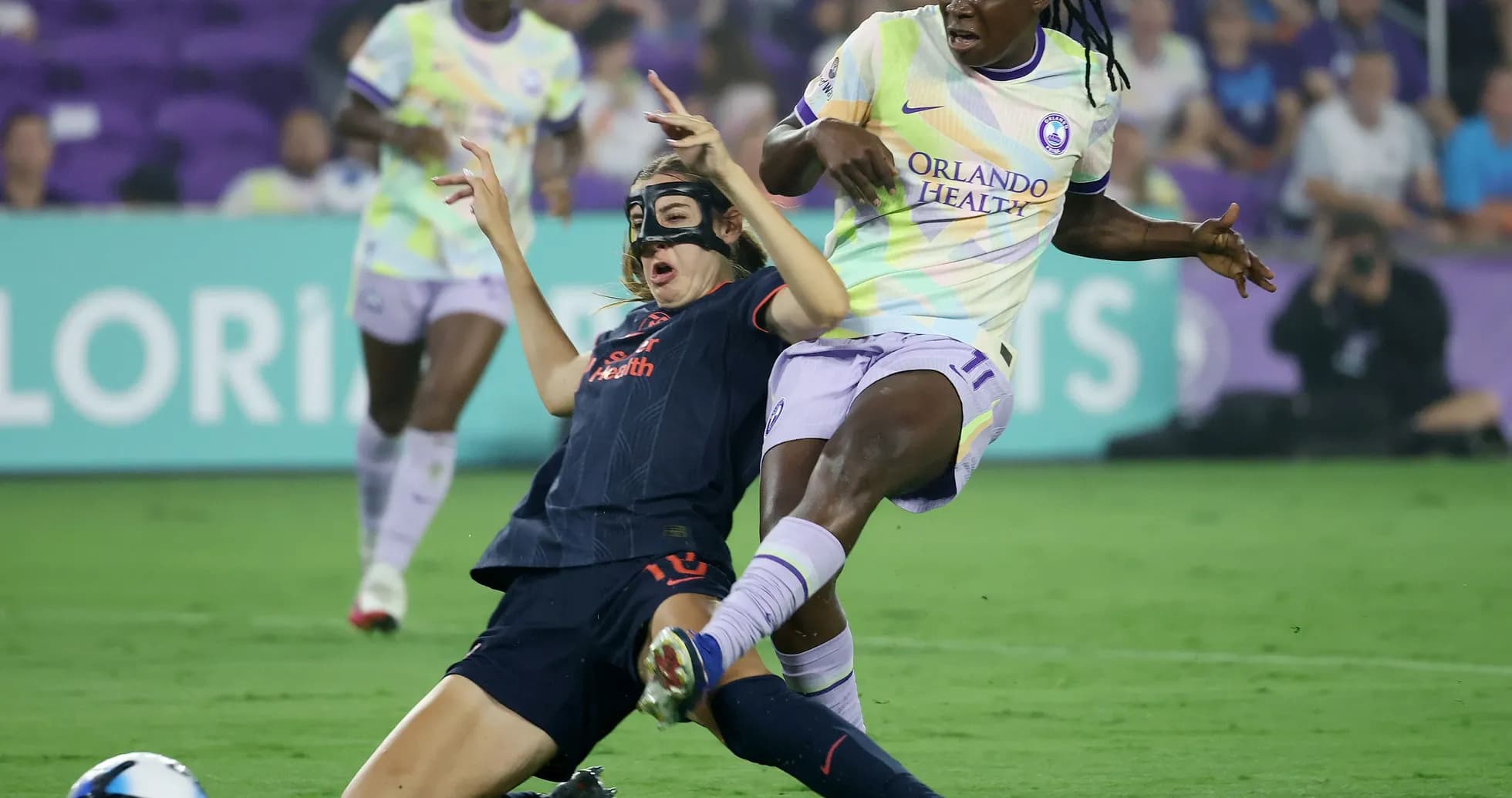
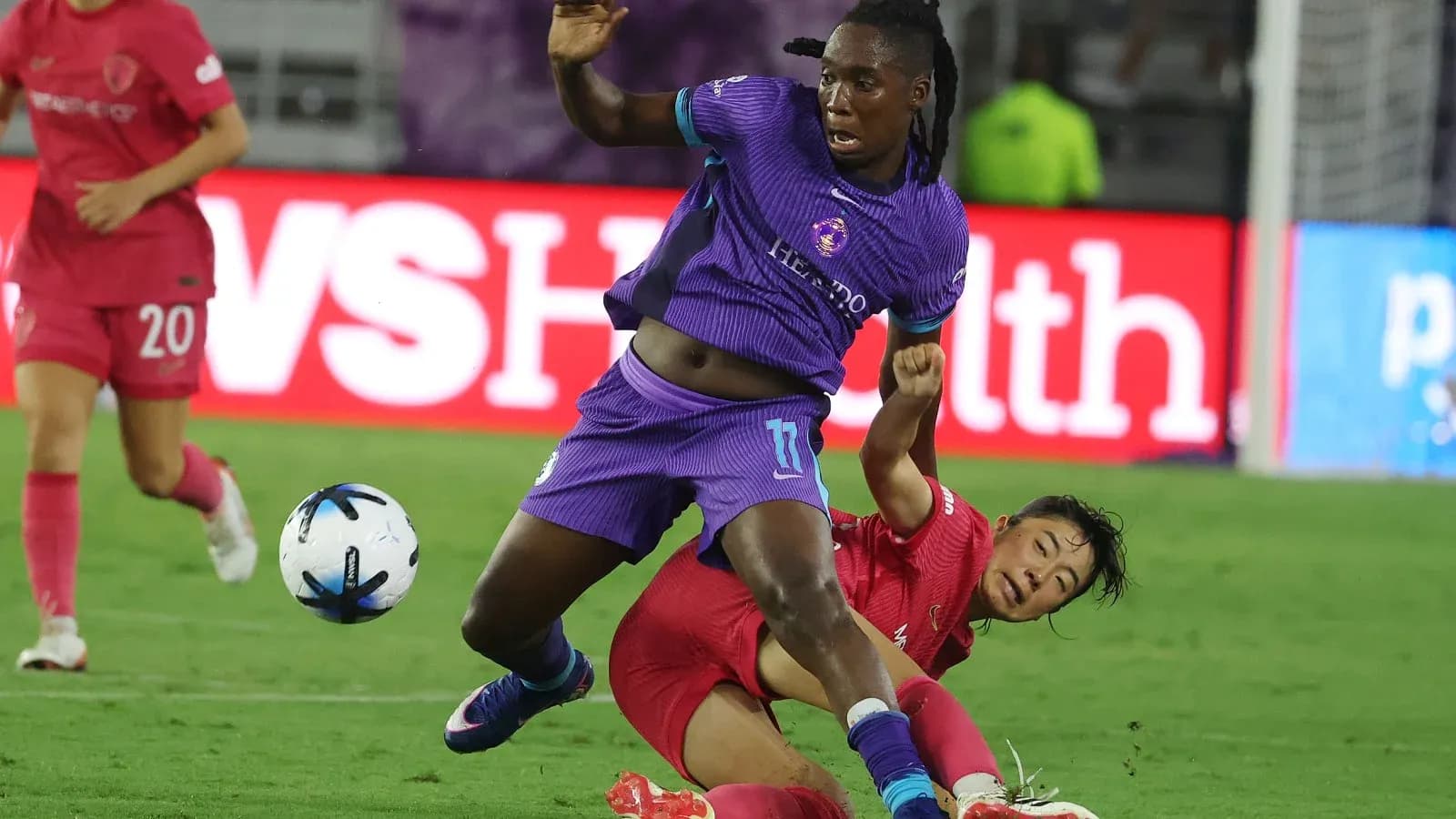
The headline duel was always going to be Barbra Banda against the Courage defence. Banda, the league’s top scorer with 7 goals in 8 appearances and a 7.87 rating, came into the game as the division’s most ruthless “hunter”. Her 30 shots, 19 on target, and 19 fouls drawn speak to a forward who lives on the edge of chaos, constantly forcing defenders into last-ditch decisions.
North Carolina’s “shield” was built around Kailen Sheridan and the centre-back pairing of Uno Shiragaki and Natalia Staude, with Ryan Williams and Dani Weatherholt flanking them. On their travels this season, the Courage had conceded only 3 goals in 4 matches, an average of 0.8 per away game, and kept 2 clean sheets. They are used to making away fixtures attritional.
Banda’s movement, though, stretched that shield in ways their raw numbers had not yet been tested. Her willingness to run channels meant Williams, usually a marauding provider of 3 assists and 10 key passes, had to spend longer pinned back. Every time Banda drifted into the right half-space, Staude and Shiragaki had to step out, fracturing the compactness that underpins North Carolina’s away defensive record.
In midfield, the “engine room” battle pitted Orlando’s double pivot plus attacking trio against a Courage triangle that has been the quiet backbone of their season. Koyama and Matsukubo tried to set tempo and find Sanchez between the lines, but without a dominant ball-winner behind them, they were gradually pushed back. Sanchez, with 5 goals and 11 key passes, is usually North Carolina’s creative detonator; here, she was often forced to receive with her back to goal and limited space, making it harder to unleash Thompson or Ijeh into the channels.
IV. Statistical Prognosis – What This Result Says Going Forward
Overall, Orlando’s season numbers suggest a team that lives in the margins but is trending upward. In total this campaign they average 1.5 goals for and 1.4 against per match, with 3 clean sheets already and only 1 game in which they have failed to score. The 4-2-3-1 is stable, the spine is settled, and Banda gives them a constant xG platform even when chances are scarce.
North Carolina, by contrast, are still searching for a stable identity. In total they average 1.1 goals for and 1.4 against, with their away profile (0.8 for, 0.8 against) telling the story of low-event, knife-edge contests. Their 2 clean sheets away from home show that the defensive structure can work, but their 2 failed-to-score away games highlight how easily their attack can be muted when Sanchez is crowded out.
If we project forward from this match and the underlying trends, Orlando look the more sustainable proposition. Their consistent formation, superior attacking ceiling through Banda, and ability to generate goals both at home and on their travels point to a side whose xG and actual returns are aligned. North Carolina’s defensive solidity on the road will keep them in games, but unless they can add another reliable goal source alongside Sanchez and reduce their mid-game yellow-card spikes, their Expected Goals profile will continue to lag behind that of genuine playoff contenders.
In narrative terms, this 1–0 felt less like a one-off and more like a snapshot: Orlando as a team growing into a defined, front-foot identity; North Carolina as a side still caught between pragmatism and ambition, their shield sturdy but their spear too often dulled.