
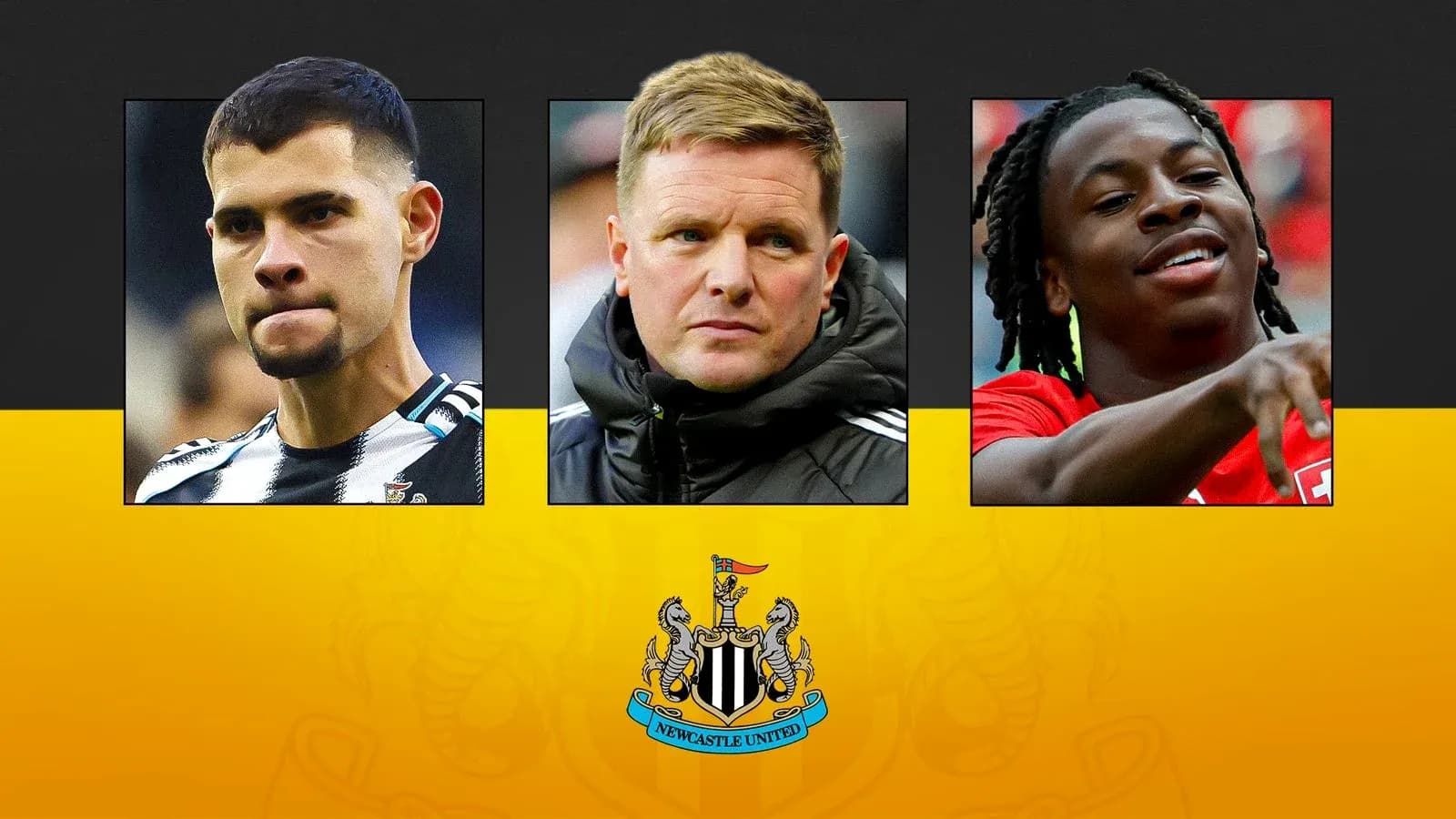
Newcastle's Summer Overhaul: A New Era Begins
The cranes are swinging over St James’ Park in spirit if not in steel. Newcastle United are not just tweaking a squad this summer; they are tearing into it. By the time the window shuts, as many as 10 positions could have changed hands. For a club that only recently talked about building a dynasty, it feels more like a controlled demolition.
Anthony Gordon has gone. Sandro Tonali has gone. Both moved on to clubs with bigger chequebooks and brighter European lights. And in the middle of it all sits the question that will define Newcastle’s summer: what happens to Bruno Guimaraes?
Bruno’s crossroads
Bruno has not downed tools. He has not handed in a transfer request or gone public with demands. What he has done is look Newcastle in the eye and tell them, clearly, what he wants.
If Arsenal lodge what he and the club regard as a serious offer, he wants to go.
This is not about squeezing another few thousand a week out of someone. Bruno is already Newcastle’s highest earner and would only make slightly more at the Emirates. At 28, turning 29 later this year, his motivation is simpler and sharper: he wants to win titles. He does not see that happening on Tyneside in the next couple of years, on or off the pitch.
He has also made one thing plain. If he leaves, he wants Newcastle properly paid. The internal tipping point sits around £80m. Hit that number and Newcastle’s hierarchy know they will have to listen.
The twist? Arsenal have not picked up the phone. Not once. No bid, no formal enquiry. All the noise has come through agents, leaving Newcastle baffled at the frenzy around a transfer that, in official terms, doesn’t yet exist.
Until a real offer lands, they insist Bruno is not for sale. They are desperate to keep their captain. But the clock is ticking, and everyone knows it.
Manzambi chase brings back old scars
While Bruno’s future hangs in the air, Newcastle have moved decisively elsewhere. Johan Manzambi is the headline act of the rebuild: a £49m agreement with Freiburg, a delegation sent to Germany, a verbal deal in place with both club and player.
On paper, it’s done. In reality, no one at Newcastle is daring to celebrate.
Manzambi is still at the World Cup with Switzerland, carrying a slight knee issue but driving his country into the quarter-finals. He has been outstanding: five goal involvements, the best World Cup return ever recorded for a player of his age.
He has also been clear. No contract signatures until after the tournament.
Newcastle have heard that line before. Victor Munoz looked set to join a few weeks ago, only for Liverpool to steam in at the last second and hijack the move. That scar is still fresh. So while the club are confident they’ve done everything they can, there is a nervous edge. Another big club only needs to decide they want him and the whole thing could tilt.
For now, though, Manzambi is pencilled in as a Newcastle player next season. The recruitment team have pushed the boat out for him, even nudging beyond their preferred price range to get it done.
Three or four more to follow
Manzambi is not the end of it. He is the starting gun.
Newcastle expect three or four more signings once that deal is over the line. Another midfielder is on the list, especially if Bruno goes. A new No 1 goalkeeper is a priority, with long-standing interest in Manchester City’s James Trafford likely to turn into concrete movement in this window.
A versatile full-back is also on the agenda, ideally someone comfortable on either flank but with a bias towards left-back. The squad may yet need another winger if Jacob Murphy moves on, and a striker could follow if one of Nick Woltemade or Yoane Wissa departs.
If both stay, the club are content to roll with a front line of Wissa, Woltemade and Will Osula next season. If one leaves, the dominoes start again.
A new transfer doctrine
Behind the noise, there is a clear shift in strategy. Newcastle are no longer chasing the £80m–£100m blockbuster signing. They are building around a tighter band: players aged 18 to 24, typically costing between £20m and £40m.
Ewen Jaouen has arrived for £18m. Manzambi, at £49m, already stretches the model. But that is where the ceiling sits now. The club are adamant: do not expect nine-figure deals, or even something close.
This is Newcastle leaning into a Borussia Dortmund-style approach. Buy younger. Buy cheaper. Buy players with a high ceiling and let Eddie Howe shape them on the training pitch. Develop, improve, and, when the time is right, sell at a profit while still trying to compete for trophies.
It is a gamble, but it is a coherent one.
Who makes way?
To reshape a squad, players have to leave.
Nick Pope is expected to move on. Ipswich showed interest but have cooled for now. Jacob Murphy, a decade at the club behind him, could also go. Joe Willock is another who may be sacrificed.
No formal offers have landed for any of them, yet Newcastle are open to shifting all three if the right bids arrive. The aim is a cleaner, leaner squad that fits the new model. The risk is obvious: lose Pope, Murphy and Willock, and they all need replacing too. Every outgoing triggers another piece of business.
Steur, and the long game
Not every signing is expected to walk straight into the XI. Sean Steur is the clearest example.
At 18, he is very much one for tomorrow rather than today. He will train with the first team, take his place on the bench, and be eased into Premier League life. His biggest advantage? Newcastle have no European football next season.
No midweek travel, no constant recovery sessions. Just full training weeks under Howe, who will drill Steur’s physicality and game understanding into Premier League shape. The club hope that by this time next year, he is pushing for regular starts.
This is the template now: Steur, Bazoumana Toure, Manzambi. High-upside prospects, not ready-made stars.
Howe’s buy-in after a bruising window
Eddie Howe has not been dragged into this. He is driving it.
After last summer’s £250m spend, which yielded too many misfires and left the Alexander Isak saga hanging over the season, everyone at the top of the club agreed something had to change. Howe, sporting director Ross Wilson and chief executive David Hopkinson are aligned on the new direction.
They want deals done early. They want younger players who can be coached up, not just plugged in. This, more than anything, plays to Howe’s strengths. The training ground becomes the star of the show again.
Without European commitments, Newcastle will be fresher every weekend, with more time to embed ideas and integrate new signings. The pressure shifts slightly. Fewer games, more preparation. If this squad clicks quickly, they have a genuine shot at a strong domestic campaign.
Champions League? Unlikely. Top four or five? A stretch. But a return to the European places is realistic, and the lack of midweek football might just be their secret weapon.
PIF, money, and the ceiling above Newcastle
Hovering over all of this is the question of ambition. Saudi Arabia’s Public Investment Fund remains committed to Newcastle. There is no suggestion of a pullback in interest or support.
Yet fans look at Tonali, Gordon, Isak and potentially Bruno all heading off to bigger clubs and wonder how far this project can really go under current constraints.
Newcastle are discovering how hard it is to crack the Premier League’s top six when financial rules bite. Their commercial revenues sit at around half the level of the established elite. Until that changes, they will always be punching up.
The club know it. They are pushing to grow sponsorships, expand revenue streams and, in time, explore the prospect of a new stadium. Those are the levers that will eventually allow them to match the big six in fees and wages, rather than dance around the edges.
For now, PIF are still funding ambitious windows. Newcastle have already breached PSR once and paid the price. They do not want a repeat. The brief is clear: spend as much as they can without crossing the line again.
So the club stands at a junction. A squad being rebuilt on youth and potential. A star captain weighing up a title chase elsewhere. Owners willing to back the project, but boxed in by rules and revenue.
Newcastle are not just fighting for signings this summer. They are fighting to prove that this model can carry them where they want to go.





