New England II Edges Philadelphia Union II 1–0 in MLS Next Pro Clash
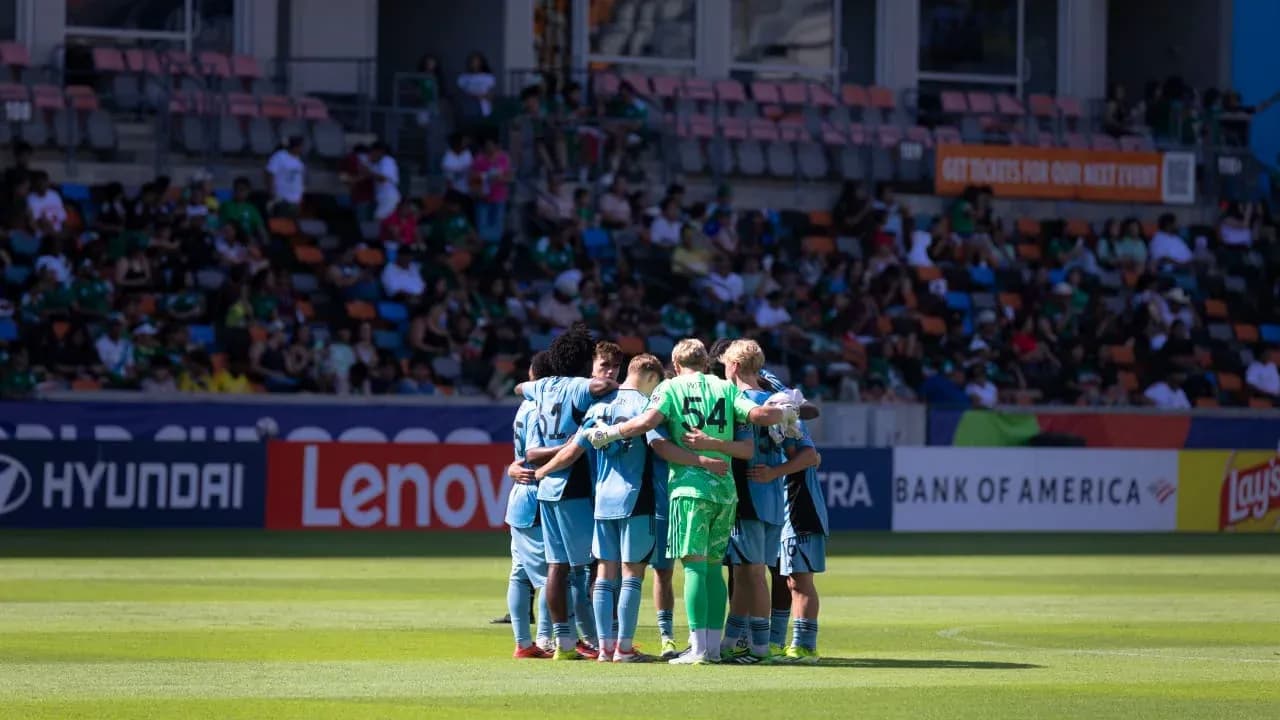
Under the Subaru Park lights, this MLS Next Pro group-stage meeting between Philadelphia Union II and New England II unfolded as a study in margins. The visitors, sharper in both structure and concentration, edged a 1–0 win, turning a tight contest into a statement that underlines their early-season identity: pragmatic, disciplined, and ruthlessly efficient.
Heading into this game, the standings already framed the narrative. Philadelphia Union II sat on 14 points from 9 matches, with a goal difference of 2 after scoring 11 and conceding 9 overall. New England II arrived with 17 points from the same 9 fixtures and a goal difference of 3, built on 11 goals for and 8 against overall. Both sides had won 5 or more matches, but the methods differed. Philadelphia’s record at home showed 3 wins and 3 losses from 6 outings, with 8 goals scored and 6 conceded at Subaru Park. New England, by contrast, were dominant at home but more cautious on their travels: 1 away win, 2 defeats, and a narrow 2–2 away goal tally overall.
The seasonal DNA of both teams suggested a clash of philosophies. Philadelphia Union II, with 12 goals in total this campaign and an overall average of 1.3 goals for per match, lean into open, front-foot football. They also concede an average of 1.0 goal overall, a reminder that their aggression comes with risk. New England II, though slightly more prolific overall at 13 goals and an average of 1.4 goals for per match, are built on balance: they also concede just 1.0 goal on average overall, and their 3 clean sheets (2 at home, 1 away) underline a defensive structure that travels.
I. The Big Picture: Structure Without a Safety Net
With no formations listed in the data, the tactical canvas is drawn instead from roles and trends. For Philadelphia, the spine began with P. Holbrook in goal, shielded by a young but combative defensive group featuring G. Sequera, R. Uzcategui and A. Craig. In front of them, the likes of J. Griffin and M. De Paula were tasked with knitting phases together, while the attacking thrust came from W. Ferreira, S. Olivas and M. Jakupovic.
New England II’s starting XI carried a different weight. J. Gunn anchored the side from the back, with a defensive core built around G. Dahlin, J. Shannon and C. Mbai Assem. The midfield line, including G. Emerhi and J. Mussenden, provided industry and balance, while the creative and decisive sparks came from C. Oliveira and J. Da, supported by the movement of J. Siqueira and A. Oyirwoth.
With no draws in either side’s league campaign to this point – 5 wins and 4 losses overall for Philadelphia, 6 wins and 3 losses overall for New England – the pattern was clear: both teams play to win, not to manage stalemates. That set the tone for a match where the first goal always felt likely to be decisive.
II. Tactical Voids and Discipline
The absence list offers no clues, so both coaches effectively had full decks. For Philadelphia, coach Ryan Richter could rotate between the bench options of M. White, K. Moore, O. Benitez and O. Pratt, all capable of injecting energy or shoring up phases. New England’s bench, with M. Tibbetts, S. Sasaki, D. McIntosh, M. Morgan, S. George, S. Mimy and C. Zambrano, gave them flexibility to switch from compact containment to more aggressive pressing.
From a disciplinary standpoint, Philadelphia Union II came into this match with a yellow-card profile that spikes early and mid-game. A notable 20.00% of their yellows arrive between 16–30 minutes, and 16.67% in both the 31–45 and 61–75 ranges, signalling a team that tackles aggressively in the middle phases. Red cards are rare but telling: 50.00% of their reds come between 31–45 and another 50.00% between 61–75, hinting at emotional spikes when the game’s tempo rises.
New England II’s yellow distribution paints a different picture. They are relatively calm early, with no bookings recorded between 0–15 minutes, then ramp up their physical edge after the break. A combined 50.00% of their yellow cards arrive between 46–60 and 76–90 minutes (25.00% in each range), with another 20.83% between 61–75. This is a side that leans into the contest late, using controlled aggression to protect or chase a result without drifting into red-card territory.
III. Key Matchups: Hunter vs Shield, Engine vs Enforcer
The “Hunter vs Shield” duel in this fixture was less about a single star striker and more about units. Philadelphia Union II’s attack, averaging 1.3 goals both at home and away, faced a New England defence that concedes 1.0 goal per match overall and has already produced 3 clean sheets. On their travels, New England allow 1.0 goal per match away, a testament to their compactness.
Holbrook’s back line had to cope with a New England forward group that is far more potent at home (1.8 goals per match there) but more restrained away, with just 0.7 goals per match on their travels. That away restraint, though, is tactical rather than timid: New England are happy to win by a single goal, and their biggest away win of 1–0 overall speaks directly to the 1–0 scoreline they carved out here.
In the “Engine Room” battle, the contest between Philadelphia’s central operators – players like Griffin, De Paula and K. LeBlanc – and New England’s midfield core of Dahlin, Emerhi and Mussenden was crucial. Philadelphia’s season-long profile of 2 clean sheets at home but also 1 home match where they failed to score hinted at a side that can be stifled when the midfield is denied rhythm. New England, who have failed to score just once overall this campaign and have not blanked at home, brought a more reliable supply line to their forwards.
The substitutes added another layer. For Philadelphia, options such as O. Benitez and T. Reed could have been used to tilt the field late, but New England’s deeper bench – including the direct running of C. Zambrano and the fresh legs of S. George and S. Mimy – gave them more ways to protect a lead once they had it. The substitution pattern, with [IN] replaced [OUT] rotations in the second half, allowed New England to keep their block compact and their press selective, while Philadelphia were forced to chase.
IV. Statistical Prognosis and the 1–0 Reality
On paper, heading into this game, the numbers leaned slightly towards New England II. They had more wins overall (6 to Philadelphia’s 5), a better overall goal difference (3 to 2), and a more convincing defensive record away from home, with only 2 goals conceded on their travels. Their penalty record – 2 penalties taken, 2 scored, 100.00% conversion with no misses – underlined a clinical edge in decisive moments, even though no spot-kick was needed to settle this one.
Philadelphia’s own profile suggested volatility. With no draws and a home record of 3 wins and 3 losses, their matches at Subaru Park tend to swing. They score 1.3 goals per match at home but also concede 1.0, and they have already failed to score twice overall this season, once at home and once away. New England, by contrast, had failed to score only once overall, and their 3 clean sheets pointed to a side comfortable in low-scoring games.
The 1–0 full-time scoreline fits that statistical arc perfectly. New England II leaned into their identity: disciplined, structurally sound, and opportunistic. They did not need to open the game up; they needed one moment, and then the courage to compress space and manage the clock. Philadelphia Union II, for all their attacking ambition, ran into the kind of compact, late-game resistance that New England’s yellow-card curve predicts: a side that becomes more combative from 46–90 minutes, exactly when Philadelphia needed clarity and precision.
Following this result, the broader story is clear. Philadelphia Union II remain a dangerous, high-variance side whose home matches can tilt either way. New England II, meanwhile, continue to look like a playoff-calibre outfit: not flamboyant, but structurally reliable, with a defensive platform and mentality that can grind out narrow wins in hostile venues. In a league where fine margins dictate playoff seeding, this single goal at Subaru Park may resonate far beyond the final whistle.