Gary Neville's Alarm Over Bukayo Saka's Fitness
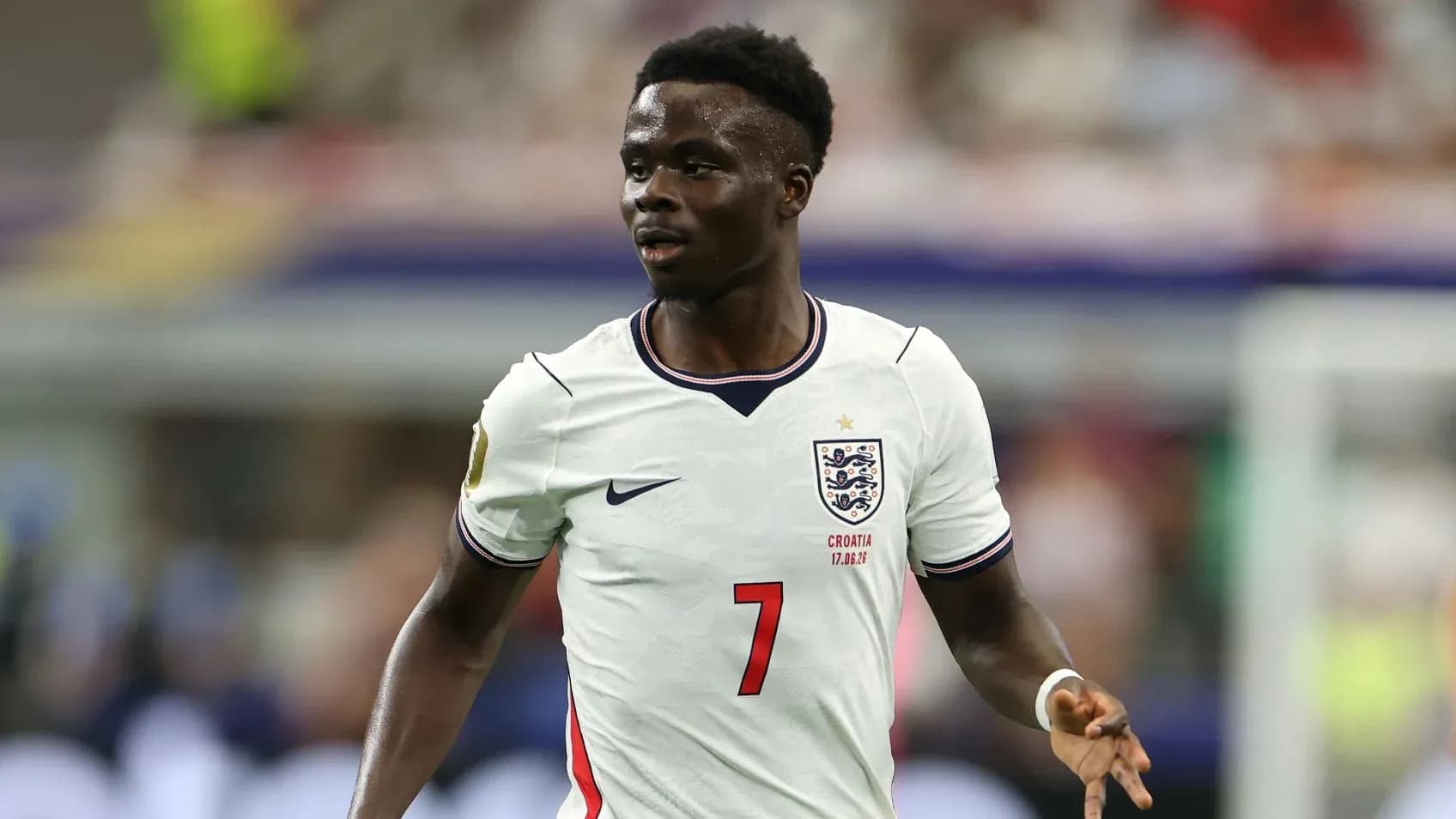
Gary Neville’s alarm over Bukayo Saka cuts through the usual tournament noise because it comes with a simple, stark observation: England’s most reliable wide threat does not look like himself.
The Arsenal winger, only 24 but already carrying the miles of a veteran, has been nursing a persistent Achilles problem throughout this World Cup in North America. The FA’s medical staff have tracked it closely, Thomas Tuchel has rationed his minutes, yet Saka has still been thrown into all three group games — always from the bench, always with the sense that England are gambling with a precious asset running on fumes.
Neville, speaking on Stick to Football with Sky Bet, didn’t bother dressing it up.
“Bukayo Saka doesn’t look right at all,” he said. “He’s usually the boy that’s bubbling and smiling, he’s got that competitive edge to him, but he’s not right and that’s a concern to us, I think.”
That “boy” has become England’s reference point on the right flank, the player who usually marries work-rate with end product. Right now, the smile is dimmer, the burst less explosive. It is not just form; it is a body that has been pushed to its limits.
Ian Wright sees the same picture, and he is asking the uncomfortable question: should Saka even be here?
The forward admitted before the tournament he was “happy to gamble” with his fitness. Wright looks at a player who dragged himself through a brutal domestic season, whose minutes were carefully managed during Arsenal’s Premier League run-in, and sees someone who has been struggling to complete 90 minutes for months. The warning lights have been flashing for a while.
“We’re going into a World Cup, and still not starting the first few games, only starting when we’re three games in, and still isn’t looking like the Saka that we know – this guy needs a break,” Wright said.
It is not just about Saka’s legs, though. It is about what they represent: England’s entire plan out wide.
Tuchel has turned to Anthony Gordon and Noni Madueke to inject life into the flanks. The response has been underwhelming. The wide areas, usually a source of chaos and incision, have felt flat. England have leaned heavily on Jude Bellingham’s surges from midfield and Harry Kane’s moments of clarity in front of goal, waiting for individual brilliance rather than sustained pressure from the wings.
Roy Keane, never one to indulge reputations, has been unimpressed.
“The wingers need to grab their opportunity. These players haven’t quite grabbed their opportunity yet,” he said. “In the group games, you can maybe slip up in one of them, but now at least one of them has to start turning up.”
That is the crux of it. Group stages allow for off-days and tactical experiments. Knockout football does not. One more subdued night from England’s wide men, and the margins will close in fast.
Next up is DR Congo in the last-32 in Atlanta, a tie England are expected to navigate. But the bracket beyond that is already being mapped out in studios and dressing rooms alike. Get through, and a route through Mexico or Ecuador could set up a quarter-final with Brazil. Survive that, and the reward might be a semi-final against Lionel Messi and reigning champions Argentina.
Wright, ever the optimist with a realist’s edge, can see a path and a ceiling.
“I think if we can get to Brazil we could probably beat Brazil,” he said. “But then I think we’d have problems after that. I said England would reach the semi-final from the start.”
Keane doesn’t bother with caveats. For him, Argentina is a hard stop.
“England would have absolutely no chance of beating Argentina in the semi’s, I just can’t see it.”
Strip away the bluntness and there is a clear theme: this England side, as currently constructed and currently playing, looks short of what is needed to go toe-to-toe with the very best. Not in terms of names on a teamsheet, but in sharpness, rhythm and ruthlessness in both penalty areas.
Saka sits at the heart of that debate. A fit, flying Saka changes the geometry of the pitch. He pins full-backs, creates overloads, opens pockets for Bellingham and Kane. A diminished Saka, trying to play through pain, leaves England with a star on the team sheet but a hole on the grass.
Tuchel now faces a brutal call. Does he keep squeezing minutes out of a player who “doesn’t look right at all,” as Neville put it, and hope the old electricity suddenly returns in the heat of the knockouts? Or does he protect Saka from himself, lean harder on Gordon and Madueke, and trust that one of them finally “turns up,” as Keane demands?
The medical charts will offer one view. The player, desperate to play, will offer another. The reality of knockout football offers a third: from here on, every decision on Saka and the flanks will help decide whether England are good enough to even reach that Argentina semi-final Keane believes they would have “absolutely no chance” of winning.